Background Decorative Shape

Powering B2B growth through LinkedIn advocacy

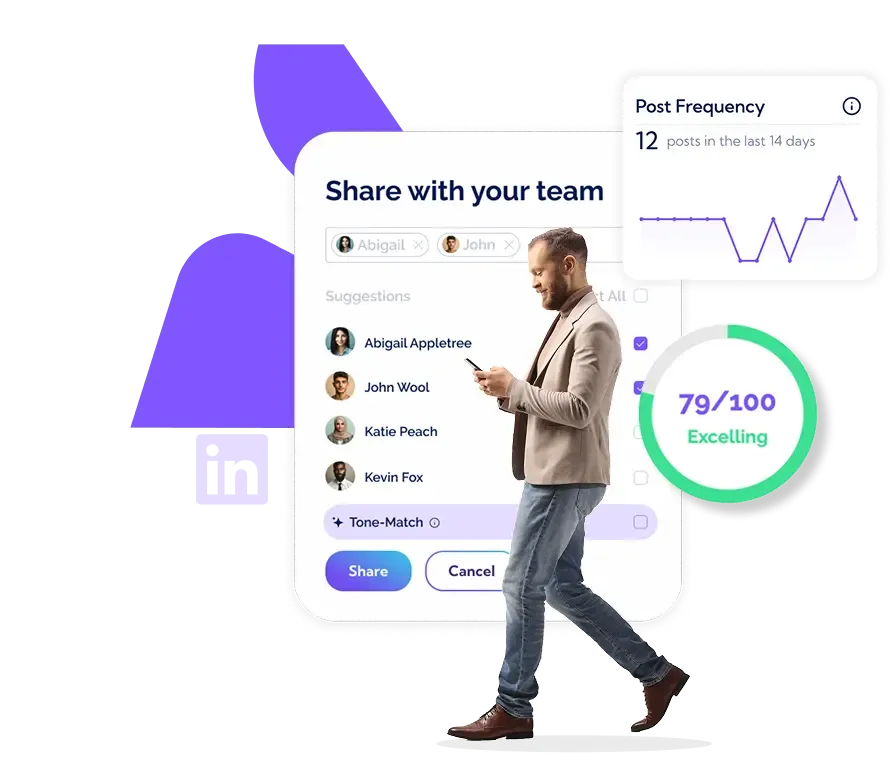
Vulse makes it easy to create, share, and measure high-impact content - turning employees into your strongest advocates.

User Icon
  • partnership image
  • partnership image
  • partnership image
  • partnership image
  • partnership image

Why Vulse Is The Leading B2B Content Tool For LinkedIn

Vulse SecurityVulse ScoringVulse ScoringVulse ScoringVulse ScoringVulse Scoring

World-class security as standard

Vulse has exclusive LinkedIn API access, allowing us to capture data directly from LinkedIn. All the data we use is approved, accurate, and secure, allowing us to create the most scalable and efficient content-sharing solutions.

Precision Tone MatchingVulse ScoringVulse ScoringVulse ScoringVulse Scoring

Precise content tone-matching

We’ve developed a unique tone of voice model that ensures your brand’s message stays consistent across personal and business accounts. That means all Vulse content is personalized and relevant to the audience you’re posting to.

Vulse Image

Strategic guidance and support

Our diverse, highly skilled team has been working with LinkedIn since 2019, bringing years of experience in social media and SaaS development to deliver customer-led solutions for every business.

Empower Your Team To Become Authentic Brand Advocates

Harness our secure employee advocacy platform to create brand-friendly, ready-to-share content in seconds.

Community Management

Community Management

Tone-Of-Voice Matching

Tone-Of-Voice Matching

Team Leaderboard

Team Leaderboard

Live Analytics

Live Analytics

Content Scheduling

Content Scheduling

Security Background Rectangle

Enjoy peace of mind with enterprise-grade security

We know how important it is to keep your data safe and your account secure.

As an ISO 27001-accredited and GDPR-certified software provider, our customers can be confident that Vulse won’t compromise their information security. With robust access management and incident response frameworks, your team can embrace our innovative employee advocacy tool without compromising compliance.

securityLogos
Employee advocacy visual

What is employee advocacy?

Employee advocacy is all about empowering employees to share organic content about their organization on social media.

It leverages personal and professional networks to increase brand awareness, amplify key messages, and establish thought leadership.

With our LinkedIn content tool, you and your team can overcome “post anxiety” to become proactive spokespeople for your company. We’ll help you track employee advocacy KPIs and optimize your content to attract talent and create new social selling opportunities.

Tap into the benefits of employee advocacy
Benefit Icon

Click-through rates are 2x higher* on content shared by employees versus businesses

Benefit Icon

Employee networks have 10x more connections* than a company has followers

Benefit Icon

Companies with socially engaged employees are 58% more likely to attract top talent*

Benefit Icon

Companies with an employee advocacy program report a 26% increase in year-over-year revenue**

Trusted By High-Performing Teams Worldwide

Vulse quote

Since using Vulse, I have posted 3x per week consistently, increasing my daily follower growth by 300%. My most engaging posts, generated over 4500 impressions. Vulse's layout ensured I included all necessary elements like hashtags and media, while the content theme planner developed post ideas and created quick summaries, saving me significant amounts of time. The ability to schedule posts is a huge benefit, allowing me to enjoy building my personal brand and consistently produce content without the stress of planning.

Lara Hanson, Founder - Noux Talent

Vulse quote

I’ve been patiently waiting to get my hands on Vulse, and it is a game-changer for me. It’s simple to use but powerful in its results. This is the first AI tech I’ve used that doesn’t read like a robot wrote it. Consistency is key to growing social media platforms and Vulse has given me no excuse with its scheduling tool and speedy post generation. Whilst it’s aimed at LinkedIn, there’s no reason why I can’t repurpose the content for other social media platforms.

Carla Speight, Founder - PR

Vulse quote

It’s a great tool. Incredible work by the Vulse team.

Ian Wright, CEO - Virtual Non Execs

Vulse quote

Vulse is fantastic. I can’t praise it enough.

Obi Onuorah, Director - Senior Internet

Vulse quote

This tool is the one to use. The best thing is that the people at Vulse listen to their users on what they need to make the product better and as a result, it is constantly evolving and moving with the times.

Claire Woods, Director - Kennedy Woods

Vulse quote

I found that the output was incredibly precise, and matched my tone of voice, especially on technical themes. They allow me to add a theme, which then develops a post idea, which is a great starting point for the content creation process. And you know, it’s going to be seen in the feeds of my LinkedIn users.

Ryan Short, Business Development Manager - Planit Testing

Vulse quote

Vulse is a great tool. It has already made a difference to us and the fact that the tool is still evolving and the team is so receptive to feedback means I am just stoked to see where this takes us.

Elliot Gaspar, Founding Director - Standard Ledger

Vulse quote

Vulse has allowed me to stay consistent, overcome writer's block, and analyse post-performance. My impressions and engagement have increased, with other users contacting me to compliment my content.

Marcell Edwards, Global Talent Acquisition - Adidas

Latest News

  • blog img

    Vulse vs DSMN8: Which Employee Advocacy Platform Fits Your Team

    Employee advocacy has become essential for B2B brands. With LinkedIn's algorithm favouring personal profiles over company pages, businesses that activate their employees as brand advocates see significantly higher engagement and reach.When researching employee advocacy platforms, DSMN8 often appears in search results. It's a well-established player with enterprise clients. But for many teams, particularly those focused on LinkedIn, DSMN8's approach introduces complexity and cost that simply isn't necessary.This comparison examines both platforms to help you understand which approach makes sense for your team.DR: Vulse vs DSMN8 at a GlanceFactorVulseDSMN8Best ForTeams wanting LinkedIn results fastEnterprises needing multi-platform complexityStarting Price£17/user/month$850/month minimumLinkedIn APINative integrationStandard connectionPlatformsLinkedIn (where B2B happens)LinkedIn, Twitter, Facebook, Instagram, XingSetup TimeMinutesWeeks (onboarding required)Ideal Team Size5-500 employees100+ employees with dedicated adminTop Tip: If LinkedIn is where your audience lives, Vulse delivers faster results at a fraction of the cost. DSMN8 suits enterprises with large budgets who need to manage advocacy across multiple platforms they may never fully use.What Is Employee Advocacy Software?Employee advocacy software enables companies to distribute approved content through employee social networks. Instead of relying solely on corporate pages and paid ads, these platforms help employees share company content authentically.The results speak for themselves. Content shared by employees receives up to 8x more engagement than content shared by brand pages. Employee networks also have 10x more connections than a typical company page has followers.Both Vulse and DSMN8 aim to make this process simpler. The difference lies in their approach.Vulse Overview: Built for LinkedIn ResultsVulse is a B2B employee advocacy platform built specifically for LinkedIn. With unique LinkedIn API access, Vulse focuses on helping teams maximise results on the platform where B2B buyers actually spend their time.Key Vulse FeaturesNative LinkedIn API integration providing real-time analytics unavailable in other platformsProprietary tone-of-voice model ensuring content sounds authentic, not robotic or copy-pastedContent scoring system that predicts post performance before publishingAI-powered content ideas and article summariser for faster content creationTeam leaderboards to drive healthy competition without complex reward administrationPersonal profile analytics alongside company page metricsContent scheduling with optimal timing suggestionsISO 27001 and GDPR certified for enterprise-grade securityVulse PricingPlanPriceBest ForPro£17/user/monthIndividual professionalsBusiness£37/user/monthTeams with company pagesEnterpriseCustomLarge organisationsVulse charges per user, so you only pay for employees actively participating. A 20-person team pays approximately £740/month on the Business plan.DSMN8 Overview: Enterprise ComplexityDSMN8 (pronounced "disseminate") is an employee advocacy platform targeting enterprise organisations. Founded in 2016, it offers multi-platform sharing and extensive features that come with corresponding complexity.DSMN8 FeaturesMulti-platform sharing across LinkedIn, Twitter, Facebook, Instagram, Xing, WhatsApp, and emailAuto-scheduling for employees who don't have time to engage with the platformGamification engine with leaderboards and rewards (requires budget for prizes)AI content assistant for caption generationManaged services available for teams who find the platform too complex to run themselvesNewsletter feature for internal communicationsExtensive integrations with enterprise toolsDSMN8 PricingTierStarting PriceRealityStartup$850/monthMinimum commitment regardless of team sizeScaleCustomAdds customer success managerEnterpriseCustomRequired for larger deploymentsDSMN8 requires annual contracts and charges a flat monthly rate. For a small team of 10, you're paying $85 per person per month before you've activated a single employee.Feature Comparison: What Actually MattersLinkedIn PerformanceFor B2B companies, LinkedIn is where decisions happen. 80% of B2B leads from social media come through LinkedIn.Vulse was purpose-built for LinkedIn with native API access. This means real-time data, accurate analytics, and features designed specifically for how LinkedIn works. When LinkedIn changes its algorithm, Vulse adapts.DSMN8 supports LinkedIn alongside five other platforms. This breadth means their LinkedIn features compete for development resources with platforms your team likely won't use. The connection is standard rather than native.The difference: Vulse's LinkedIn focus means your employees get a tool optimised for where they'll actually post.Content AuthenticityNothing kills an advocacy programme faster than employees sharing identical, robotic posts.Vulse includes a proprietary tone-of-voice model that ensures each employee's posts sound like them, not like a corporate press release. Content scoring predicts performance before posting, helping employees optimise without endless trial and error.DSMN8 offers multiple caption options per post to avoid duplicate content. This helps, but employees still choose from pre-written options rather than content shaped to their voice.The difference: Vulse posts sound human. That's what drives engagement.Getting StartedAdoption is the single biggest challenge in employee advocacy. If employees don't use the platform, features don't matter.Vulse is designed for quick adoption. Employees can start sharing content within minutes of signing up. The interface focuses on what matters: creating and sharing content on LinkedIn. There's no training required because the platform is intuitive.DSMN8 includes onboarding support because setup typically requires it. Enterprise deployments take weeks, not days. The platform offers managed services for companies who find ongoing management too demanding.The difference: If you need managed services to run your advocacy platform, the platform may be the problem.Analytics and ReportingUnderstanding what's working is essential for improving results.Vulse provides real-time LinkedIn analytics through direct API integration. Weekly automated content reports summarise performance and deliver recommendations without requiring you to navigate complex dashboards. You see what's working and what to do next.DSMN8 offers extensive analytics with customisable dashboards, earned media value calculations, and detailed segmentation. This depth serves enterprises with dedicated analytics teams. For most marketing teams, it's more data than anyone has time to analyse.The difference: Vulse gives you actionable insights. DSMN8 gives you a data warehouse.IntegrationsBoth platforms connect with other tools, but the question is whether you need those connections.Vulse integrates with LinkedIn (with unique API access), CRMs, and analytics tools. The focus remains on doing LinkedIn exceptionally well.DSMN8 connects with Slack, Microsoft Teams, Salesforce, Marketo, Google Analytics, Adobe Analytics, and single sign-on providers. This breadth serves enterprises with complex tech stacks but adds configuration overhead for everyone else.The difference: More integrations means more setup, more maintenance, and more that can break.SecurityBoth platforms meet enterprise security requirements with ISO 27001 certification. Vulse is additionally GDPR certified with robust access management and incident response frameworks.Pricing Reality CheckThe pricing models tell the real story:Team SizeVulse (Business)DSMN8 (Startup)You're Paying DSMN810 users~£370/month$850/month130% more25 users~£925/month$850/month+Similar, but locked in50 users~£1,850/monthCustomEnterprise sales processWith Vulse, you pay for active advocates. Scale up or down as adoption grows. No annual lock-in on standard plans.With DSMN8, you pay $850/month whether you have 10 active employees or 2. Annual contracts mean you're committed before you've proven the programme works.For most teams: Vulse costs less and lets you prove ROI before committing to enterprise spend.What About Multi-Platform?DSMN8's multi-platform support sounds attractive. But consider your reality:Where do your B2B buyers spend time? LinkedIn.Where do employee posts drive pipeline? LinkedIn.Where do candidates research your employer brand? LinkedIn.Paying for Twitter, Facebook, Instagram, and Xing support makes sense if your employees will actively use those platforms for business purposes. Most don't.Vulse focuses on LinkedIn because that's where B2B results happen. You're not paying for platforms that sit unused.Who Should Choose Vulse?Vulse is the right choice if:LinkedIn is your primary B2B channel (it probably is)You want employees posting within days, not monthsYour budget is realistic for a growing programmeYou value authentic content over volumeYou need accurate LinkedIn data for reportingYour team is between 5 and 500 employeesYou want a focused tool rather than an enterprise platform you'll never fully useBook a Vulse demo to see the platform in action.When DSMN8 Might Make SenseDSMN8 could work if:You genuinely need employees sharing across multiple platforms regularlyYour organisation has 500+ employees and dedicated programme administratorsYou have budget for $10,000+ annually before proving ROIYour enterprise requires extensive integrations with Salesforce, Marketo, and AdobeYou prefer vendors to run the programme for you via managed servicesFor most B2B marketing teams, these requirements don't apply.The VerdictDSMN8 built a platform for enterprises who want everything. That means complexity, cost, and features most teams never touch.Vulse built a platform for teams who want LinkedIn results. That means focus, speed, and pricing that makes sense.If you're evaluating employee advocacy platforms, the question isn't which has more features. It's which will get your employees actually posting, consistently, on the platform where your buyers pay attention.For LinkedIn-focused B2B companies, that's Vulse.Frequently Asked QuestionsWhat is the main difference between Vulse and DSMN8?Vulse is a LinkedIn-specialised employee advocacy platform with native API integration and tone-matching AI, built for teams who want results without complexity. DSMN8 is a multi-platform enterprise solution with extensive features that require more budget, setup time, and ongoing administration.Which employee advocacy platform is better for LinkedIn?Vulse is purpose-built for LinkedIn with unique API access, real-time analytics, content scoring, and a proprietary tone-of-voice model. DSMN8 supports LinkedIn but spreads its development across six platforms, which means less depth in any single channel.How much does Vulse cost compared to DSMN8?Vulse starts at £17 per user per month, scaling with your team size. DSMN8 starts at $850 per month regardless of how many employees participate. For teams under 25 employees, Vulse typically costs 50-70% less while delivering LinkedIn-specific features DSMN8 lacks.Is DSMN8 overkill for small to mid-size companies?For most teams under 200 employees, DSMN8's pricing and complexity exceed what's needed. The $850 monthly minimum, annual contracts, and weeks-long onboarding process suit enterprises with dedicated administrators and large budgets, not growing marketing teams.Why doesn't Vulse support other social platforms?Vulse focuses on LinkedIn because that's where B2B engagement and lead generation happen. Rather than building mediocre support for six platforms, Vulse invests in making LinkedIn advocacy exceptional. Most B2B teams find this focus delivers better results than spreading effort across platforms their employees rarely use for business.How quickly can employees start using each platform?Vulse employees can start sharing content within minutes of signing up. The intuitive interface requires no training. DSMN8 deployments typically take weeks and include formal onboarding, which suggests the platform needs explanation before employees can use it effectively.Do I need managed services for employee advocacy?If a platform requires managed services to run effectively, that's a sign of complexity rather than a feature. Vulse is designed for marketing teams to manage themselves without dedicated administrators or external support.Is employee advocacy worth the investment?Absolutely. Content shared by employees receives up to 8x more engagement than brand content, and companies with advocacy programmes report 26% higher year-over-year revenue. The question is whether you need an enterprise platform to achieve those results, or whether a focused tool delivers the same outcomes at lower cost.Ready to Start Your Employee Advocacy Programme?The best employee advocacy programmes combine the right technology with clear goals and engaged employees. Complex platforms don't guarantee better results.Book a Vulse demo to see how LinkedIn-focused employee advocacy can amplify your brand's reach without enterprise complexity.

    Loading

    Vulse vs DSMN8: Which Employee Advocacy Platform Fits Your Team

    by - Rob Illidge -

  • blog img

    Vulse Attends Parliamentary Panel By Lumi.Network and Accenture

    Vulse recently attended a Parliamentary Panel discussion titled Bridging the Skills and Innovation Gap, hosted by Lumi.Networkand Accentureand held in the Palace of Westminster, London.The session brought together leading voices from government, education, industry, and the UK tech ecosystem to explore how the UK can bridge its widening digital skills gap through initiatives that equip people with essential skills and build innovative problem-solving to drive economic growth.As a data-driven social content platform with deep roots in the UK tech ecosystem, Vulse contributed to the post-panel discussion that explored the challenges and opportunities shaping AI adoption nationwide.Below is a summary of the key themes from the session, and why they matter for businesses across the UK.1. Behavioural Cultural Change: AI Upskilling Is a TransformationAttendees emphasised that AI skills development is not just training, it’s behaviour change.AI success depends on building confidenceand agency, not fear.Human-AI collaboration is becoming essential in every UK organisation.Soft AI skills such as adaptability, communication, and digital literacy must be prioritised.At Vulse, we see that the UK teams who grow fastest with AI are those who embrace experimentation, curiosity and a culture of continuous learning.2. Confusing Landscape: UK Businesses Need Clearer Access to AI ProgramsDespite many government-backed AI courses, businesses, especially SMEs, shared that:They don’t know where to find trusted, high-quality training.Free programmes are often perceived as lower quality.There is no unified narrative helping SMEs understand their options.The panel highlighted the need for clearer communication from both industry and government. Vulse supports this mission by providing accessible, practical AI tools and education to teams of all sizes.3. Reaching Underrepresented Groups Across the UKA major concern was that SMEs and disadvantaged communities risk falling behind.The discussion highlighted the need to focus on:Underserved UK regionsSocial mobility challengesGender representation in techEnsuring SMEs can access the same AI opportunities as large enterprisesVulse is committed to democratising access to AI tools and insights, regardless of business size or location.4. Public-Private Partnerships Are Essential for UK AI GrowthThe UK’s digital skills strategy faces funding gaps and uncertainty.The panel emphasised:Many successful initiatives now rely heavily on private partners.Businesses need to see a clear ROI to take part in government upskilling efforts.A joined-up national strategy is essential.The panel highlighted the power of collaborative public-private partnerships to drive the UK's AI competitiveness.5. AI Risk Mitigation: Balancing Speed and SafetyPanellists discussed the tension between innovationand compliance:Companies want to move fast with AI adoption to stay competitive.Legal and compliance teams are urging caution.Recruitment is a key battleground - some employers are stepping back due to legal fears, while others push ahead to stay aligned with public use.Vulse supports organisations in adopting AI safely, responsibly and transparently.FAQ: AI Upskilling UK Workforce - What Businesses Need to Know1. What did the Parliamentary Panel involve?Panellists included Minister Lloyd, Minister for Digital Economy, Department for Science, Innovation and Technology, Dame Chi Onwurah MP, Chair of the Science, Innovation and Technology Committee, Freha Arshad, Managing Director at Accenture and Prashant Raizada, Founder and CEO at Lumi. The discussion was centred around the panellists’ experience across government, industry and education, followed by questions from the audience.2. Why did Vulse attend?Vulse attended as a UK-based AI company with expertise in helping teams adopt AI responsibly and effectively through real-world tools, content automation and workforce insights.3. What are the biggest AI skill gaps in the UK right now?Soft skills, AI confidence, data literacy, responsible AI usage, and practical hands-on experience, especially within SMEs and underrepresented regions.4. Are there government-funded AI training programmes for SMEs?Yes, but awareness is low. Many SMEs report confusion around where to start. The panel identified this as a priority area for improvement.5. How can UK businesses adopt AI safely?By balancing innovation with proper risk management, transparency, and clear internal guidance. Tools like Vulse help teams adopt AI confidently and in line with compliance needs.6. How does Vulse support AI upskilling?Vulse provides an AI-powered platform for content creation, employee advocacy, training support, and analytics, helping organisations build confidence and capability in day-to-day workflows.

    Loading

    Vulse Attends Parliamentary Panel By Lumi.Network and Accenture

    by - Rob Illidge -

  • blog img

    Vulse 1.3 Is Now Live - Including Weekly Insight Reports

    If you regularly post on LinkedIn but struggle to find time to review your analytics, you’re not alone.Understanding content performance is essential for improving reach, engagement, and overall LinkedIn strategy, but most marketing teams are too busy.That’s why we built Vulse Content Reports, released with Vulse Version 1.3, to give you automated, easy-to-understand insights based on your live LinkedIn data.Vulse, the world's leading employee advocacy platform now provides a complete weekly overview of your content performance, team rankings, and personalised recommendations, without you needing to open a dashboard or analyse a single metric.What Are Vulse Content Reports?Vulse Content Reports are automated weekly LinkedIn performance summaries generated directly from your LinkedIn analytics.These reports provide marketing teams, employee advocacy managers, and individual creators with a clear explanation of how their content performed and what actions to take next.With Vulse v1.3, you receive:Data-driven insightsTeam leaderboard updatesA weekly content strategy guideAll in one place.Key Features of Vulse Content Reports (Version 1.3)Weekly LinkedIn Content Performance OverviewEach report includes a clean breakdown of:ImpressionsEngagementAudience interactionsPost-by-post performanceThis gives you instant clarity on what worked and where your content strategy is gaining traction.Team Leaderboard RankingIf your organisation uses employee advocacy, Vulse shows your exact position on the team leaderboard each week.This helps:Encourage friendly competitionBoost participationHighlight top performersInform marketing managers where support is neededPersonalised Summary Of Your PerformanceYour bespoke weekly summary does more than list numbers. It tells you:What’s working in your contentWhat can be improvedWhy certain posts performed wellWhat you should post next weekThis transforms analytics into immediate, actionable recommendations.Who Benefits from Vulse Content Reports?Marketing ManagersGet quick visibility across teams without spending hours analysing LinkedIn data.Employee Advocacy LeadsMonitor performance, motivate contributors, and scale your advocacy programme.Busy Professionals and CreatorsReceive personalised insights that help you grow your LinkedIn presence consistently.Teams Using LinkedIn for Lead GenerationUnderstand which posts bring the most engagement and apply those insights to drive stronger results.Why Automated LinkedIn Reporting MattersMost organisations lack time for manual content analysis. Automated reporting ensures:Consistent trackingData-led decisionsClear weekly prioritiesHigher-quality content outputWith Vulse Content Reports, every user gets a simple, reliable content improvement cycle driven by real analytics.What’s New in Vulse v1.3?Version 1.3 introduces:Automated weekly content insightsExpanded data integration with LinkedInSmarter AI content recommendationsImproved team engagement toolsThis update strengthens Vulse as the go-to platform for LinkedIn content analytics, tone matching, and employee advocacy support.See Vulse Content Reports In ActionVulse Content Reports are now live for all eligible users. If you’d like a demo, want to enable reporting for your team, or want to see example reports, our team is here to help.Ready to improve your LinkedIn performance?Get in touch to explore Vulse Content Reports and see what’s possible with Version 1.3.

    Loading

    Vulse 1.3 Is Now Live - Including Weekly Insight Reports

    by - Rob Illidge -

  • blog img

    How To Use LinkedIn Articles And Newsletters To Scale Employee Thought Leadership

    In this exclusive guide, we'll show you how B2B marketing and HR teams can use LinkedIn long-form content, specifically Articles and Newsletters, to build scalable employee thought leadership that drives trust, discoverability, and pipeline signals.Purpose: Practical steps to launch and scale employee-written LinkedIn Articles and Newsletters.Outcome: Increased discoverability, shareable assets, and repeatable workflows for employee advocates.Who this helps: Marketing managers, internal comms, and HR teams running employee advocacy programs.Why long-form content matters for employee personal brandsShort posts amplify reach, but Articles and Newsletters create lasting assets.They index on LinkedIn and search engines, demonstrate expertise, and give employees a reusable content hub for speaking, sales enablement, and recruiting.LinkedIn’s own guidance on newsletters and articles shows they help authors build a subscriber base and extend reach beyond a single post. See LinkedIn’s help center for how LinkedIn newsletters work.Three reasons to include Articles and Newsletters in your employee advocacy playbookSearchable credibility: Articles live on the author’s profile and can be found via Google and LinkedIn search.Subscriber momentum: Newsletters create an opt-in audience that notifies subscribers when new issues publish.Repurposable assets: Long-form pieces feed shorter posts, videos, and sales enablement collateral.How to run a low-risk pilot for employee Articles and NewslettersStart small with a 6-week pilot that focuses on coaching, templates, and measurement.Week 0: Select authors and set goalsChoose 4 to 8 employees across sales, product, and customer success.Set simple goals: subscribers, article views, and lead signals from comments or messages.Week 1-2: Train and templateRun a two-hour workshop on topic selection and storytelling. Use practical templates: intro hook, 3 insight sections, and action items.Provide a headline swipe file and SEO tips for LinkedIn Articles.Week 3-6: Publish and amplifyPublish one article per author and convert it into a weekly or biweekly newsletter issue if traction appears.Amplify through employee networks with a simple share kit: suggested post copy, hero image, and tagging guidelines.Editorial and governance rules that keep the program scalableLong form introduces brand and compliance risk if unmanaged.Put straightforward governance in place:Lightweight editorial review for claims and sensitive content.Ownership rules: authors own voice, company reviews for legal or customer references.Republishing policy: who can repurpose company blog content and how to credit sources.Measurement: metrics that matterMeasure both direct and downstream impact.Direct: article views, read time, newsletter subscribers, and engagement rate.Downstream: inbound messages, demo requests mentioning content, and link clicks to gated assets.Track a small set of KPIs and add qualitative win stories from sales and recruiting.Repurposing playbook: get more from each long form pieceExtract 3–5 short posts promoting key quotes or stats.Create a 60–90 second video summarizing the article for LinkedIn native video.Convert article sections into a downloadable slide or checklist for lead capture.Tools such as an employee advocacy platform can automate content distribution and track amplification across the team.Best practices and examplesEncourage authenticity and useful takeaways. HubSpot’s guide to LinkedIn Articles is a practical resource for structure and optimization.Also, review industry thought leadership research to understand what audiences value in long-form content.Tip: Start with customer problems, lessons learned, or unique frameworks rather than promotional pieces. Readers subscribe for insights, not pitches.Questions AnswersQ: Who should own editorial coaching for employee newsletters?A: A cross-functional content lead or communications manager should coach authors, supported by subject matter reviewers.Q: How often should employees publish newsletters?A: Start with biweekly or monthly cadence. Frequency should match the author's bandwidth and the audience response rate.Q: Can company content be republished as employee articles?A: Yes, with clear attribution and small edits to reflect the author voice. Include a republishing clause in your governance doc.

    Loading

    How To Use LinkedIn Articles And Newsletters To Scale Employee Thought Leadership

    by - Rob Illidge -

  • blog img

    Empowering The Next Generation: How Vulse And The University of Staffordshire Help Students Thrive In Tech

    The tech world moves fast, and for students, turning ambition into opportunity is often harder than writing the first line of code.That’s where the partnership between Vulse and the University of Staffordshire comes in. By combining practical employability support with next-gen digital tools, this alliance can help students progress, thrive and really make an impact in tech.Watch the Vision: Staffordshire Students Their Tech FuturesStart by watching “How to progress, thrive in and impact the tech sector | University of Staffordshire.” The video captures the potential and promise students have when institutions and forward-looking platforms work together. From real-world placements to digital skills training, it’s a call to action, and a blueprint for what’s possible. How to progress, thrive in and impact the tech sector | University of StaffordshireWhy Students at the University of Staffordshire Are Already Well-PositionedThe University offers a broad range of courses, from AI, cybersecurity, computer science, games design, to creative tech, giving students many pathways into the tech workforce.Their Careers, Placements Employability services help students with CV writing, mock interviews, internships and placement opportunities, part-time and graduate jobs, even support after graduation.For students in creative-tech fields (e.g. games, esports, design), Staffordshire’s London campus, located at the technology-hub Here East, opens doors to real industry interaction from day one.The University embeds employability into its academic strategy: work experience and placement opportunities are core, not optional, helping bridge the gap between “student” and “tech professional.”All of this already gives Staffordshire students a head start, but adding Vulse into the mix can transform those opportunities into real, visible success.What Vulse Brings to the Table: More Than Just VisibilityAs a SaaS platform designed to leverage social media (especially LinkedIn) for employee advocacy and personal branding, Vulse offers unique advantages to students and recent grads:Polished personal brand on LinkedIn social networks, which significantly increases visibility to prospective employers.Content-sharing tools and tone-matching: students can present themselves consistently and professionally - crucial for early-career professionals in tech.A “digital footprint” that complements CVs and formal applications, helping students stand out in competitive recruitment pools.Exposure to global employers and enterprise clients (thanks to Vulse’s partnerships and reach) - giving students access to more than just the local job market.In short: with Vulse, a student’s technical skills and university experience don’t just stay on paper; they become part of a public, professional narrative.How Combining the University of Staffordshire + Vulse Maximises Career PotentialChallenge for StudentsHow Staffordshire HelpsHow Vulse Amplifies ItGaining real-world experiencePlacements, internships, employability services, mock interviews, access to Here East industry partners.Documenting, sharing achievements and building a professional profile on LinkedIn that stands out to employersBreaking into competitive tech/creative-tech sectorsCourses in emerging fields (games, cybersecurity, esports), embedded employability in curricula.Showcasing portfolios, projects, internships, even if student, as legitimate professional credentialsNetworking and visibility beyond local regionAccess to industry events, employer collaborations, freelancing/placement opportunities via Unitemps and IEZ.Reach beyond local employers, global and remote tech firms looking at social profiles and activityTransition from education to employmentCareer support, job boards, lifelong careers-service access.Consistent professional presence, proof of engagement, and social-proof endorsements, helpful for when applying for first job or positionCombined, Staffordshire + Vulse gives students not only a competitive skillset, but also a platform and narrative to back it up.Real-World Impact: What Could This Look Like for a Staffordshire Grad“I completed my AI Cybersecurity course, did a 6-month placement via Staffordshire, then used Vulse to build my LinkedIn profile, within two weeks I got head-hunted by a London tech firm.”Scenarios like this become possible when the academic, practical and digital-branding pieces come together. Students don’t have to rely solely on traditional graduate-job routes; they can show up ready, visible, and confident, already demonstrating professional-level engagement.Over time, the ripple effect grows: more students from Staffordshire forge successful tech careers, drawing attention to the University’s employability strength, strengthening Vulse’s ecosystem, and inspiring new students to follow the path.Why This Matters - For Students, For Industry, For the UK Tech SectorThe UK tech sector is growing rapidly; to feed it, we need graduates who are not only technically skilled but also workplace-ready. By combining education, practical experience and digital self-presentation, Staffordshire + Vulse creates ready-to-hire grads.From a diversity and inclusion viewpoint: by lowering barriers, giving visibility even to first-gen or non-traditional students, this model democratizes access to tech jobs.For employers, especially SMEs and startups, it’s easier to find well-prepared, digitally literate candidates who already understand the language of the sector.Finally, this helps shape a more dynamic, adaptive UK tech workforce, students who not only code, but also communicate, network, and build personal brands.What’s Next, How to Take AdvantageIf you’re a student at Staffordshire, treat your socials (especially LinkedIn) as part of your career toolkit from day one.Use placements and employability services not just for experience, but also to build real-world stories, projects, and credentials to share.Don’t wait until graduation: start building your digital presence now. Use Vulse (or similar) alongside what you learn at University.Employers and educators should recognise this model; it’s not just about degrees, it’s about readiness, visibility, and adaptability.

    Loading

    Empowering The Next Generation: How Vulse And The University of Staffordshire Help Students Thrive In Tech

    by - Rob Illidge -

  • blog img

    The Complete Guide To Employee Advocacy Training For High-Impact LinkedIn Results

    This article explains how to build a practical, repeatable microlearning program to turn employees into confident LinkedIn advocates.Here's our step-by-step 6-week plan, module ideas, delivery tips, and ways to measure and sustain participation.Short, weekly modules increase completion and confidence.Design modules for profile polish, content curation, posting, and compliance.Use cohort challenges, badges, and reporting to reinforce habits and show value.Why microlearning works for employee advocacyLong training sessions are a participation killer. Microlearning breaks onboarding into tiny, targeted bursts that employees can finish on a commute or between meetings.For employee advocacy, the goal is not to create social media experts but to build repeatable, brand-safe habits.Micro-modules reduce friction, increase retention, and let you iterate content based on performance and feedback.6-week microlearning onboarding planThis ready-made plan balances skill, confidence, and compliance. Each week includes a 5–12 minute lesson, a practical task, and a quick quiz or reflection.Week 1: Why advocacy matters and low-friction first stepsExplain program purpose, expectations, and benefits. Task: like or share one company post with a personal note.Week 2: LinkedIn profile polishTeach headline, summary, and experience tweaks that improve discoverability. Task: update headline and add a short summary line aligned with role.Week 3: Content types and curationShow the 3 content types you want (company news, thought leadership, human stories). Task: save or suggest 3 shareable pieces from a provided content pack.Week 4: Simple post frameworksTeach a 3-part post formula: hook, value, CTA. Task: draft and publish a short post using the template.Week 5: Compliance and brand guardrailsCover what employees can and cannot say, privacy rules, and how to escalate questions. Task: complete a 3-question compliance quiz.Week 6: Amplify and measureShow how advocacy ties to metrics: reach, profile views, referral traffic. Task: compare week 1 and week 6 metrics and share one learning.Essential micro-modules to includeProfile optimization checklist3 quick post templates with examplesContent curation playbook and a monthly content packShort compliance scenarios and a one-question escalation flowSimple metrics dashboard and how to read itDelivery formats and tools that improve completionChoose formats that match how your people work. Mobile-first video, bite-sized emails, and chat nudges outperform long PDFs.Short videos (60–120 seconds) and captionsInteractive quizzes and reflection promptsSlack or Teams nudges and cohort channels for peer feedbackMicro-certificates or badges delivered via email or LMSUse your employee advocacy platform for content distribution and tracking. For example, integrate with your content hub to push curated packs and track clicks.Motivation, reinforcement, and measurementTraining is only useful if habits stick. Combine social proof, recognition, and visible metrics to keep momentum.Cohort challenges: small groups complete tasks together and share results.Visible leaderboards: show top contributors and sample wins.Recognition rituals: highlight stories in internal newsletters or town halls.Tie your program to outcomes. Use simple KPIs like participation rate, average reach per post, and referral traffic to campaigns. If you need a measurement framework, see our guide on proving advocacy impact.Common roadblocks and how to fix themLow completion: reduce module length and add a 1-minute reward (badge or recognition).Fear of posting: offer templates, peer review, and a private practice channel.Compliance concerns: build clear do/don't examples and a fast escalation path.Content scarcity: provide a monthly content pack and allow employees to suggest ideas.Scaling beyond onboardingAfter the initial 6-week program, keep momentum with monthly micro-modules - product updates, customer wins, or personal storytelling prompts.Couple learning with incentives and recognition programs to sustain long-term participation and measurable results.Q: How long should each micro-module be?A: Aim for 5–12 minutes of content plus a 5-minute task. Shorter modules increase completion and repeat engagement.Q: What metrics prove training success?A: Participation rate, active advocates, average reach per post, profile views, and referral clicks to campaigns are practical starting KPIs.Q: Can we run onboarding without a dedicated advocacy platform?A: Yes, but platforms dramatically ease distribution, tracking, and content packaging. If you lack one, use a mix of email, Slack channels, and a simple spreadsheet for tracking.

    Loading

    The Complete Guide To Employee Advocacy Training For High-Impact LinkedIn Results

    by - Rob Illidge -

  • blog img

    LinkedIn Launches Conversational AI Search

    LinkedIn just added another AI layer to its platform: conversational search. Instead of tinkering with multiple filters, you can now type a plain-language request like 'ex-coworkers who became founders in healthcare in NY' and get people, pages, and posts that match your query.The feature is currently rolling out to LinkedIn Premium subscribers in the US and will reach more members soon.This change is part of LinkedIn's broader push to embed AI across the app, supported by parent company Microsofts continued investments in AI research and products. For context on Microsofts AI focus, see the Microsoft AI blog.How conversational search works and where it helpsPlain-language queries, smarter matchesConversational search lets you describe what you need in natural language. That lowers the barrier for non-technical users who previously had to combine multiple filters to locate specific people or content. Recruiters, partnership leads, and sales teams may find it especially useful for discovering niche expertise or overlooked connections in their network.Typical use casesFinding specialized talent, for example, ‘angels with FDA experience for an early biotech’Reconnecting with former colleagues who moved into relevant rolesFinding content or pages relevant to a niche topic without manual filteringPrivacy and accuracy considerationsWhile this feature sounds powerful, it raises some important questions:Data scope: LinkedIn can only search what users have shared on their profiles and posts. That limits results to publicly available or network-visible data.Representation: People tend to present their best professional selves on LinkedIn, so results may skew positive or omit relevant but unflattering details.Sensitive queries: Historically, features like Facebooks Graph Search exposed privacy risks by enabling granular searches. For more background, see the discussion of Graph Search and its implications at https://news.ycombinator.com/item?id=5100679 and consider how platforms must balance utility with privacy.LinkedIn will need strong guardrails to prevent enabling searches that could be used to surface sensitive personal information or to target people unfairly.Tips for professionals and recruiters using conversational searchFor job seekers and talentAudit your profile: Update headlines, skills, and experience to reflect how you want to be found.Use privacy settings: Review what information is public vs network-only to control visibility.Be authentic: AI can surface inconsistencies if you overstate skills or experience.For content creators and employee advocatesOptimize your profile and posts: Use clear keywords in your summary and content to improve discoverability with natural-language queries.Encourage teammates to update profiles: A consistent, accurate employee presence helps your company surface as a trusted source. Learn how employee advocacy can amplify reach at https://vulse.co/.What to watch nextLinkedIn has already added conversational language queries for job discovery, and its evolving AI toolkit keeps getting broader. Expect more targeted search enhancements and integration across LinkedIn experiences.At the same time, monitor how well the feature returns accurate and relevant matches, and whether it respects privacy boundaries.Conversational AI search promises convenience and faster discovery, but its value will depend on result quality and responsible roll-out.For organizations, this is a reminder to keep employee profiles up to date and to think strategically about how employees represent themselves online.For additional reporting on this feature, see LinkedIn's announcement and a coverage piece on how LinkedIn is using AI for job discovery.Want to make the most of LinkedIn's AI search for your brand or career?Explore our platform to learn how employee advocacy and optimized profiles can increase discoverability.

    Loading

    LinkedIn Launches Conversational AI Search

    by - Rob Illidge -

  • blog img

    How To Scale B2B Personal Branding Faster Using Team Content Pillars

    In this guide, we share a repeatable framework to help B2B marketing and HR teams scale authentic LinkedIn personal brands across your organization.Discover what content pillars are, how to build them, and how to amplify them with an employee advocacy platform.Why team content pillars matter for B2B personal brandingIndividual leaders can create strong personal brands, but scaling impact across an organization requires shared focus.Content pillars are repeatable themes your people post about, topics that map to company strengths and buyer interests.Faster onboarding for new employee advocates, consistent messaging, and easier content creation that still feels personal.Research shows audiences trust employee content more than brand posts, so enabling many employees to post purposefully increases credibility and reach.For context on employee-led reach, see LinkedIn’s insights on creator and employee content strategies.What are content pillars for B2B teams?Content pillars are 3 to 5 core themes your team uses to guide LinkedIn posts, long-form articles, and micro-videos. Examples for a B2B SaaS company might be:Product value and customer outcomesIndustry trends and researchCareer advice and leadership lessonsCustomer stories and case highlightsEach pillar should include suggested formats, tone, and simple prompts so employees can make posts quickly while staying on brand.How to build practical content pillars in 5 stepsMap buyer and employee needs. Interview sales and customer-facing teams to align pillars with buyer questions and employee expertise.Pick 3 to 5 pillars. Fewer pillars make it easier for employees to stay consistent.Create post templates and prompts. Provide 3 headline templates, two image suggestions, and CTA options per pillar.Provide reusable assets. Share slide decks, quote images, and short video clips employees can personalize. This is where an employee advocacy platform streamlines distribution and tracking.Train and pilot. Run a 4-week pilot with 10-20 advocates, collect feedback, then scale with playbooks and monthly content calendars.How to keep posts personal but on-messageThe balance is simple: give structure but encourage authentic voice. Instead of providing full captions, give bullet-point talking points and a suggested first line to reduce friction.Use an employee advocacy platform to push approved assets, measure engagement, and reward contributors. Platforms designed for employee advocacy can also surface high-performing posts and suggest personalization tips.Vulse’s approach focuses on personal branding while ensuring compliance and easy sharing.HubSpot’s guide on personal branding provides useful tips on tone and narrative that pairs well with pillar-based programs.Measure what mattersMove beyond likes. Track metrics that tie to business outcomes and brand reach:Share rate: percent of invited advocates who postReach from employee networks: impressions and profile views driven by employee postsConversion signals: inbound leads and meeting requests referencing employee contentCorrelate spikes in profile views and inbound demos after advocacy campaigns to prove impact. For high-level trust and credibility stats, consult industry trust research such as the Edelman Trust Barometer.Practical tips to keep momentumRun short, recurring challenges to surface quick wins.Share monthly content reports and celebrate top contributors.Rotate pillar ownership so different teams bring fresh perspectives.Keep assets bite-sized: 1-slide images, 30-second clips, and one-sentence hooks.Common challenges and how to avoid themAvoid overly prescriptive scripts. Encourage personal anecdotes instead.Don’t assume one size fits all. Provide pillar variations for product, sales, and customer success functions.Prevent burnout by spacing required activity and recognizing volunteers.Frequently Asked Questions (FAQ)Q: How many pillars should we start with?A: Start with 3 pillars. It gives enough variety without overwhelming advocates.Q: Can employees customize company-provided assets?A: Yes. Provide editable templates and short personalization prompts so posts remain authentic.Q: What’s the ideal cadence for employee posts?A: Aim for 1 to 2 posts per month per advocate during the first 3 months, then increase as the program matures.

    Loading

    How To Scale B2B Personal Branding Faster Using Team Content Pillars

    by - Rob Illidge -

  • blog img

    LinkedIn Simplifies Thought Leader Ads For Easier Discovery

    LinkedIn has made it simpler for brands to discover and sponsor user-generated content (UGC) with a new, streamlined discovery feature in Campaign Manager.This update helps marketers find relevant posts that mention their brand or event across 1st, 2nd and 3rd+ degree connections - then request permission to promote them as Thought Leader Ads.What’s new in Campaign ManagerEasier content discovery: A built-in search and highlight function surfaces posts, articles and newsletter pieces that mention your brand or event.Wider reach: You can now discover content from beyond your immediate network (including 3rd+ degree connections).Partnerships tab: Sponsored content opportunities are shown in a dedicated “Partnerships” area, and you can filter by content type to streamline outreach.Why brands should careThought Leader Ads let companies amplify authentic voices, not just company posts, by sponsoring organic content created by others.LinkedIn reports these ads see about 2x higher click-through rates than comparable single-image ads, making them an attractive option for boosting engagement and credibility.Key benefits:Authenticity: Boosting real users’ posts can feel more trustworthy than brand-only messaging.Efficiency: Built-in discovery reduces time spent hunting for promotable content.Scale: Access to 3rd+ degree posts expands potential sponsorship candidates.How to use LinkedIn Thought Leader Ads (step-by-step)1) Find relevant contentUse the new discovery tools in Campaign Manager’s Partnerships tab to surface posts, LinkedIn articles or newsletters that mention your brand or event.2) Get permissionBefore promoting anything, request sponsorship permission from the content creator. LinkedIn’s workflow in Campaign Manager makes it easier to send and track those requests.3) Launch a campaignOnce approved, you can convert the organic post into a Thought Leader Ad and run it with your chosen targeting and budget.Creator monetization: a possible next stepWhile the current process focuses on sponsorship permission, the improved discovery flow could lay groundwork for future monetization for creators.If LinkedIn decides to share ad revenue with creators whose posts are sponsored, it could create a new incentive for posting brand-positive content.That said, brands and platforms should balance monetization with authentic dialogue; paid incentives can unintentionally skew commentary.Coverage and context on LinkedIn’s broader creator efforts:Best practices for brandsPrioritize relevancy: Sponsor posts that genuinely align with your messaging and values.Be transparent: Clearly communicate sponsorship terms with creators.Measure performance: Compare Thought Leader Ads’ CTR and engagement to other ad types to understand ROI.Respect authenticity: Avoid pressuring creators into overly promotional content; authentic endorsements perform best.LinkedIn’s updated discovery tools make Thought Leader Ads easier to find and activate, opening up new opportunities to amplify user voices and boost campaign performance.As this feature rolls out to more countries, it’s worth testing Thought Leader Ads alongside existing ad formats to see how UGC-driven promotions perform for your brand.

    Loading

    LinkedIn Simplifies Thought Leader Ads For Easier Discovery

    by - Rob Illidge -

  • blog img

    How To Measure ROI Of B2B Employee Personal Branding Programs

    Employee personal brands extend your company's reach, but without measurement, it is hard to justify resources.This guide helps B2B marketing and HR teams build a clear, defensible approach to reporting business outcomes from employee social activity on LinkedIn and other professional channels.Purpose: Turn activity into measurable outcomes.Scope: Awareness, engagement, lead signals, and talent impact.Outcome: A replicable measurement plan and dashboard checklist.Start with clear goals and mapped outcomesThe first step is to link employee activity to business outcomes. Use three goal buckets:Awareness: Reach, impressions, profile views.Engagement and trust: Comments, shares, follower growth, sentiment.Demand and talent signals: leads, meeting requests, job inquiries.For each bucket, define one primary KPI and two supporting metrics. That keeps reporting focused and aligns to stakeholders.Attribution models that work for employee advocacyEmployee posts are often organic and multi-touch. Use pragmatic attribution:Direct attribution for actions that clearly originate from an employee post, like a tracked link click that results in a demo booking.Assisted attribution for leads where employee content increased engagement during the buying process, measured via lead surveys or lead scoring uplift.Correlation tracking when direct links are missing: track timing of spikes in inbound inquiries after coordinated employee campaigns.Combine these with UTM parameters, dedicated landing pages, and short-form tracking to connect employee activity to conversions.Practical tipAlways append UTM tags to campaign links and add a hidden field or source on forms that captures "employee_post" values. This makes direct attribution clean and repeatable.Suggested KPI set for B2B teamsBelow is a compact KPI set that balances visibility and business outcomes.Reach: Total impressions and profile views from employee posts.Engagement rate: Likes, comments, shares divided by impressions.Lead signals: Demo requests, content downloads, or contact form submissions tied to employee campaigns.Talent signals: Inbound recruiter messages and job application volume resulting from employee content.Sales influence: Number of opportunities where a seller cites employee content as a touchpoint.Building a simple dashboardCombine platform analytics with CRM and web analytics to create a single source of truth. A typical dashboard has three panels:Activity panel: Posts, shares, and top-performing employees.Engagement panel: Impressions, engagement rate, and follower lift.Outcome panel: Leads attributed, demo requests, and talent inbound metrics.Use an employee advocacy solution to centralize post scheduling and analytics. See how built-in reporting can speed analysis on an employee advocacy analytics page.How to calculate a simple ROIROI for personal branding programs is often a mixture of direct revenue and soft value. Use this conservative formula to start:Sum direct revenue attributed to employee-driven leads over a period.Add estimated value of assisted conversions using a conservative uplift percentage.Divide by program cost including platform, content creation, and team time.This produces a monetary ROI figure you can present to leadership. Be explicit about assumptions and update them with real data over time.Operational checklist to scale measurementApply these practical rules to keep measurement consistent:Standardize UTMs and naming conventions across employee campaigns.Automate data ingestion from LinkedIn and your advocacy platform into your BI tool.Train employees to use trackable links and to tag campaigns in post copy when asked.Schedule a monthly review with marketing, sales, and HR to review dashboard insights.Vulse customers often pair the platform with a CRM to close the loop between post and pipeline. Learn more on our features page about LinkedIn analytics and reporting.Example: 90-day reporting cadenceRun this lightweight cadence for the first 90 days:Week 0: Baseline metrics for profiles, impressions, and leads.Week 1 to 8: Run two focused campaigns and collect UTM-tagged conversions.Week 12: Produce a stakeholder report with direct revenue, assisted conversions, and talent signal changes.Repeat and refine goals based on what moves the needle.Evidence and further readingResearch shows employee-shared content generates higher trust and click-through rates than brand-only content. For context, LinkedIn's guidance on employee advocacy provides practical benchmarks and best practices, which can help calibrate expectations: LinkedIn Marketing Solutions.For measuring social ROI and building dashboards, HubSpot's guide to social media ROI is a useful practical resource: HubSpot Blog.Frequently asked questionsQ: How soon can we expect measurable results?A: You can see awareness and engagement shifts within 30 days. Attribution to pipeline typically takes 60 to 90 days depending on sales cycles.Q: Do we need an employee advocacy tool to measure ROI?A: Tools make tracking and reporting far easier but you can start with manual UTMs and CRM tagging. A platform scales measurement and reduces manual work.Q: Which metric should executives care about most?A: That depends on priorities. For revenue-focused leaders show attributed pipeline and deals. For talent-focused teams highlight inbound candidate volume and recruiter touchpoints.

    Loading

    How To Measure ROI Of B2B Employee Personal Branding Programs

    by - Rob Illidge -

  • blog img

    You Can Now Get Paid To Train LinkedIn’s AI

    LinkedIn is taking a new approach to building better AI; it’s recruiting members to help label and annotate data.Instead of relying only on anonymous contractors, LinkedIn will invite professionals to apply their industry expertise to create high-quality, human-labelled training data, and yes, you can get paid for it.This isn’t just manual tagging.LinkedIn says it will vet applicants to make sure their background matches the annotation tasks, using profile details (education, licenses, work history) and an AI-driven conversational interview to verify expertise.Learn more about the program on LinkedIn’s help page.How the process worksProfile-based vetting and AI interviewsIf you express interest, LinkedIn may use an AI-powered conversation to ask about your professional background and assess whether you’re the right fit for specific annotation projects.The platform uses that information to match you with tasks that need specialized knowledge — for example, medical, legal, or financial labeling.Annotating industry-specific dataOnce matched, you’ll annotate examples so AI systems learn how people in your profession refer to tools, products, outcomes, and context.This helps AI models provide more accurate recommendations, search results, and professional insights across LinkedIn, and potentially for other companies that license training data.Why this matters (and why it’s complicated)Benefits for professionals and AI qualityEarn flexible, skill-based income by applying domain knowledge.Improve AI understanding of niche terms and context, leading to better matches and recommendations.Receive personalized feedback, LinkedIn may suggest profile improvements based on the interview.Ethical and career considerationsThere’s a tension here: by training AI, experts could also be helping build systems that automate parts of their own jobs.The conversation about fairness, pay, and long-term impacts of AI labor is ongoing — see a deeper dive into the industry’s reliance on human labelers in this article from The Conversation.What to consider before you sign upConfirm what tasks you’ll do, and how much you’ll be paid per assignment.Understand how your interview data will be used, LinkedIn says it will supplement your profile information to match you to projects and suggest profile updates, and will not use that info for other purposes without permission.Think about long-term implications for your role and industry.LinkedIn’s approach leverages its unique access to professionals across industries to create higher-quality, specialized training data.For people who want flexible income and enjoy applying domain expertise, it’s an attractive option, but it’s reasonable to weigh the potential trade-offs for your career.

    Loading

    You Can Now Get Paid To Train LinkedIn’s AI

    by - Rob Illidge -

  • blog img

    Simple LinkedIn Post Framework For Employee Advocates To Boost Reach And Trust

    In this guide, we share a repeatable, tested framework your employees can use to write LinkedIn posts that increase reach, drive engagement, and protect authenticity.Use these steps to coach advocates, run quick experiments, and measure wins.Learn a 5-part LinkedIn post framework optimized for employee sharing.Includes example templates, testing tips, and measurement signals.Designed to keep posts authentic while improving reach and CTR.Why a simple framework mattersMany employee advocates want to help but don’t know how to turn ideas into posts that perform on LinkedIn.A clear, short framework reduces friction and preserves each person’s voice while aligning content with business goals.Purpose: teach non-writers a reliable structure that balances authenticity and discoverability so your program drives measurable results.The 5-part LinkedIn post frameworkUse these five elements in order. Not every post needs all five, but this sequence is your baseline for consistent performance.1. Hook (1–2 lines)Start with a single strong sentence that creates curiosity, states a clear benefit, or challenges an assumption. Short hooks drive more clicks and reduce scroll fatigue.Examples: "Why our launch failed in week one" or "3 small habits that doubled my focus."2. Value or story (2–4 short paragraphs)Deliver practical value or a concise personal story. Keep paragraphs to one or two sentences. Bullet lists work well here to make ideas scannable.3. Evidence or microcase (1 paragraph)Add one concrete data point, a quick example, or a mini case that supports the claim. This builds credibility without turning the post into a long read.4. Clear human CTA (call to action)End with a simple CTA that invites conversation, not sales pressure. Examples: "What do you think?" "Share a tip below." "If you’ve tried this, tell me how it went."5. Don't forget accessibilityFinish with alt text for any image you attach which helps accessibility and sometimes keeps posts clear if images don’t load.Post templates advocates can useProvide employees with short, fill-in-the-blank templates they can personalize. Templates reduce decision fatigue and increase adoption.Lesson template: “Hook. What happened. What I learned. One tip. CTA.”How-to template: "Problem. Quick steps (3 bullets). Result. CTA asking for others’ tips."Thought starter: “Contrarian statement. Brief rationale. One question to the audience.”Practical coaching tips for managersRun a 20–30 minute workshop to introduce the framework.Use live examples from your team’s LinkedIn to map posts to the format. Short group edits show how to maintain voice while improving structure.Encourage employees to keep a swipe file of ideas and snippets they can quickly turn into posts. Consider pairing new advocates with a mentor for the first 6–8 posts.Test and measure what mattersFocus on simple, meaningful metrics that reflect both reach and quality:Impressions and engagement rate (likes + comments divided by impressions)Qualitative signal: number of meaningful comments or DM leadsDownstream signal: clicks to content, topic mentions, or demo requestsRun A/B tests on hook styles, post length, and CTA phrasing for two weeks per test. Use internal tracking or a platform like Vulse to capture advocate-level performance.Quick checklist before publishingDoes the first line create curiosity or state a benefit?Is the post under 250 words and broken into short paragraphs?Is there a clear CTA that invites conversation?Have you added 2–4 relevant hashtags and alt text for images?Common pitfalls and how to avoid themAvoid making posts read like ads. If a post feels promotional, remove the sales language and add a human insight.Don’t over-hashtag; three focused tags often outperform a long list. Finally, respect employees' voices-coaching should be optional and framed as skill development.Ready-to-run experiment (7 days)Day 1: Run a 30-minute training introducing the framework.Days 2–6: Each advocate posts using one template. Track impressions and comments.Day 7: Review results and share top-performing hooks and CTAs with the team. Repeat with minor tweaks.For examples and case studies on advocate-led content that scaled, see our resources.Author:Questions and answersQ: How often should employee advocates post?A: Start with one post per week per advocate. Consistency matters more than volume; increase frequency only after measuring quality and engagement.Q: How do we keep posts authentic while aligning to brand goals?A: Use frameworks and templates, but let employees personalize language, anecdotes, and opinions. Offer optional topic buckets rather than rigid scripts.Q: Should we require approval before posting?A: Prefer guidance over gatekeeping. Use lightweight checks for regulated industries, otherwise encourage speed and authenticity with optional review for new advocates.

    Loading

    Simple LinkedIn Post Framework For Employee Advocates To Boost Reach And Trust

    by - Rob Illidge -

  • Maximise LinkedIn activity with quality content at your fingertips. Start today.

    Need help? Simply drop us an email. We’re here to help.