Vulse ArtVulse Art
Home/Linkedin Strategy

LinkedIn Verification Is Coming to the Wider Web - Starting with Adobe

  • LinkedIn Strategy
blog-image

Trust matters, especially online. And now, LinkedIn is taking steps to make digital identity more transparent and portable across the internet.
 

A Verified Identity, Beyond LinkedIn
 

LinkedIn is extending its free identity verification system to third-party platforms, allowing professionals to showcase their verified status far beyond their LinkedIn profile.


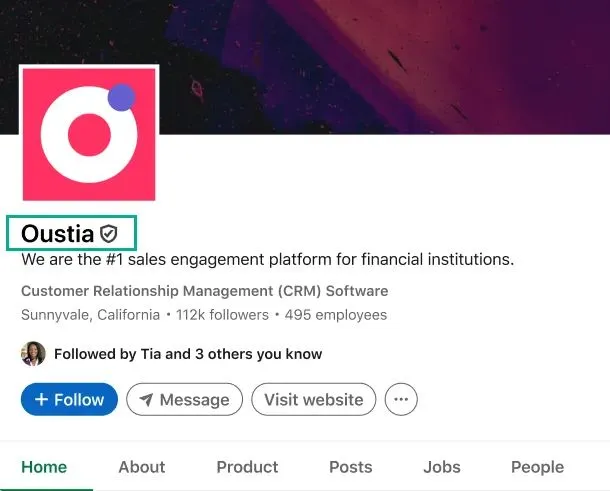
Adobe is leading the charge. The tech giant is integrating the “Verified on LinkedIn” badge into its Content Authenticity app and Behance, its flagship platform for creatives.


This means artists, designers, and professionals who verify their identity on LinkedIn can now display that credibility on Adobe’s platforms too.
 

How Adobe and LinkedIn Are Collaborating
 

When creators use Adobe’s Content Credentials, a tool that adds tamper-proof identity info to digital content, their LinkedIn-verified identity will appear alongside their work, even when it’s shared across the web or back on LinkedIn.
 

Oscar Rodriguez, LinkedIn’s VP of Trust, shared the company’s motivation:
 

“It’s getting progressively cheaper and easier to pretend you’re someone you’re not online… authenticity is super important for LinkedIn, the platform is founded on this premise of trust.”


This partnership aims to reduce online inauthenticity and empower professionals to prove their credibility wherever their work appears.
 

Other Platforms Are Following
 

Adobe isn’t alone.


Platforms like TrustRadius, G2, and UserTesting have also signed on to integrate LinkedIn verification, signaling a major shift in how professional identity is handled across the digital ecosystem.
 

This expansion echoes a growing demand for authenticity. As misinformation spreads and fake profiles become more sophisticated, professional verification tools are no longer a “nice-to-have"; they’re a necessity.
 

Why This Matters to Vulse Users
 

At Vulse, we’re all about helping professionals build authentic, impactful online presence. Tools like LinkedIn’s verification and Adobe’s Content Credentials help establish trust between creators and audiences, a mission we strongly support.
 

In a landscape where visibility matters, being verified isn’t just about a badge; it’s about credibility. Whether you're publishing thought leadership content or showcasing your creative portfolio, having verifiable proof of identity makes your work stand out.


What’s Next for Digital Identity?
 

With LinkedIn opening up its verification tools, we expect more companies to follow Adobe’s lead, embedding trusted identity signals into everything from social content to SaaS dashboards.
 

And with new platforms like Bluesky rolling out their own verification features, the race is on to build a more credible web.

Vulse ArtVulse ArtVulse Art
Vulse Art

You May also be interested in

  • blog img

    Top Jobs Rising in 2026: AI Leads the Way

    LinkedIn's annual Jobs on the Rise report tracks which roles are gaining momentum based on changes in user profiles between 2023 and 2025.The clear headline for 2026: AI-related roles are surging.From AI engineers to data annotators, the list reflects how rapidly businesses are adopting and adapting to new AI tools.This isn't speculation about future trends. It's based on actual hiring patterns and career transitions happening right now.The World Economic Forum's Future of Jobs Report predicted this shift, estimating that 23% of jobs would change by 2027 due to AI and automation. LinkedIn's data suggests we're already seeing that transformation accelerate.The top rising roles (U.S.): a quick snapshotAI Engineers - Building and deploying AI systemsAI Consultants and Strategists - Helping businesses apply AI effectivelyNew Home Sales Specialists - Real estate roles adapting to market shiftsData Annotators - Ensuring AI training data qualityAI/ML Researchers - Advancing the science behind AI modelsHealthcare Reimbursement Specialists - Navigating complex healthcare billingStrategic Advisors and Independent Consultants - Flexible expertise on demandAdvertising Sales Specialists - Adapting to changing media landscapeFounders - More professionals launching their own businessesSales Executives - Enterprise sales remains in high demandWhat's notable: six of the top ten roles are either directly AI-related or reflect broader shifts in how work is organised (consultants, founders, specialists).Gartner's research supports this pattern, showing AI technologies moving rapidly from hype to practical implementation across industries.Why AI roles are growing so fastAI tools that didn't exist a few years ago are now mainstream. ChatGPT reached 100 million users faster than any consumer application in history, and enterprise adoption has followed.Organisations now need:Technical talent to build and maintain AI models. The U.S. Bureau of Labor Statistics projects computer and information technology jobs will grow 15% through 2031, much faster than average.Strategists to apply AI effectively. Building AI is one thing. Knowing where it creates value is another. McKinsey's research estimates generative AI could add $2.6 to $4.4 trillion annually to the global economy, but only if organisations deploy it strategically.Quality-control roles like data annotators to ensure training data is reliable. AI models are only as good as their training data. MIT Technology Review has highlighted how data quality directly impacts AI reliability.Beyond technical jobs, the report highlights a rise in founders and independent consultants. More professionals are choosing flexible or self-employed paths as the market shifts. LinkedIn's Workforce Report shows self-employment and contract work growing steadily across industries.What this means for your careerDon't panic. Adapt thoughtfully.AI isn't simply a replacement for human expertise. These systems extend what people can do, but they don't "understand" outputs the way a trained professional does.Research from Stanford's Human-Centered AI Institute consistently shows that AI performs best when paired with human judgment, not when left to operate autonomously.That means:If you already have domain expertise, learning how to use AI tools will boost your productivity and opportunities. You understand context that AI cannot.If you lack core knowledge in your field, relying solely on AI can produce risky or sub-par results. AI can generate plausible-sounding content that's factually wrong or contextually inappropriate.Focus on complementary skillsSkills that combine domain knowledge, critical thinking, and AI fluency will be the most valuable. Harvard Business Review's analysis puts it simply: "AI won't replace humans. But humans with AI will replace humans without AI."The most valuable skill combinations include:Data literacy - Understanding how to interpret, question, and apply data insights. Data Literacy Project research shows only 24% of employees feel confident working with data.Model evaluation - Knowing when AI outputs are reliable and when they need verification.Prompt engineering - OpenAI's best practices show that how you ask AI matters as much as what you ask.Human judgment - The ability to spot where AI outputs need correction, context, or ethical consideration.Practical steps to prepare and upskillStart with purposeIdentify how AI could augment your current role rather than replace it. Ask yourself: What repetitive tasks consume my time? Where could AI handle first drafts while I focus on refinement?Anthropic's research on AI-assisted work suggests the biggest productivity gains come from using AI for structured, repeatable tasks while reserving human effort for judgment-intensive decisions.Mix learning modesCombine technical tutorials with real-world projects and mentorship. LinkedIn Learning's research shows that employees who apply new skills immediately retain significantly more than those who only complete courses.Online courses for foundational knowledgeSide projects for hands-on practiceMentorship for context and career guidanceCommunity participation for ongoing learningTake advantage of free resourcesLinkedIn Learning is offering free courses tied to the "Jobs on the Rise" skills through February 6 (check the full report for details).Other quality free resources:Google's AI Essentials courseMicrosoft Learn's AI modulesCoursera's AI for Everyone by Andrew NgWhere to learn more (trusted resources)LinkedIn's full Jobs on the Rise 2026 report - The primary source for this analysisWorld Economic Forum Future of Jobs Report - Global perspective on workforce transformationMcKinsey Future of Work insights - Research on AI adoption and workforce implicationsO*NET OnLine - U.S. Department of Labor's detailed job descriptions and skill requirementsBureau of Labor Statistics Occupational Outlook - Official U.S. job growth projectionsHow organisations can respondCompanies should invest in reskilling programmes that pair AI tool training with domain-specific knowledge. PwC's Global Workforce Hopes and Fears Survey found that 74% of workers are ready to learn new skills, but only 40% feel their employer provides adequate upskilling opportunities.The gap between employee willingness and employer investment represents both a risk and an opportunity.Internal mobility matters. LinkedIn's Workplace Learning Report shows employees at companies with strong internal mobility stay nearly 2x longer.Storytelling accelerates culture change. Employee advocacy platforms can help amplify upskilling stories, highlight internal mobility, and showcase how teams are evolving. This makes it easier to attract talent in a competitive market where candidates increasingly research company culture before applying.When employees share their learning journeys and career growth publicly, it signals that your organisation invests in people. Glassdoor research shows 86% of job seekers research company reviews and ratings before applying.The 2026 Jobs on the Rise report is a reminder that change is accelerating. AI roles are rising, but the winners will be professionals and organisations that combine human expertise with the right AI tools.The opportunity isn't about becoming an AI expert overnight. It's about understanding how AI fits into your domain and developing the judgment to use it effectively.Start where you are. Learn continuously. Share what you discover.Curious how employee advocacy can help your team ride this wave?Explore how Vulse can amplify skills, share success stories, and attract top talent. Book a demo to see how employee advocacy supports your workforce development goals.

    Loading

    Top Jobs Rising in 2026: AI Leads the Way

    by - Rob Illidge -

  • blog img

    LinkedIn Launches Creator Marketplace: What It Means for B2B Marketers

    LinkedIn has launched two new offerings for B2B brands. Creator Marketplace, available inside Campaign Manager, helps brands discover and partner with vetted creators by topic, audience, and performance. BrandWorks is a hands-on team of LinkedIn experts that helps brands and agencies build higher-performing campaigns. Both launched in June 2026 (Creator Marketplace initially in the US and Canada) and reflect a clear shift: B2B buyers now trust credible individual voices more than polished brand messaging. For marketers, the takeaway is that creator partnerships and employee advocacy are becoming the core of effective LinkedIn strategy. On 10 June 2026, LinkedIn announced two significant additions to its B2B marketing toolkit: Creator Marketplace and BrandWorks. Both are built around the same insight, that buyers increasingly trust people over brands, and both signal how seriously LinkedIn is investing in the creator economy as the centre of B2B influence. Here's what each does, why LinkedIn is making this move, and what it means for how B2B marketers should think about their LinkedIn strategy in Key takeaways LinkedIn launched Creator Marketplace and BrandWorks on 10 June Creator Marketplace, inside Campaign Manager, lets brands find, assess, and partner with vetted creators by topic, audience, and performance. BrandWorks is a team of LinkedIn experts providing hands-on campaign strategy and creative support, already used by SAP and Webflow. The move is driven by data: 82% of B2B marketers say creators increase credibility with decision-makers, and 83% say credibility now matters more than traditional brand messaging. Creator Marketplace launches first in the US and Canada. Creator partnerships and employee advocacy are complementary, and the strongest 2026 strategies use both. What is LinkedIn Creator Marketplace? LinkedIn Creator Marketplace is a tool inside Campaign Manager that helps brands discover, assess, and partner with vetted creators. It centralises creator discovery, insights, and partnership tools in one place, so brands can find the right voices to amplify their message to a decision-maker audience. According to LinkedIn, the marketplace lets brands do three things: Find credible creators who influence buying decisions. Marketers can search for vetted creators by topic and content expertise, then assess each profile for audience make-up, performance, and fit. Turn creator conversations into paid impact. Brands can identify organic and sponsored content that already features them, then amplify it with Thought Leader Ads to boost visibility with decision-makers. Move from discovery to partnership faster. Brands can access creator contact information to connect directly about collaborations. For creators, the marketplace is opt-in. Once a creator chooses to share their information, they control how they collaborate, which brands can reach them, how their work is showcased, and how sponsored content is used. Eligible creators sign up through a new Monetization tab. Creator Marketplace launches first in the US and Canada, available via a new section under "Content and Assets" in Campaign Manager. What is LinkedIn BrandWorks? LinkedIn BrandWorks is a team of LinkedIn experts that provides hands-on campaign strategy and creative support to B2B marketers. Where Creator Marketplace is a self-serve discovery tool, BrandWorks is a service: a team across brand, creative, content, and events that works directly with brands and their agency partners. LinkedIn says BrandWorks helps marketers turn audience insights into smarter strategy, create content aimed at how buyers actually engage, unlock more value from existing creative, and connect that creative to high-impact opportunities. Early customers include SAP and Webflow, who LinkedIn says used BrandWorks to turn strong creative into higher-performing campaigns. Why LinkedIn is investing in creators LinkedIn is investing in creators because B2B buyers increasingly trust individual voices more than brand messaging, and the platform's own data makes the case starkly. From LinkedIn's 2026 Global B2B Marketing Outlook: 82% of B2B marketers say creators increase credibility with decision-makers. 83% of B2B marketers say credibility matters more than traditional brand messaging. 70% of marketers say buyers rely more on peer voices and experts than brand-produced content. 56% of B2B buyers depend on creator input in the final stage of the buying process to validate recommendations. 81% of B2B CMOs agree their organisation needs to deliver in new ways, and 78% say they need to change how they show up to stay relevant. The pattern is unambiguous: polished corporate messaging is losing ground to credible human voices. LinkedIn has been building toward this for two years through BrandLink, Top Voices 360, Advice Sessions, podcast sponsorships, and creator-led events. Creator Marketplace and BrandWorks bring that ecosystem into one place. There's a commercial logic for LinkedIn too. Funnelling revenue share to creators keeps top voices posting, which sustains the engagement that powers LinkedIn's ad business across its membership of more than 1.3 billion. LinkedIn has also benefited from the migration of professional conversation away from X, much of which has landed on LinkedIn. What this means for B2B marketers The launch confirms a strategic reality that's been building for a while: on LinkedIn, who says something now matters as much as what's said. For marketers, that has two practical implications. First, creator partnerships are becoming a mainstream B2B tactic, not an experiment. With LinkedIn building dedicated infrastructure for brand-creator collaboration, partnering with external creators to reach new audiences is now a supported, measurable channel. If creator marketing has been on your "maybe later" list, the tooling to do it well now exists natively. Second, and more importantly, the same trust dynamic that powers creator marketing also powers employee advocacy, and that's the channel most brands can act on immediately. Creator Marketplace helps you borrow credibility from external voices. Employee advocacy lets you build credibility through your own people, at a fraction of the cost and with no sponsorship fees. The two are complementary, and the strongest 2026 strategies use both. Creator marketing and employee advocacy: complementary, not competing It's worth being precise about how these two channels differ and how they fit together. Creator marketing brings external reach and borrowed credibility. You partner with (usually pay) an established voice to put your message in front of their audience. It's powerful for reaching new audiences quickly, but it's a rented relationship that stops when the budget does. Employee advocacy builds owned, sustained credibility through your own team. Your employees share authentic content through their personal profiles, reaching their networks consistently over time. It's lower cost, fully owned, and compounds as participation grows. The most effective B2B brands run both: creator partnerships for spikes of external reach and credibility, employee advocacy as the always-on engine of owned reach. If you're weighing where to invest, employee advocacy is the foundation, because it's the channel you control entirely and the one that keeps working when campaign budgets pause. We cover how to build that foundation in our complete guide to employee advocacy strategy. A note on the trust shift driving all of this The data LinkedIn cites (credibility overtaking polished messaging, buyers trusting peers over brands) is the same shift that makes employee advocacy so effective. When 70% of marketers say buyers rely more on peer and expert voices than brand content, the logical response isn't only to hire external creators. It's to turn your own credible experts (your employees) into consistent, authentic voices. For more on why personal profiles outperform company pages, see our guide to how LinkedIn's 2026 algorithm works. How to prepare, especially in the UK Creator Marketplace is launching first in the US and Canada, so UK and other international marketers can't use it natively yet. But the underlying shift applies everywhere, and there's plenty to do now: Build your employee advocacy programme. It's available to you today, in any market, and it's the owned-reach foundation that creator marketing complements. See our roundup of the best employee advocacy tools. Identify your internal creators. The employees who already post well are your most valuable advocates. Support them first. Map relevant external creators in your category. Even without the marketplace, you can identify and build relationships with credible voices now, so you're ready when the tooling expands. Strengthen your measurement. Both creator marketing and advocacy need clear ROI tracking to justify investment. Our practical framework for measuring employee advocacy ROI applies to both. The bigger picture LinkedIn's Creator Marketplace and BrandWorks confirm what B2B marketers have been seeing in their own data: trust now flows through people, not logos. LinkedIn is building the infrastructure to match, giving brands more ways to work with credible voices and more support to make campaigns land. For most brands, the immediate opportunity isn't the marketplace itself (especially outside the US and Canada). It's recognising that the trust shift behind it is something you can act on today through employee advocacy, the one channel where your own credible voices, your own people, build owned reach that compounds over time. Creator Marketplace is a powerful addition to the toolkit. Employee advocacy is the foundation it sits on. Frequently asked questions What is LinkedIn Creator Marketplace? LinkedIn Creator Marketplace is a tool within LinkedIn Campaign Manager that helps brands discover, assess, and partner with vetted creators. Brands can search for creators by topic and content expertise, review audience data and performance, identify organic and sponsored content featuring their brand, and access creator contact information to start partnerships. It launched in June 2026, initially for the US and Canada. What is LinkedIn BrandWorks? LinkedIn BrandWorks is a team of experts across brand, creative, content, and events that provides hands-on strategy and creative support to help B2B marketers build higher-performing LinkedIn campaigns. It works with brands and their agencies to turn audience insights into strategy, create content suited to how buyers engage, and connect creative to high-impact opportunities. Early customers include SAP and Webflow. How is LinkedIn Creator Marketplace different from employee advocacy? Creator Marketplace helps brands partner with external creators and influencers to reach new audiences, usually through paid sponsorships. Employee advocacy activates a company's own employees to share authentic content through their personal profiles. The two are complementary: creator marketing brings external credibility and reach, while employee advocacy builds sustained, owned reach at lower cost. Most effective B2B strategies use both. Why is LinkedIn investing in creators in 2026? LinkedIn is investing in creators because B2B buyers increasingly trust people over brands. LinkedIn's 2026 research found that 82% of B2B marketers say creators increase credibility with decision-makers, 83% say credibility matters more than traditional brand messaging, and 70% say buyers rely more on peer and expert voices than brand-produced content. Investing in creator tools helps LinkedIn keep top voices posting and gives brands more effective ways to reach buyers. Is LinkedIn Creator Marketplace available in the UK? At launch in June 2026, LinkedIn Creator Marketplace is available to brands in the United States and Canada. LinkedIn typically expands such features to other markets, including the UK, over time, but no UK availability date has been confirmed. UK B2B marketers can prepare by building their employee advocacy and creator relationships now so they are ready when the marketplace expands. Further reading Employee Advocacy Strategy: The Complete Guide The Best Employee Advocacy Tools How LinkedIn's 2026 Algorithm Works and What It Means for Your Content Strategy How to Measure Employee Advocacy ROI: A Practical Framework to Prove Impact External reference: LinkedIn's official announcement: How B2B Brands Can Drive Impact With Creators and Stronger Creative

    Loading

    LinkedIn Launches Creator Marketplace: What It Means for B2B Marketers

    by - Rob Illidge -

  • blog img

    Why LinkedIn Content Now Shows Up in ChatGPT And What It Means for Employee Advocacy

    Google traffic is down. AI citations are up. And LinkedIn is suddenly one of the most trusted sources for AI tools like ChatGPT and Perplexity.For B2B marketers running employee advocacy programmes, this changes everything.The Shift from Search to AINew data from the Reuters Institute shows that Google search traffic to publishers declined by a third globally in the year to November 2025. Google Discover referrals dropped 21% year on year. Since May 2023, overall external referrals to publisher websites have fallen by 24%.The reason? AI is changing how people find information.Instead of clicking through search results, more people are asking ChatGPT, Perplexity, and Google's AI tools directly. These tools summarise content from across the web and provide answers in a conversational format. For many queries, users never visit the original source at all.According to Press Gazette, publishers expect traffic from search engines to decline by more than 40% over the next three years. This is not a temporary dip. It is a structural shift in how information is discovered and consumed.LinkedIn Is Now a Top Source for AI ToolsHere is where it gets interesting for B2B brands.Research from SEMRush, based on a study of 230,000 prompts across ChatGPT, Google AI, and Perplexity, found that LinkedIn is now the second most cited source in AI chatbot responses, trailing only Reddit.A separate study from Spotlight showed that AI tools are citing LinkedIn sources up to five times more often than before. ChatGPT cites LinkedIn 4.2 times more frequently, and Perplexity cites it 5.7 times more frequently.Of the 19,202 LinkedIn sources cited in the Spotlight analysis, over 15,000 came from LinkedIn Pulse articles specifically.As Social Media Today reported, AI chatbots are putting more trust in LinkedIn, and in LinkedIn articles in particular. This points to a new opportunity for brands and individuals who want to show up in AI-powered search results.What This Means for Employee AdvocacyIf your employees are posting regularly on LinkedIn, they are not just building brand awareness. They are building citable authority.When someone asks an AI tool a question about your industry, the answer may come from content your team published on LinkedIn. That is a level of discoverability that traditional SEO cannot match.This changes the value proposition of employee advocacy. It is no longer just about reach and engagement. It is about becoming a trusted source that AI tools reference when answering questions.For B2B companies, this is significant. Your buyers are already using AI tools for research. If your employees are visible, publishing valuable content, and building authority on LinkedIn, your brand is more likely to appear in those AI-generated answers.How to Optimise LinkedIn Content for AI CitationNot all LinkedIn content is created equal. If you want your posts and articles to be cited by AI tools, there are a few things to keep in mind.Publish LinkedIn articles, not just posts. The Spotlight data showed that the vast majority of LinkedIn citations came from Pulse articles. Long-form content is more likely to be indexed and referenced by AI systems.Answer specific questions. AI tools are looking for clear, authoritative answers to user queries. Structure your content around the questions your audience is asking. Use the question as your headline where possible.Verify your profile. LinkedIn profile verification is a trust signal. AI systems may use this as an indicator of authority when deciding which sources to cite.Keep your career history current. An up-to-date profile with a clear professional history reinforces credibility. AI tools are looking for signals that a source is legitimate and knowledgeable.Write factual, substantive content. AI tools favour content that is informative, well-structured, and easy to extract key points from. Avoid fluff. Get to the point and provide real value.Publish consistently. Topical authority builds over time. Regular publishing signals to AI systems that you are an active, engaged voice in your field.The Opportunity for B2B BrandsThis shift creates a real opportunity for companies investing in employee advocacy.While competitors focus on traditional SEO and paid advertising, you can build a library of LinkedIn content that AI tools trust and cite. Every article your team publishes is a potential answer to a question your buyers are asking.The companies that act now will have a head start. AI citation is not yet a crowded space. The brands that establish authority early will be harder to displace as these systems mature.Employee advocacy has always been about trust. People trust people more than they trust brands. Now AI tools are following the same pattern, favouring content from verified individuals over faceless corporate sources.What Vulse Customers Should Do NextIf you are already running an employee advocacy programme with Vulse, you are well positioned to take advantage of this shift. Here is how to maximise the opportunity:Encourage long-form content. In addition to regular posts, prompt your team to publish LinkedIn articles on topics where your company has expertise. These are more likely to be cited by AI tools.Focus on buyer questions. Create content that answers the questions your prospects are asking. Think about what someone might type into ChatGPT when researching your industry or evaluating solutions like yours.Build topical authority. Concentrate your team's content around specific themes. Consistent publishing on a focused topic signals expertise to AI systems.Track what is working. Use Vulse's analytics to identify which content is generating the most engagement. High-performing posts are likely candidates for expansion into full articles.The rules of discoverability are changing. Google traffic is declining. AI tools are rising. And LinkedIn content is becoming one of the most trusted sources for AI-generated answers.For B2B companies, this is not a threat. It is an opportunity. The brands that invest in employee advocacy now will be the ones AI tools cite tomorrow.

    Loading

    Why LinkedIn Content Now Shows Up in ChatGPT And What It Means for Employee Advocacy

    by - Rob Illidge -

Revolutionise Your LinkedIn Output Today

Got a question? Give us a call or start your free trail today