Vulse ArtVulse Art
Home/How-to Guides

9 tips to increase your profile views on LinkedIn

  • How-To Guides|
  • LinkedIn Strategy
blog-image

LinkedIn is like your professional business card. It is often the first place that potential employers, consumers and fellow professionals will look at when seeking information about you. It is important that your profile is an accurate reflection of your skills and expertise, as well as shows off your personality. This will encourage people to engage with you, particularly if they share similar interests. 


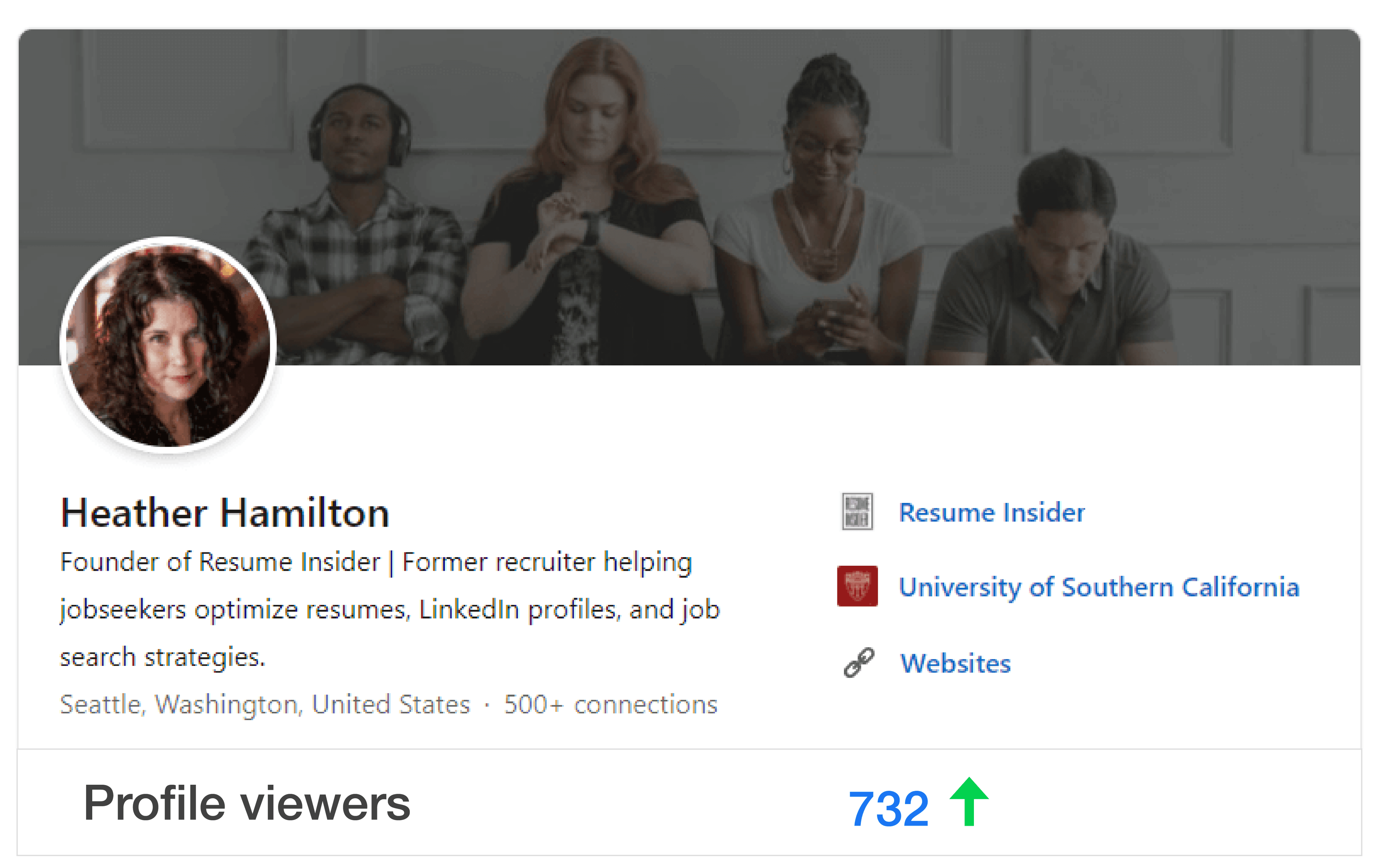
You can measure the appeal of your profile by monitoring the profile views. Optimising your profile increases your visibility on the platform and opens you up to more opportunities. So how can you get your profile in front of more people? 


Optimise your profile headline and summary


Your headline and summary are prime real estate on your LinkedIn profile. They should be attention-grabbing and informative. Your headline should display your current role and key skills. In the summary, you will need to craft an engaging story about your professional journey and accomplishments so far. This is your chance to engage visitors immediately and encourage them to explore your profile further.


Showcase a suitable profile photo


Your profile photo is often the first thing that people notice. Ensure it's a high-quality, professional image that aligns with your industry and, where possible, shows a bit of your personality. A friendly, approachable photo can make a significant difference in how others perceive you. 


Develop a strong experience section


Your professional experience is key when people are viewing your profile. Complete this section carefully and be as detailed as possible, highlighting your achievements, responsibilities, and skills. Use action-oriented language to highlight your contributions.


Leverage keywords


Use relevant keywords throughout your profile, especially in your headline and summary. These keywords help your profile appear in searches by potential employers or collaborators. They will help your profile stand out.


Grow your network

Expanding your network is a sure way to increase profile views. You can connect with colleagues, alumni, professionals in your field, people who share common interests in your industry, and individuals you may meet at networking events. A larger network exposes your profile to more potential views.


You can also join and participate in LinkedIn groups related to your industry or interests. Active group engagement not only expands your network but can also lead to more profile views.


Share valuable conten


Consistently sharing updates, experiences and engaging with your network, through comments and likes, can draw more attention to your profile. As you show your interest and actively participate in discussions, your visibility will improve.


Request recommendations


Positive endorsements and recommendations from colleagues, managers and fellow professionals you may have worked with in the past greatly enhance your credibility. These recommendations can encourage more profile views and show your professional strengths.


Analyse your insights and make adjustments

LinkedIn provides insights into who's viewing your profile. Take advantage of this information to understand your audience better. You can also use the information provided to you on the Vulse Analytics Tool. Adjust your profile based on this data, tailoring it to meet the interests and expectations of your visitors.


LinkedIn is a large, growing platform, that has a lot of potential. Your profile is your digital presence, and profile views are a reflection of your reach and impact. By optimising your profile and actively engaging on the platform, you can significantly increase your profile views and open doors to new connections and opportunities. Test these strategies for your brand and watch your LinkedIn profile become a magnet for your fellow professionals and target audience.


Vulse ArtVulse ArtVulse Art
Vulse Art

You May also be interested in

  • blog img

    How To Measure ROI Of B2B Employee Personal Branding Programs

    Employee personal brands extend your company's reach, but without measurement, it is hard to justify resources.This guide helps B2B marketing and HR teams build a clear, defensible approach to reporting business outcomes from employee social activity on LinkedIn and other professional channels.Purpose: Turn activity into measurable outcomes.Scope: Awareness, engagement, lead signals, and talent impact.Outcome: A replicable measurement plan and dashboard checklist.Start with clear goals and mapped outcomesThe first step is to link employee activity to business outcomes. Use three goal buckets:Awareness: Reach, impressions, profile views.Engagement and trust: Comments, shares, follower growth, sentiment.Demand and talent signals: leads, meeting requests, job inquiries.For each bucket, define one primary KPI and two supporting metrics. That keeps reporting focused and aligns to stakeholders.Attribution models that work for employee advocacyEmployee posts are often organic and multi-touch. Use pragmatic attribution:Direct attribution for actions that clearly originate from an employee post, like a tracked link click that results in a demo booking.Assisted attribution for leads where employee content increased engagement during the buying process, measured via lead surveys or lead scoring uplift.Correlation tracking when direct links are missing: track timing of spikes in inbound inquiries after coordinated employee campaigns.Combine these with UTM parameters, dedicated landing pages, and short-form tracking to connect employee activity to conversions.Practical tipAlways append UTM tags to campaign links and add a hidden field or source on forms that captures "employee_post" values. This makes direct attribution clean and repeatable.Suggested KPI set for B2B teamsBelow is a compact KPI set that balances visibility and business outcomes.Reach: Total impressions and profile views from employee posts.Engagement rate: Likes, comments, shares divided by impressions.Lead signals: Demo requests, content downloads, or contact form submissions tied to employee campaigns.Talent signals: Inbound recruiter messages and job application volume resulting from employee content.Sales influence: Number of opportunities where a seller cites employee content as a touchpoint.Building a simple dashboardCombine platform analytics with CRM and web analytics to create a single source of truth. A typical dashboard has three panels:Activity panel: Posts, shares, and top-performing employees.Engagement panel: Impressions, engagement rate, and follower lift.Outcome panel: Leads attributed, demo requests, and talent inbound metrics.Use an employee advocacy solution to centralize post scheduling and analytics. See how built-in reporting can speed analysis on an employee advocacy analytics page.How to calculate a simple ROIROI for personal branding programs is often a mixture of direct revenue and soft value. Use this conservative formula to start:Sum direct revenue attributed to employee-driven leads over a period.Add estimated value of assisted conversions using a conservative uplift percentage.Divide by program cost including platform, content creation, and team time.This produces a monetary ROI figure you can present to leadership. Be explicit about assumptions and update them with real data over time.Operational checklist to scale measurementApply these practical rules to keep measurement consistent:Standardize UTMs and naming conventions across employee campaigns.Automate data ingestion from LinkedIn and your advocacy platform into your BI tool.Train employees to use trackable links and to tag campaigns in post copy when asked.Schedule a monthly review with marketing, sales, and HR to review dashboard insights.Vulse customers often pair the platform with a CRM to close the loop between post and pipeline. Learn more on our features page about LinkedIn analytics and reporting.Example: 90-day reporting cadenceRun this lightweight cadence for the first 90 days:Week 0: Baseline metrics for profiles, impressions, and leads.Week 1 to 8: Run two focused campaigns and collect UTM-tagged conversions.Week 12: Produce a stakeholder report with direct revenue, assisted conversions, and talent signal changes.Repeat and refine goals based on what moves the needle.Evidence and further readingResearch shows employee-shared content generates higher trust and click-through rates than brand-only content. For context, LinkedIn's guidance on employee advocacy provides practical benchmarks and best practices, which can help calibrate expectations: LinkedIn Marketing Solutions.For measuring social ROI and building dashboards, HubSpot's guide to social media ROI is a useful practical resource: HubSpot Blog.Frequently asked questionsQ: How soon can we expect measurable results?A: You can see awareness and engagement shifts within 30 days. Attribution to pipeline typically takes 60 to 90 days depending on sales cycles.Q: Do we need an employee advocacy tool to measure ROI?A: Tools make tracking and reporting far easier but you can start with manual UTMs and CRM tagging. A platform scales measurement and reduces manual work.Q: Which metric should executives care about most?A: That depends on priorities. For revenue-focused leaders show attributed pipeline and deals. For talent-focused teams highlight inbound candidate volume and recruiter touchpoints.

    Loading

    How To Measure ROI Of B2B Employee Personal Branding Programs

    by - Rob Illidge -

  • blog img

    How To Scale B2B Personal Branding Faster Using Team Content Pillars

    In this guide, we share a repeatable framework to help B2B marketing and HR teams scale authentic LinkedIn personal brands across your organization.Discover what content pillars are, how to build them, and how to amplify them with an employee advocacy platform.Why team content pillars matter for B2B personal brandingIndividual leaders can create strong personal brands, but scaling impact across an organization requires shared focus.Content pillars are repeatable themes your people post about, topics that map to company strengths and buyer interests.Faster onboarding for new employee advocates, consistent messaging, and easier content creation that still feels personal.Research shows audiences trust employee content more than brand posts, so enabling many employees to post purposefully increases credibility and reach.For context on employee-led reach, see LinkedIn’s insights on creator and employee content strategies.What are content pillars for B2B teams?Content pillars are 3 to 5 core themes your team uses to guide LinkedIn posts, long-form articles, and micro-videos. Examples for a B2B SaaS company might be:Product value and customer outcomesIndustry trends and researchCareer advice and leadership lessonsCustomer stories and case highlightsEach pillar should include suggested formats, tone, and simple prompts so employees can make posts quickly while staying on brand.How to build practical content pillars in 5 stepsMap buyer and employee needs. Interview sales and customer-facing teams to align pillars with buyer questions and employee expertise.Pick 3 to 5 pillars. Fewer pillars make it easier for employees to stay consistent.Create post templates and prompts. Provide 3 headline templates, two image suggestions, and CTA options per pillar.Provide reusable assets. Share slide decks, quote images, and short video clips employees can personalize. This is where an employee advocacy platform streamlines distribution and tracking.Train and pilot. Run a 4-week pilot with 10-20 advocates, collect feedback, then scale with playbooks and monthly content calendars.How to keep posts personal but on-messageThe balance is simple: give structure but encourage authentic voice. Instead of providing full captions, give bullet-point talking points and a suggested first line to reduce friction.Use an employee advocacy platform to push approved assets, measure engagement, and reward contributors. Platforms designed for employee advocacy can also surface high-performing posts and suggest personalization tips.Vulse’s approach focuses on personal branding while ensuring compliance and easy sharing.HubSpot’s guide on personal branding provides useful tips on tone and narrative that pairs well with pillar-based programs.Measure what mattersMove beyond likes. Track metrics that tie to business outcomes and brand reach:Share rate: percent of invited advocates who postReach from employee networks: impressions and profile views driven by employee postsConversion signals: inbound leads and meeting requests referencing employee contentCorrelate spikes in profile views and inbound demos after advocacy campaigns to prove impact. For high-level trust and credibility stats, consult industry trust research such as the Edelman Trust Barometer.Practical tips to keep momentumRun short, recurring challenges to surface quick wins.Share monthly content reports and celebrate top contributors.Rotate pillar ownership so different teams bring fresh perspectives.Keep assets bite-sized: 1-slide images, 30-second clips, and one-sentence hooks.Common challenges and how to avoid themAvoid overly prescriptive scripts. Encourage personal anecdotes instead.Don’t assume one size fits all. Provide pillar variations for product, sales, and customer success functions.Prevent burnout by spacing required activity and recognizing volunteers.Frequently Asked Questions (FAQ)Q: How many pillars should we start with?A: Start with 3 pillars. It gives enough variety without overwhelming advocates.Q: Can employees customize company-provided assets?A: Yes. Provide editable templates and short personalization prompts so posts remain authentic.Q: What’s the ideal cadence for employee posts?A: Aim for 1 to 2 posts per month per advocate during the first 3 months, then increase as the program matures.

    Loading

    How To Scale B2B Personal Branding Faster Using Team Content Pillars

    by - Rob Illidge -

  • blog img

    Build B2B Employee Video Brands on LinkedIn to Drive Trust and Pipeline

    Text posts are easy. Video feels harder. But for B2B personal branding, video builds trust faster than any other format.Buyers see faces, hear tone, and pick up context that text alone cannot convey. For buying committees evaluating vendors, watching an employee explain a concept creates credibility and memorability that a written post simply cannot match.What this guide covers:Why video outperforms text for B2B personal brandingA 5-step framework to launch employee video programmesProduction shortcuts that remove frictionRepurposing tactics to maximise ROI on recording timeMeasurement guidance to tie video activity to pipelineWhy video matters for B2B personal brandingThe data is clear: video drives engagement on LinkedIn.LinkedIn's own research shows that native video generates 5x more engagement than other content types on the platform. Wyzowl's State of Video Marketing 2024 found that 91% of businesses now use video as a marketing tool, up from 61% in 2016.But the real advantage for B2B is trust acceleration.Edelman's Trust Barometer consistently shows that people trust "someone like me" more than corporate communications. When that someone appears on video, the trust signal intensifies. Viewers see authenticity that polished brand content cannot replicate.The completion rate advantageShort-form video (under 90 seconds) drives significantly higher completion rates than longer content. Vidyard's Video Benchmarks Report shows that videos under 60 seconds have an average retention rate of 68%, compared to just 25% for videos over 20 minutes.For busy professionals scrolling LinkedIn, a 60-second insight video is far more likely to be watched completely than a 5-minute explainer.Who should own employee video personal brandingThis is a shared programme between marketing, communications, and HR.FunctionResponsibilityMarketingContent frameworks, measurement, amplificationCommunicationsCoaching, messaging guardrails, crisis protocolsHRParticipation incentives, policies, recognitionGallup's research on employee engagement shows that recognition drives participation. When HR treats video contributions as valued work (not extra work), adoption increases.Use an employee advocacy platform to coordinate requests, approvals, and distribution at scale. Centralised tools reduce friction and provide the analytics needed to prove ROI.Practical 5-step framework to launch video personal brandsStep 1: Define signature formatsPick two repeatable formats employees can commit to. Fixed formats simplify production and reduce decision fatigue.Recommended formats:FormatLengthPurpose90-second insight60-90 secQuick takeaway on an industry trendCustomer micro-case60-90 secExplain a customer result (respecting NDAs)How-to clip60-120 secDemonstrate a tip, tool, or processHot take30-60 secBrief opinion on breaking newsContent Marketing Institute research shows that consistent formats build audience expectations and improve engagement over time. Viewers learn what to expect and return for more.The key is repeatability. An employee who commits to one 90-second insight video every two weeks will build more presence than someone who attempts a complex production once and burns out.Step 2: Keep production simpleForget expensive equipment. Modern smartphones shoot excellent video. The barriers to entry have never been lower.Basic production checklist:Phone camera (iPhone or recent Android)Quiet room with minimal echoSimple lapel mic ($15-$30 options work fine)Natural light or a ring lightClean background (bookshelf, plain wall, or branded backdrop)Landscape for LinkedIn feed, vertical for mobile-first viewingWistia's production research confirms that audio quality matters more than video quality. Viewers tolerate slightly grainy video but abandon content with poor sound immediately.One message per clip. Do not try to cover multiple topics. State the insight, explain briefly, and end with a single CTA (profile visit, article link, or event registration).Batch recording tip: Record 4-6 clips in one session. This lets employees maintain posting cadence without scheduling weekly recording time. One focused hour can produce a month of content.Step 3: Repurpose for scaleOne recorded clip can become multiple content assets:OriginalRepurposed Assets90-second videoFull LinkedIn post with videoTranscript as text-only post30-second highlight teaserQuote image for engagementLinkedIn article expanding the ideaAudio clip for internal podcastHubSpot's content repurposing guide shows that repurposing can extend content ROI by 3-5x without additional production time.This approach multiplies reach while keeping employee time investment low. The person records once; marketing handles the rest.Store assets in an internal content library so employees can access approved clips, captions, and images when they are ready to post.Step 4: Distribute and amplifyProduction is half the battle. Distribution determines reach.Provide ready-to-post assets:Pre-written captions employees can use or adapt2-3 relevant hashtags (not more, based on LinkedIn's current best practices)Suggested posting times based on audience activityCoordinate early engagement. Richard van der Blom's LinkedIn algorithm research shows that engagement in the first 60 minutes significantly impacts distribution. Encourage colleagues to watch, comment, and share within that window.Use your employee advocacy tool to:Schedule posts for optimal times per employee time zoneSend reminders when videos are ready to publishTrack engagement across the teamIdentify top-performing content for further amplificationConsider promoting top-performing videos as Thought Leader Ads to extend reach beyond organic networks.Step 5: Measure what mattersTrack metrics at three levels:Content performance:MetricSourceWhat It Tells YouViewsLinkedIn AnalyticsRaw visibilityCompletion rateLinkedIn AnalyticsContent resonanceEngagement rateLinkedIn AnalyticsAudience responseSharesLinkedIn AnalyticsAmplification potentialProfile impact:MetricSourceWhat It Tells YouProfile viewsLinkedIn AnalyticsDiscovery increaseConnection requestsLinkedInNetwork growthFollower growthLinkedInAudience buildingBusiness outcomes:MetricSourceWhat It Tells YouLeads mentioning videoCRMDirect attributionMeetings bookedCRMPipeline impactInbound enquiriesSales teamAwareness effectHubSpot's guidance on measuring video ROI provides frameworks for connecting engagement metrics to pipeline goals.The goal is tying video activity to outcomes. When you can show that employees who post video generate more inbound leads, the programme sells itself internally.Governance and coaching: make it safe and effectiveVideo feels riskier than text. Employees worry about saying the wrong thing, looking unprofessional, or representing the company poorly.Good governance removes that uncertainty.Create a one-page playbook covering:Topics that are encouraged vs. off-limitsCompetitor mention guidelinesCustomer confidentiality boundariesDisclosure requirements (if applicable)Approval path for sensitive topicsFINRA's social media guidance provides a framework for regulated industries. Adapt the principles to your context.Offer micro-coaching sessions. A 15-minute call before someone records their first video dramatically improves quality and confidence. Cover framing, audio check, and message clarity.Keep governance light. The goal is enabling participation, not blocking it. If approval takes a week, employees will stop submitting content. Aim for 24-48 hour turnaround on reviews.Sprout Social's employee advocacy research found that overly complex approval processes are the number one killer of advocacy programmes. Simplify ruthlessly.Quick starter plan for the first 90 daysWeeks 1-2: FoundationSelect 8 volunteer employees (mix of roles and seniority)Finalise two video formats with templatesConduct 30-minute training on production basicsEach participant records 4 clips in a batch sessionWeeks 3-6: LaunchPublish 1 video per employee every 10 daysMonitor early engagement metricsProvide individual coaching based on performanceCelebrate early wins internallyWeeks 7-12: ScaleExpand to 20 employees based on learningsAutomate scheduling through advocacy platformEstablish repurposing workflow with marketingReport performance to stakeholders with pipeline attributionCommon objections and responses"I am not comfortable on camera"Most people feel this way initially. Start with audio-only or text-on-screen formats. Build confidence gradually. Many reluctant participants become enthusiastic advocates once they see engagement on their first video."I do not have time"Batch recording solves this. One hour every 4-6 weeks produces enough content to maintain presence. Provide scripts and talking points so employees are not starting from scratch."What if I say something wrong?"That is what the approval workflow is for. Review catches issues before publication. And authenticity beats perfection. Minor imperfections make content feel real."Our industry is too boring for video"Every industry has problems worth solving and insights worth sharing. Caterpillar makes heavy machinery interesting on social media. Your industry is not more boring than tractors.Tools and resourcesProduction:Descript - Video editing with transcript-based editingCanva - Quote images and video templatesRiverside - Remote recording for interviewsDistribution:Vulse - Employee advocacy scheduling and analyticsLinkedIn Campaign Manager - Thought Leader Ads for amplificationLearning:LinkedIn Learning video courses - Production skillsWistia's video marketing guides - Strategy and measurementHow long should B2B personal branding videos be on LinkedIn?Aim for 60 to 90 seconds for most professional posts. Vidyard's research shows shorter clips drive higher completion rates and are easier for employees to produce consistently. Save longer formats for deep-dive topics where audience intent is already high.Do employees need fancy equipment?No. Modern phone cameras plus a quiet room and a simple lapel mic are enough. Focus on clear audio, steady framing, and a single message per clip. Production polish matters less than authenticity and consistency.How do we encourage employees to share consistently?Use a mix of recognition, micro-training, and tools that reduce friction. Provide ready-made captions, recommended posting times, and a predictable cadence. When posting becomes routine rather than a special project, consistency follows.Should we script videos or let employees speak naturally?Provide bullet points rather than full scripts. Scripted videos often feel stiff. Bullet points keep the message on track while allowing natural delivery. Review the first take and coach from there.

    Loading

    Build B2B Employee Video Brands on LinkedIn to Drive Trust and Pipeline

    by - Rob Illidge -

Revolutionise Your LinkedIn Output Today

Got a question? Give us a call or start your free trail today