Vulse ArtVulse Art
Home/How-to Guides

Expert Guide - How To Create LinkedIn Post Ideas On Vulse

  • How-To Guides|
  • LinkedIn Strategy
blog-image

Ready to improve your LinkedIn content creation process?


Look no further. We're here as your ultimate companion for generating captivating post ideas effortlessly.


Engaging users quickly has never been so important, and with Vulse we equip you with the tools you need to stand out in the LinkedIn crowd. Let's get to it and start creating outstanding LinkedIn posts together.


Step 1: Login to create LinkedIn post ideas


First things first, let's dive into the Vulse dashboard. This is where the magic begins, offering you a seamless experience from content ideas to scheduling your content.


Step 2: Start planning themes for your LinkedIn content strategy


Once inside, head over to the “Content Theme Planner” – the only you need for LinkedIn content ideas.


This feature is designed to speed up the content ideation process, ensuring your themes are as cohesive as they are compelling.


It helps in discovering some of the best LinkedIn content ideas for various themes, including creative 'fill-in-the-blank' LinkedIn posts that encourage audience participation and increase engagement.


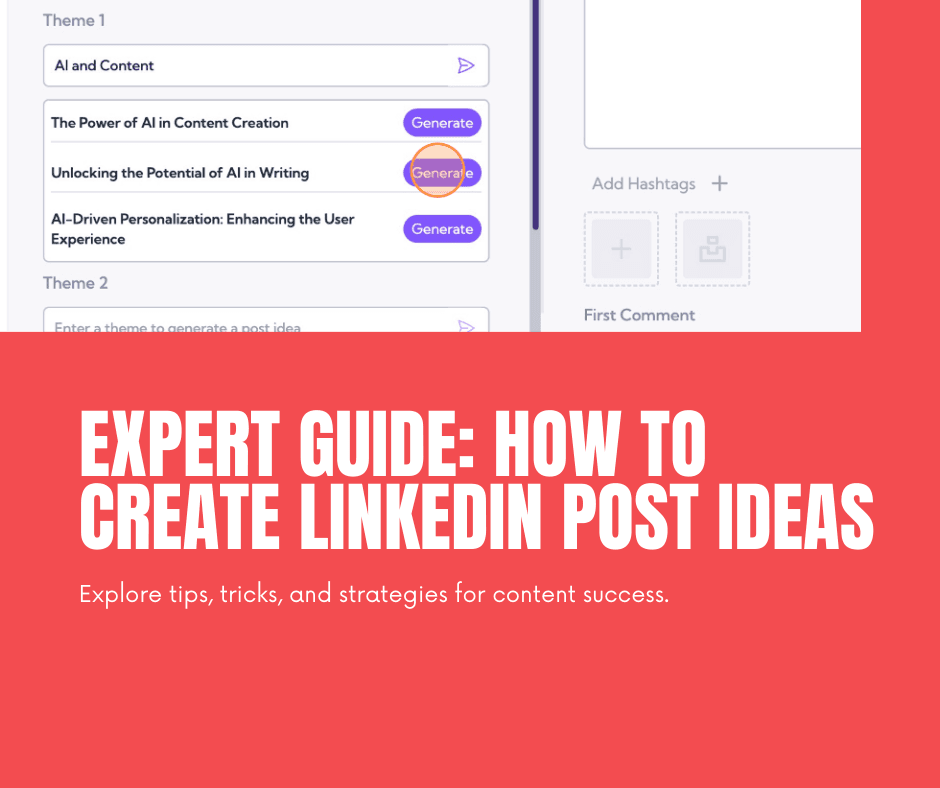
Step 3: Enter your theme


Add your theme to the field, play around with this and test to see what works for you.


Whether it’s “AI and Content” or “Leadership Insights,” Vulse will generate tailored LinkedIn post ideas that resonate with your audience.


Step 4: Choose the length of your posts


Adapt your posts to perfection by selecting the ideal length – whether you prefer a concise snippet or a deep dive into your topic, Vulse has you covered.


Step 5: Generate LinkedIn post ideas


With a simple click of a button, watch as Vulse works its magic, presenting you with three post ideas tailored to your chosen theme and length. 


Vulse offers a wide range of content ideas, from long-form articles to engaging carousels, aligning perfectly with your LinkedIn content strategy by providing diverse and strategic content types to keep your audience engaged.


Step 6: Schedule your best LinkedIn content


Found an idea that sparks joy?


Schedule it for the perfect moment to maximise engagement and impact. With Vulse's scheduling feature, maintaining a consistent posting schedule has never been easier.


Step 7: Set the date


Choose the date and time for your post to go live, ensuring it reaches your audience at the optimal moment for maximum visibility and impact.


Step 8: Double-check your work


Before sending your post out to LinkedIn's network, take a moment to review and refine. Attention to detail is key to crafting posts that resonate with your audience.


Step 9: Monitor Your LinkedIn posts' performance with your audience


Once your post is live, leverage Vulse’s analytics tools to monitor its performance and gather valuable insights.


Use this data to refine your strategy and create even more impactful content in the future.


Understanding and engaging with the LinkedIn audience through monitoring post performance is crucial for tailoring content that resonates and drives engagement.

Vulse ArtVulse ArtVulse Art
Vulse Art

You May also be interested in

  • blog img

    How To Scale B2B Personal Branding Faster Using Team Content Pillars

    In this guide, we share a repeatable framework to help B2B marketing and HR teams scale authentic LinkedIn personal brands across your organization.Discover what content pillars are, how to build them, and how to amplify them with an employee advocacy platform.Why team content pillars matter for B2B personal brandingIndividual leaders can create strong personal brands, but scaling impact across an organization requires shared focus.Content pillars are repeatable themes your people post about, topics that map to company strengths and buyer interests.Faster onboarding for new employee advocates, consistent messaging, and easier content creation that still feels personal.Research shows audiences trust employee content more than brand posts, so enabling many employees to post purposefully increases credibility and reach.For context on employee-led reach, see LinkedIn’s insights on creator and employee content strategies.What are content pillars for B2B teams?Content pillars are 3 to 5 core themes your team uses to guide LinkedIn posts, long-form articles, and micro-videos. Examples for a B2B SaaS company might be:Product value and customer outcomesIndustry trends and researchCareer advice and leadership lessonsCustomer stories and case highlightsEach pillar should include suggested formats, tone, and simple prompts so employees can make posts quickly while staying on brand.How to build practical content pillars in 5 stepsMap buyer and employee needs. Interview sales and customer-facing teams to align pillars with buyer questions and employee expertise.Pick 3 to 5 pillars. Fewer pillars make it easier for employees to stay consistent.Create post templates and prompts. Provide 3 headline templates, two image suggestions, and CTA options per pillar.Provide reusable assets. Share slide decks, quote images, and short video clips employees can personalize. This is where an employee advocacy platform streamlines distribution and tracking.Train and pilot. Run a 4-week pilot with 10-20 advocates, collect feedback, then scale with playbooks and monthly content calendars.How to keep posts personal but on-messageThe balance is simple: give structure but encourage authentic voice. Instead of providing full captions, give bullet-point talking points and a suggested first line to reduce friction.Use an employee advocacy platform to push approved assets, measure engagement, and reward contributors. Platforms designed for employee advocacy can also surface high-performing posts and suggest personalization tips.Vulse’s approach focuses on personal branding while ensuring compliance and easy sharing.HubSpot’s guide on personal branding provides useful tips on tone and narrative that pairs well with pillar-based programs.Measure what mattersMove beyond likes. Track metrics that tie to business outcomes and brand reach:Share rate: percent of invited advocates who postReach from employee networks: impressions and profile views driven by employee postsConversion signals: inbound leads and meeting requests referencing employee contentCorrelate spikes in profile views and inbound demos after advocacy campaigns to prove impact. For high-level trust and credibility stats, consult industry trust research such as the Edelman Trust Barometer.Practical tips to keep momentumRun short, recurring challenges to surface quick wins.Share monthly content reports and celebrate top contributors.Rotate pillar ownership so different teams bring fresh perspectives.Keep assets bite-sized: 1-slide images, 30-second clips, and one-sentence hooks.Common challenges and how to avoid themAvoid overly prescriptive scripts. Encourage personal anecdotes instead.Don’t assume one size fits all. Provide pillar variations for product, sales, and customer success functions.Prevent burnout by spacing required activity and recognizing volunteers.Frequently Asked Questions (FAQ)Q: How many pillars should we start with?A: Start with 3 pillars. It gives enough variety without overwhelming advocates.Q: Can employees customize company-provided assets?A: Yes. Provide editable templates and short personalization prompts so posts remain authentic.Q: What’s the ideal cadence for employee posts?A: Aim for 1 to 2 posts per month per advocate during the first 3 months, then increase as the program matures.

    Loading

    How To Scale B2B Personal Branding Faster Using Team Content Pillars

    by - Rob Illidge -

  • blog img

    Vulse vs DSMN8: Which Employee Advocacy Platform Fits Your Team

    Employee advocacy has become essential for B2B brands. With LinkedIn's algorithm favouring personal profiles over company pages, businesses that activate their employees as brand advocates see significantly higher engagement and reach.When researching employee advocacy platforms, DSMN8 often appears in search results. It's a well-established player with enterprise clients. But for many teams, particularly those focused on LinkedIn, DSMN8's approach introduces complexity and cost that simply isn't necessary.This comparison examines both platforms to help you understand which approach makes sense for your team.DR: Vulse vs DSMN8 at a GlanceFactorVulseDSMN8Best ForTeams wanting LinkedIn results fastEnterprises needing multi-platform complexityStarting Price£17/user/month$850/month minimumLinkedIn APINative integrationStandard connectionPlatformsLinkedIn (where B2B happens)LinkedIn, Twitter, Facebook, Instagram, XingSetup TimeMinutesWeeks (onboarding required)Ideal Team Size5-500 employees100+ employees with dedicated adminTop Tip: If LinkedIn is where your audience lives, Vulse delivers faster results at a fraction of the cost. DSMN8 suits enterprises with large budgets who need to manage advocacy across multiple platforms they may never fully use.What Is Employee Advocacy Software?Employee advocacy software enables companies to distribute approved content through employee social networks. Instead of relying solely on corporate pages and paid ads, these platforms help employees share company content authentically.The results speak for themselves. Content shared by employees receives up to 8x more engagement than content shared by brand pages. Employee networks also have 10x more connections than a typical company page has followers.Both Vulse and DSMN8 aim to make this process simpler. The difference lies in their approach.Vulse Overview: Built for LinkedIn ResultsVulse is a B2B employee advocacy platform built specifically for LinkedIn. With unique LinkedIn API access, Vulse focuses on helping teams maximise results on the platform where B2B buyers actually spend their time.Key Vulse FeaturesNative LinkedIn API integration providing real-time analytics unavailable in other platformsProprietary tone-of-voice model ensuring content sounds authentic, not robotic or copy-pastedContent scoring system that predicts post performance before publishingAI-powered content ideas and article summariser for faster content creationTeam leaderboards to drive healthy competition without complex reward administrationPersonal profile analytics alongside company page metricsContent scheduling with optimal timing suggestionsISO 27001 and GDPR certified for enterprise-grade securityVulse PricingPlanPriceBest ForPro£17/user/monthIndividual professionalsBusiness£37/user/monthTeams with company pagesEnterpriseCustomLarge organisationsVulse charges per user, so you only pay for employees actively participating. A 20-person team pays approximately £740/month on the Business plan.DSMN8 Overview: Enterprise ComplexityDSMN8 (pronounced "disseminate") is an employee advocacy platform targeting enterprise organisations. Founded in 2016, it offers multi-platform sharing and extensive features that come with corresponding complexity.DSMN8 FeaturesMulti-platform sharing across LinkedIn, Twitter, Facebook, Instagram, Xing, WhatsApp, and emailAuto-scheduling for employees who don't have time to engage with the platformGamification engine with leaderboards and rewards (requires budget for prizes)AI content assistant for caption generationManaged services available for teams who find the platform too complex to run themselvesNewsletter feature for internal communicationsExtensive integrations with enterprise toolsDSMN8 PricingTierStarting PriceRealityStartup$850/monthMinimum commitment regardless of team sizeScaleCustomAdds customer success managerEnterpriseCustomRequired for larger deploymentsDSMN8 requires annual contracts and charges a flat monthly rate. For a small team of 10, you're paying $85 per person per month before you've activated a single employee.Feature Comparison: What Actually MattersLinkedIn PerformanceFor B2B companies, LinkedIn is where decisions happen. 80% of B2B leads from social media come through LinkedIn.Vulse was purpose-built for LinkedIn with native API access. This means real-time data, accurate analytics, and features designed specifically for how LinkedIn works. When LinkedIn changes its algorithm, Vulse adapts.DSMN8 supports LinkedIn alongside five other platforms. This breadth means their LinkedIn features compete for development resources with platforms your team likely won't use. The connection is standard rather than native.The difference: Vulse's LinkedIn focus means your employees get a tool optimised for where they'll actually post.Content AuthenticityNothing kills an advocacy programme faster than employees sharing identical, robotic posts.Vulse includes a proprietary tone-of-voice model that ensures each employee's posts sound like them, not like a corporate press release. Content scoring predicts performance before posting, helping employees optimise without endless trial and error.DSMN8 offers multiple caption options per post to avoid duplicate content. This helps, but employees still choose from pre-written options rather than content shaped to their voice.The difference: Vulse posts sound human. That's what drives engagement.Getting StartedAdoption is the single biggest challenge in employee advocacy. If employees don't use the platform, features don't matter.Vulse is designed for quick adoption. Employees can start sharing content within minutes of signing up. The interface focuses on what matters: creating and sharing content on LinkedIn. There's no training required because the platform is intuitive.DSMN8 includes onboarding support because setup typically requires it. Enterprise deployments take weeks, not days. The platform offers managed services for companies who find ongoing management too demanding.The difference: If you need managed services to run your advocacy platform, the platform may be the problem.Analytics and ReportingUnderstanding what's working is essential for improving results.Vulse provides real-time LinkedIn analytics through direct API integration. Weekly automated content reports summarise performance and deliver recommendations without requiring you to navigate complex dashboards. You see what's working and what to do next.DSMN8 offers extensive analytics with customisable dashboards, earned media value calculations, and detailed segmentation. This depth serves enterprises with dedicated analytics teams. For most marketing teams, it's more data than anyone has time to analyse.The difference: Vulse gives you actionable insights. DSMN8 gives you a data warehouse.IntegrationsBoth platforms connect with other tools, but the question is whether you need those connections.Vulse integrates with LinkedIn (with unique API access), CRMs, and analytics tools. The focus remains on doing LinkedIn exceptionally well.DSMN8 connects with Slack, Microsoft Teams, Salesforce, Marketo, Google Analytics, Adobe Analytics, and single sign-on providers. This breadth serves enterprises with complex tech stacks but adds configuration overhead for everyone else.The difference: More integrations means more setup, more maintenance, and more that can break.SecurityBoth platforms meet enterprise security requirements with ISO 27001 certification. Vulse is additionally GDPR certified with robust access management and incident response frameworks.Pricing Reality CheckThe pricing models tell the real story:Team SizeVulse (Business)DSMN8 (Startup)You're Paying DSMN810 users~£370/month$850/month130% more25 users~£925/month$850/month+Similar, but locked in50 users~£1,850/monthCustomEnterprise sales processWith Vulse, you pay for active advocates. Scale up or down as adoption grows. No annual lock-in on standard plans.With DSMN8, you pay $850/month whether you have 10 active employees or 2. Annual contracts mean you're committed before you've proven the programme works.For most teams: Vulse costs less and lets you prove ROI before committing to enterprise spend.What About Multi-Platform?DSMN8's multi-platform support sounds attractive. But consider your reality:Where do your B2B buyers spend time? LinkedIn.Where do employee posts drive pipeline? LinkedIn.Where do candidates research your employer brand? LinkedIn.Paying for Twitter, Facebook, Instagram, and Xing support makes sense if your employees will actively use those platforms for business purposes. Most don't.Vulse focuses on LinkedIn because that's where B2B results happen. You're not paying for platforms that sit unused.Who Should Choose Vulse?Vulse is the right choice if:LinkedIn is your primary B2B channel (it probably is)You want employees posting within days, not monthsYour budget is realistic for a growing programmeYou value authentic content over volumeYou need accurate LinkedIn data for reportingYour team is between 5 and 500 employeesYou want a focused tool rather than an enterprise platform you'll never fully useBook a Vulse demo to see the platform in action.When DSMN8 Might Make SenseDSMN8 could work if:You genuinely need employees sharing across multiple platforms regularlyYour organisation has 500+ employees and dedicated programme administratorsYou have budget for $10,000+ annually before proving ROIYour enterprise requires extensive integrations with Salesforce, Marketo, and AdobeYou prefer vendors to run the programme for you via managed servicesFor most B2B marketing teams, these requirements don't apply.The VerdictDSMN8 built a platform for enterprises who want everything. That means complexity, cost, and features most teams never touch.Vulse built a platform for teams who want LinkedIn results. That means focus, speed, and pricing that makes sense.If you're evaluating employee advocacy platforms, the question isn't which has more features. It's which will get your employees actually posting, consistently, on the platform where your buyers pay attention.For LinkedIn-focused B2B companies, that's Vulse.Frequently Asked QuestionsWhat is the main difference between Vulse and DSMN8?Vulse is a LinkedIn-specialised employee advocacy platform with native API integration and tone-matching AI, built for teams who want results without complexity. DSMN8 is a multi-platform enterprise solution with extensive features that require more budget, setup time, and ongoing administration.Which employee advocacy platform is better for LinkedIn?Vulse is purpose-built for LinkedIn with unique API access, real-time analytics, content scoring, and a proprietary tone-of-voice model. DSMN8 supports LinkedIn but spreads its development across six platforms, which means less depth in any single channel.How much does Vulse cost compared to DSMN8?Vulse starts at £17 per user per month, scaling with your team size. DSMN8 starts at $850 per month regardless of how many employees participate. For teams under 25 employees, Vulse typically costs 50-70% less while delivering LinkedIn-specific features DSMN8 lacks.Is DSMN8 overkill for small to mid-size companies?For most teams under 200 employees, DSMN8's pricing and complexity exceed what's needed. The $850 monthly minimum, annual contracts, and weeks-long onboarding process suit enterprises with dedicated administrators and large budgets, not growing marketing teams.Why doesn't Vulse support other social platforms?Vulse focuses on LinkedIn because that's where B2B engagement and lead generation happen. Rather than building mediocre support for six platforms, Vulse invests in making LinkedIn advocacy exceptional. Most B2B teams find this focus delivers better results than spreading effort across platforms their employees rarely use for business.How quickly can employees start using each platform?Vulse employees can start sharing content within minutes of signing up. The intuitive interface requires no training. DSMN8 deployments typically take weeks and include formal onboarding, which suggests the platform needs explanation before employees can use it effectively.Do I need managed services for employee advocacy?If a platform requires managed services to run effectively, that's a sign of complexity rather than a feature. Vulse is designed for marketing teams to manage themselves without dedicated administrators or external support.Is employee advocacy worth the investment?Absolutely. Content shared by employees receives up to 8x more engagement than brand content, and companies with advocacy programmes report 26% higher year-over-year revenue. The question is whether you need an enterprise platform to achieve those results, or whether a focused tool delivers the same outcomes at lower cost.Ready to Start Your Employee Advocacy Programme?The best employee advocacy programmes combine the right technology with clear goals and engaged employees. Complex platforms don't guarantee better results.Book a Vulse demo to see how LinkedIn-focused employee advocacy can amplify your brand's reach without enterprise complexity.

    Loading

    Vulse vs DSMN8: Which Employee Advocacy Platform Fits Your Team

    by - Rob Illidge -

  • blog img

    The Complete Guide To Employee Advocacy Training For High-Impact LinkedIn Results

    This article explains how to build a practical, repeatable microlearning program to turn employees into confident LinkedIn advocates.Here's our step-by-step 6-week plan, module ideas, delivery tips, and ways to measure and sustain participation.Short, weekly modules increase completion and confidence.Design modules for profile polish, content curation, posting, and compliance.Use cohort challenges, badges, and reporting to reinforce habits and show value.Why microlearning works for employee advocacyLong training sessions are a participation killer. Microlearning breaks onboarding into tiny, targeted bursts that employees can finish on a commute or between meetings.For employee advocacy, the goal is not to create social media experts but to build repeatable, brand-safe habits.Micro-modules reduce friction, increase retention, and let you iterate content based on performance and feedback.6-week microlearning onboarding planThis ready-made plan balances skill, confidence, and compliance. Each week includes a 5–12 minute lesson, a practical task, and a quick quiz or reflection.Week 1: Why advocacy matters and low-friction first stepsExplain program purpose, expectations, and benefits. Task: like or share one company post with a personal note.Week 2: LinkedIn profile polishTeach headline, summary, and experience tweaks that improve discoverability. Task: update headline and add a short summary line aligned with role.Week 3: Content types and curationShow the 3 content types you want (company news, thought leadership, human stories). Task: save or suggest 3 shareable pieces from a provided content pack.Week 4: Simple post frameworksTeach a 3-part post formula: hook, value, CTA. Task: draft and publish a short post using the template.Week 5: Compliance and brand guardrailsCover what employees can and cannot say, privacy rules, and how to escalate questions. Task: complete a 3-question compliance quiz.Week 6: Amplify and measureShow how advocacy ties to metrics: reach, profile views, referral traffic. Task: compare week 1 and week 6 metrics and share one learning.Essential micro-modules to includeProfile optimization checklist3 quick post templates with examplesContent curation playbook and a monthly content packShort compliance scenarios and a one-question escalation flowSimple metrics dashboard and how to read itDelivery formats and tools that improve completionChoose formats that match how your people work. Mobile-first video, bite-sized emails, and chat nudges outperform long PDFs.Short videos (60–120 seconds) and captionsInteractive quizzes and reflection promptsSlack or Teams nudges and cohort channels for peer feedbackMicro-certificates or badges delivered via email or LMSUse your employee advocacy platform for content distribution and tracking. For example, integrate with your content hub to push curated packs and track clicks.Motivation, reinforcement, and measurementTraining is only useful if habits stick. Combine social proof, recognition, and visible metrics to keep momentum.Cohort challenges: small groups complete tasks together and share results.Visible leaderboards: show top contributors and sample wins.Recognition rituals: highlight stories in internal newsletters or town halls.Tie your program to outcomes. Use simple KPIs like participation rate, average reach per post, and referral traffic to campaigns. If you need a measurement framework, see our guide on proving advocacy impact.Common roadblocks and how to fix themLow completion: reduce module length and add a 1-minute reward (badge or recognition).Fear of posting: offer templates, peer review, and a private practice channel.Compliance concerns: build clear do/don't examples and a fast escalation path.Content scarcity: provide a monthly content pack and allow employees to suggest ideas.Scaling beyond onboardingAfter the initial 6-week program, keep momentum with monthly micro-modules - product updates, customer wins, or personal storytelling prompts.Couple learning with incentives and recognition programs to sustain long-term participation and measurable results.Q: How long should each micro-module be?A: Aim for 5–12 minutes of content plus a 5-minute task. Shorter modules increase completion and repeat engagement.Q: What metrics prove training success?A: Participation rate, active advocates, average reach per post, profile views, and referral clicks to campaigns are practical starting KPIs.Q: Can we run onboarding without a dedicated advocacy platform?A: Yes, but platforms dramatically ease distribution, tracking, and content packaging. If you lack one, use a mix of email, Slack channels, and a simple spreadsheet for tracking.

    Loading

    The Complete Guide To Employee Advocacy Training For High-Impact LinkedIn Results

    by - Rob Illidge -

Revolutionise Your LinkedIn Output Today

Got a question? Give us a call or start your free trail today