Vulse ArtVulse Art
Home/How-to Guides

How Marketers Can Leverage LinkedIn To Connect With SMBs: Key Insights

  • How-To Guides|
  • LinkedIn Strategy
blog-image

LinkedIn has released a new report shedding light on the current state of small and medium-sized businesses (SMBs), focusing on business growth opportunities, challenges, information sourcing, and decision-making processes.


For marketers targeting SMBs, this report is a goldmine of insights that could help shape strategies and outreach efforts.


Understanding the SMB Landscape on LinkedIn


The LinkedIn report is based on a survey of 4,287 employees from businesses with fewer than 400 employees.


While the upper limit of 400 employees may be pushing the boundaries of a traditional SMB, the insights provided remain highly relevant to marketers targeting small and medium businesses.


LinkedIn’s SMB audience is fast-growing, with 150 million active SMBs on the platform today. In fact, engagement from SMBs has grown a staggering 25 times in the past two years.


According to LinkedIn’s research, SMBs are one of the platform’s most engaged audiences. This means that there is an enormous potential for businesses to leverage LinkedIn to reach and engage small business managers and decision-makers.


Key Challenges SMB Managers Are Facing


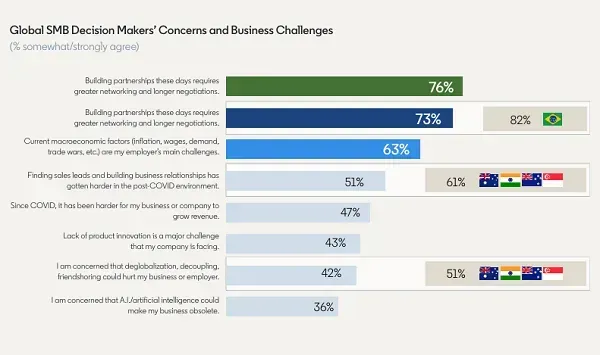
The report highlights the major challenges SMB managers are currently facing as they seek to grow their businesses.


Many SMBs are focusing their efforts on overcoming these hurdles, and understanding these challenges can help marketers better tailor their outreach to address the pain points of small business owners.


The report also touches on areas where SMBs are making investments to maximize business efficiency. For marketers, this presents an opportunity to showcase solutions that can help SMBs optimize processes and grow in a competitive environment.


Identifying Key Growth Points for SMBs


One of the key takeaways from the report is the focus on businesses with around 10 employees.


This is a critical growth point for SMBs, as companies at this size often face significant scaling challenges.


This provides a potential opportunity for marketers to reach SMBs at a pivotal moment in their growth cycle, offering products and services that can help them scale successfully.


How SMBs Source Relevant Information


Another crucial insight from the report is how SMBs source information relevant to their business.


Understanding where SMB managers turn for information is vital for marketers, as it can help refine content strategies and ensure that marketing efforts are directed toward the right platforms and channels.


In addition, the report delves into how SMBs perceive the value of social media for their business. LinkedIn, in particular, plays a central role as a trusted platform for SMBs to access industry news, share updates, and connect with other professionals.


Marketers who are strategic about their LinkedIn presence can tap into this growing SMB audience to build brand awareness and drive engagement.


Unlocking Opportunities with LinkedIn’s SMB Insights


The full "Meet the SMB" report, created in partnership with Intent, provides deeper insights into how SMBs make decisions, where they look for information, and how they source products.


This valuable data can help marketers refine their outreach strategies, develop content that resonates with SMBs, and create campaigns that drive more meaningful engagement.


The 42-page report is available for download on LinkedIn, and it’s an essential read for any marketer looking to target small to medium-sized businesses effectively.


Why This Report Is Essential for Marketers Targeting SMBs


If you’re seeking to connect with potential SMB customers, LinkedIn’s "Meet the SMB" report provides the essential information you need to refine your marketing approach.


By understanding where SMBs are focusing their efforts and what drives their decision-making processes, you can build more effective, data-driven strategies that resonate with this highly engaged and rapidly growing audience.

Vulse ArtVulse ArtVulse Art
Vulse Art

You May also be interested in

  • blog img

    Vulse vs DSMN8: Which Employee Advocacy Platform Fits Your Team

    Employee advocacy has become essential for B2B brands. With LinkedIn's algorithm favouring personal profiles over company pages, businesses that activate their employees as brand advocates see significantly higher engagement and reach.When researching employee advocacy platforms, DSMN8 often appears in search results. It's a well-established player with enterprise clients. But for many teams, particularly those focused on LinkedIn, DSMN8's approach introduces complexity and cost that simply isn't necessary.This comparison examines both platforms to help you understand which approach makes sense for your team.DR: Vulse vs DSMN8 at a GlanceFactorVulseDSMN8Best ForTeams wanting LinkedIn results fastEnterprises needing multi-platform complexityStarting Price£17/user/month$850/month minimumLinkedIn APINative integrationStandard connectionPlatformsLinkedIn (where B2B happens)LinkedIn, Twitter, Facebook, Instagram, XingSetup TimeMinutesWeeks (onboarding required)Ideal Team Size5-500 employees100+ employees with dedicated adminTop Tip: If LinkedIn is where your audience lives, Vulse delivers faster results at a fraction of the cost. DSMN8 suits enterprises with large budgets who need to manage advocacy across multiple platforms they may never fully use.What Is Employee Advocacy Software?Employee advocacy software enables companies to distribute approved content through employee social networks. Instead of relying solely on corporate pages and paid ads, these platforms help employees share company content authentically.The results speak for themselves. Content shared by employees receives up to 8x more engagement than content shared by brand pages. Employee networks also have 10x more connections than a typical company page has followers.Both Vulse and DSMN8 aim to make this process simpler. The difference lies in their approach.Vulse Overview: Built for LinkedIn ResultsVulse is a B2B employee advocacy platform built specifically for LinkedIn. With unique LinkedIn API access, Vulse focuses on helping teams maximise results on the platform where B2B buyers actually spend their time.Key Vulse FeaturesNative LinkedIn API integration providing real-time analytics unavailable in other platformsProprietary tone-of-voice model ensuring content sounds authentic, not robotic or copy-pastedContent scoring system that predicts post performance before publishingAI-powered content ideas and article summariser for faster content creationTeam leaderboards to drive healthy competition without complex reward administrationPersonal profile analytics alongside company page metricsContent scheduling with optimal timing suggestionsISO 27001 and GDPR certified for enterprise-grade securityVulse PricingPlanPriceBest ForPro£17/user/monthIndividual professionalsBusiness£37/user/monthTeams with company pagesEnterpriseCustomLarge organisationsVulse charges per user, so you only pay for employees actively participating. A 20-person team pays approximately £740/month on the Business plan.DSMN8 Overview: Enterprise ComplexityDSMN8 (pronounced "disseminate") is an employee advocacy platform targeting enterprise organisations. Founded in 2016, it offers multi-platform sharing and extensive features that come with corresponding complexity.DSMN8 FeaturesMulti-platform sharing across LinkedIn, Twitter, Facebook, Instagram, Xing, WhatsApp, and emailAuto-scheduling for employees who don't have time to engage with the platformGamification engine with leaderboards and rewards (requires budget for prizes)AI content assistant for caption generationManaged services available for teams who find the platform too complex to run themselvesNewsletter feature for internal communicationsExtensive integrations with enterprise toolsDSMN8 PricingTierStarting PriceRealityStartup$850/monthMinimum commitment regardless of team sizeScaleCustomAdds customer success managerEnterpriseCustomRequired for larger deploymentsDSMN8 requires annual contracts and charges a flat monthly rate. For a small team of 10, you're paying $85 per person per month before you've activated a single employee.Feature Comparison: What Actually MattersLinkedIn PerformanceFor B2B companies, LinkedIn is where decisions happen. 80% of B2B leads from social media come through LinkedIn.Vulse was purpose-built for LinkedIn with native API access. This means real-time data, accurate analytics, and features designed specifically for how LinkedIn works. When LinkedIn changes its algorithm, Vulse adapts.DSMN8 supports LinkedIn alongside five other platforms. This breadth means their LinkedIn features compete for development resources with platforms your team likely won't use. The connection is standard rather than native.The difference: Vulse's LinkedIn focus means your employees get a tool optimised for where they'll actually post.Content AuthenticityNothing kills an advocacy programme faster than employees sharing identical, robotic posts.Vulse includes a proprietary tone-of-voice model that ensures each employee's posts sound like them, not like a corporate press release. Content scoring predicts performance before posting, helping employees optimise without endless trial and error.DSMN8 offers multiple caption options per post to avoid duplicate content. This helps, but employees still choose from pre-written options rather than content shaped to their voice.The difference: Vulse posts sound human. That's what drives engagement.Getting StartedAdoption is the single biggest challenge in employee advocacy. If employees don't use the platform, features don't matter.Vulse is designed for quick adoption. Employees can start sharing content within minutes of signing up. The interface focuses on what matters: creating and sharing content on LinkedIn. There's no training required because the platform is intuitive.DSMN8 includes onboarding support because setup typically requires it. Enterprise deployments take weeks, not days. The platform offers managed services for companies who find ongoing management too demanding.The difference: If you need managed services to run your advocacy platform, the platform may be the problem.Analytics and ReportingUnderstanding what's working is essential for improving results.Vulse provides real-time LinkedIn analytics through direct API integration. Weekly automated content reports summarise performance and deliver recommendations without requiring you to navigate complex dashboards. You see what's working and what to do next.DSMN8 offers extensive analytics with customisable dashboards, earned media value calculations, and detailed segmentation. This depth serves enterprises with dedicated analytics teams. For most marketing teams, it's more data than anyone has time to analyse.The difference: Vulse gives you actionable insights. DSMN8 gives you a data warehouse.IntegrationsBoth platforms connect with other tools, but the question is whether you need those connections.Vulse integrates with LinkedIn (with unique API access), CRMs, and analytics tools. The focus remains on doing LinkedIn exceptionally well.DSMN8 connects with Slack, Microsoft Teams, Salesforce, Marketo, Google Analytics, Adobe Analytics, and single sign-on providers. This breadth serves enterprises with complex tech stacks but adds configuration overhead for everyone else.The difference: More integrations means more setup, more maintenance, and more that can break.SecurityBoth platforms meet enterprise security requirements with ISO 27001 certification. Vulse is additionally GDPR certified with robust access management and incident response frameworks.Pricing Reality CheckThe pricing models tell the real story:Team SizeVulse (Business)DSMN8 (Startup)You're Paying DSMN810 users~£370/month$850/month130% more25 users~£925/month$850/month+Similar, but locked in50 users~£1,850/monthCustomEnterprise sales processWith Vulse, you pay for active advocates. Scale up or down as adoption grows. No annual lock-in on standard plans.With DSMN8, you pay $850/month whether you have 10 active employees or 2. Annual contracts mean you're committed before you've proven the programme works.For most teams: Vulse costs less and lets you prove ROI before committing to enterprise spend.What About Multi-Platform?DSMN8's multi-platform support sounds attractive. But consider your reality:Where do your B2B buyers spend time? LinkedIn.Where do employee posts drive pipeline? LinkedIn.Where do candidates research your employer brand? LinkedIn.Paying for Twitter, Facebook, Instagram, and Xing support makes sense if your employees will actively use those platforms for business purposes. Most don't.Vulse focuses on LinkedIn because that's where B2B results happen. You're not paying for platforms that sit unused.Who Should Choose Vulse?Vulse is the right choice if:LinkedIn is your primary B2B channel (it probably is)You want employees posting within days, not monthsYour budget is realistic for a growing programmeYou value authentic content over volumeYou need accurate LinkedIn data for reportingYour team is between 5 and 500 employeesYou want a focused tool rather than an enterprise platform you'll never fully useBook a Vulse demo to see the platform in action.When DSMN8 Might Make SenseDSMN8 could work if:You genuinely need employees sharing across multiple platforms regularlyYour organisation has 500+ employees and dedicated programme administratorsYou have budget for $10,000+ annually before proving ROIYour enterprise requires extensive integrations with Salesforce, Marketo, and AdobeYou prefer vendors to run the programme for you via managed servicesFor most B2B marketing teams, these requirements don't apply.The VerdictDSMN8 built a platform for enterprises who want everything. That means complexity, cost, and features most teams never touch.Vulse built a platform for teams who want LinkedIn results. That means focus, speed, and pricing that makes sense.If you're evaluating employee advocacy platforms, the question isn't which has more features. It's which will get your employees actually posting, consistently, on the platform where your buyers pay attention.For LinkedIn-focused B2B companies, that's Vulse.Frequently Asked QuestionsWhat is the main difference between Vulse and DSMN8?Vulse is a LinkedIn-specialised employee advocacy platform with native API integration and tone-matching AI, built for teams who want results without complexity. DSMN8 is a multi-platform enterprise solution with extensive features that require more budget, setup time, and ongoing administration.Which employee advocacy platform is better for LinkedIn?Vulse is purpose-built for LinkedIn with unique API access, real-time analytics, content scoring, and a proprietary tone-of-voice model. DSMN8 supports LinkedIn but spreads its development across six platforms, which means less depth in any single channel.How much does Vulse cost compared to DSMN8?Vulse starts at £17 per user per month, scaling with your team size. DSMN8 starts at $850 per month regardless of how many employees participate. For teams under 25 employees, Vulse typically costs 50-70% less while delivering LinkedIn-specific features DSMN8 lacks.Is DSMN8 overkill for small to mid-size companies?For most teams under 200 employees, DSMN8's pricing and complexity exceed what's needed. The $850 monthly minimum, annual contracts, and weeks-long onboarding process suit enterprises with dedicated administrators and large budgets, not growing marketing teams.Why doesn't Vulse support other social platforms?Vulse focuses on LinkedIn because that's where B2B engagement and lead generation happen. Rather than building mediocre support for six platforms, Vulse invests in making LinkedIn advocacy exceptional. Most B2B teams find this focus delivers better results than spreading effort across platforms their employees rarely use for business.How quickly can employees start using each platform?Vulse employees can start sharing content within minutes of signing up. The intuitive interface requires no training. DSMN8 deployments typically take weeks and include formal onboarding, which suggests the platform needs explanation before employees can use it effectively.Do I need managed services for employee advocacy?If a platform requires managed services to run effectively, that's a sign of complexity rather than a feature. Vulse is designed for marketing teams to manage themselves without dedicated administrators or external support.Is employee advocacy worth the investment?Absolutely. Content shared by employees receives up to 8x more engagement than brand content, and companies with advocacy programmes report 26% higher year-over-year revenue. The question is whether you need an enterprise platform to achieve those results, or whether a focused tool delivers the same outcomes at lower cost.Ready to Start Your Employee Advocacy Programme?The best employee advocacy programmes combine the right technology with clear goals and engaged employees. Complex platforms don't guarantee better results.Book a Vulse demo to see how LinkedIn-focused employee advocacy can amplify your brand's reach without enterprise complexity.

    Loading

    Vulse vs DSMN8: Which Employee Advocacy Platform Fits Your Team

    by - Rob Illidge -

  • blog img

    How To Use LinkedIn Articles And Newsletters To Scale Employee Thought Leadership

    In this exclusive guide, we'll show you how B2B marketing and HR teams can use LinkedIn long-form content, specifically Articles and Newsletters, to build scalable employee thought leadership that drives trust, discoverability, and pipeline signals.Purpose: Practical steps to launch and scale employee-written LinkedIn Articles and Newsletters.Outcome: Increased discoverability, shareable assets, and repeatable workflows for employee advocates.Who this helps: Marketing managers, internal comms, and HR teams running employee advocacy programs.Why long-form content matters for employee personal brandsShort posts amplify reach, but Articles and Newsletters create lasting assets.They index on LinkedIn and search engines, demonstrate expertise, and give employees a reusable content hub for speaking, sales enablement, and recruiting.LinkedIn’s own guidance on newsletters and articles shows they help authors build a subscriber base and extend reach beyond a single post. See LinkedIn’s help center for how LinkedIn newsletters work.Three reasons to include Articles and Newsletters in your employee advocacy playbookSearchable credibility: Articles live on the author’s profile and can be found via Google and LinkedIn search.Subscriber momentum: Newsletters create an opt-in audience that notifies subscribers when new issues publish.Repurposable assets: Long-form pieces feed shorter posts, videos, and sales enablement collateral.How to run a low-risk pilot for employee Articles and NewslettersStart small with a 6-week pilot that focuses on coaching, templates, and measurement.Week 0: Select authors and set goalsChoose 4 to 8 employees across sales, product, and customer success.Set simple goals: subscribers, article views, and lead signals from comments or messages.Week 1-2: Train and templateRun a two-hour workshop on topic selection and storytelling. Use practical templates: intro hook, 3 insight sections, and action items.Provide a headline swipe file and SEO tips for LinkedIn Articles.Week 3-6: Publish and amplifyPublish one article per author and convert it into a weekly or biweekly newsletter issue if traction appears.Amplify through employee networks with a simple share kit: suggested post copy, hero image, and tagging guidelines.Editorial and governance rules that keep the program scalableLong form introduces brand and compliance risk if unmanaged.Put straightforward governance in place:Lightweight editorial review for claims and sensitive content.Ownership rules: authors own voice, company reviews for legal or customer references.Republishing policy: who can repurpose company blog content and how to credit sources.Measurement: metrics that matterMeasure both direct and downstream impact.Direct: article views, read time, newsletter subscribers, and engagement rate.Downstream: inbound messages, demo requests mentioning content, and link clicks to gated assets.Track a small set of KPIs and add qualitative win stories from sales and recruiting.Repurposing playbook: get more from each long form pieceExtract 3–5 short posts promoting key quotes or stats.Create a 60–90 second video summarizing the article for LinkedIn native video.Convert article sections into a downloadable slide or checklist for lead capture.Tools such as an employee advocacy platform can automate content distribution and track amplification across the team.Best practices and examplesEncourage authenticity and useful takeaways. HubSpot’s guide to LinkedIn Articles is a practical resource for structure and optimization.Also, review industry thought leadership research to understand what audiences value in long-form content.Tip: Start with customer problems, lessons learned, or unique frameworks rather than promotional pieces. Readers subscribe for insights, not pitches.Questions AnswersQ: Who should own editorial coaching for employee newsletters?A: A cross-functional content lead or communications manager should coach authors, supported by subject matter reviewers.Q: How often should employees publish newsletters?A: Start with biweekly or monthly cadence. Frequency should match the author's bandwidth and the audience response rate.Q: Can company content be republished as employee articles?A: Yes, with clear attribution and small edits to reflect the author voice. Include a republishing clause in your governance doc.

    Loading

    How To Use LinkedIn Articles And Newsletters To Scale Employee Thought Leadership

    by - Rob Illidge -

  • blog img

    How to Run an Employee Commenting Program to Multiply B2B Reach on LinkedIn

    Most employee advocacy programs focus on getting employees to post.That is only half the strategy.Comments are the overlooked distribution channel on LinkedIn. When your employees leave thoughtful comments on the right posts, three things happen: the original post gets more reach, your employees get more profile views, and your company builds relationships with buyers who are already engaged.The best part? A commenting program requires less time than a publishing program and often delivers faster results.Here is how to build one that works.Why Employee Comments Outperform Posts for ReachLinkedIn's algorithm prioritizes engagement over publishing frequency. According to LinkedIn's official explanation of how the feed works, the platform ranks content based on how likely it is to spark conversation. Comments are a direct signal of conversation quality.When an employee comments on a post, LinkedIn shows that post to more people in the employee's network. The comment itself also appears in their activity feed, creating a second distribution channel.This is especially powerful when commenting on posts from target accounts, industry leaders, or partners.Research from HubSpot shows that posts with higher comment volume reach significantly more people than posts with only reactions. Comments tell the algorithm this content is worth distributing.The compounding effect:Employee comments increase reach on the original postThe commenter's profile gets discovered by people viewing the threadThe comment itself can generate replies, creating ongoing visibilityWell-timed comments on trending posts multiply reach exponentiallyA single thoughtful comment can reach more people than a standalone post from an employee with a smaller network.The 30-Day Employee Commenting PilotRun a structured 30-day pilot to test formats, measure lift, and build repeatable processes. This approach minimizes time commitment while maximizing learning.Week 0: Set Goals and Choose ParticipantsDefine one primary metric:Reach lift (impressions on company posts)Profile visits (for participating employees)Referral clicks (traffic driven from comment threads to your website)Pick one. You can track others as secondary metrics, but focus on what matters most for your business.Recruit 8 to 15 employees:Mix functions and seniority levels. Include sales, customer success, product, and leadership. Different perspectives create more authentic engagement.Choose 3 content sources to target:Company posts - Your own LinkedIn content that needs amplificationPartner posts - Content from companies you collaborate withTarget account posts - Leadership and employees at your 10 most important prospectsWeek 1: Train and Provide TemplatesRun a 30-minute training session covering:What makes a good comment:Adds insight the original post did not includeAsks a clarifying or thought-provoking questionShares a short personal example or storyChallenges assumptions constructivelyProvides specific data or evidenceWhat to avoid:Generic praise ("Great post!")Self-promotion without contextLong-winded explanationsOff-topic tangentsAnything that could be perceived as argumentative or condescendingSet the cadence:Start with 3 to 5 comments per week per participant. This is manageable alongside normal work and provides enough data to see patterns.Weeks 2 to 4: Execute and IterateUse a tracking sheet or employee advocacy platform to log:Which posts were commented onWho commentedReactions and replies to the commentProfile visits during the weekAny referral traffic or leads generatedHold a 15-minute sync every week to:Share comments that generated high engagementUpdate templates based on what is workingAdjust targets if certain content sources are not performingKey insight from the pilot phase: You will quickly see which employees are natural commenters and which content sources generate the most engagement. Double down on what works.Rules of EngagementGood commenting programs prioritize helpfulness over volume. Follow these principles.Be Useful, Not PromotionalThe best comments add value to the conversation. They help the reader understand something better, see a different perspective, or ask a question they had not considered.Good example:"This aligns with what we saw in our Q4 customer research. 67% of buyers told us they prioritize ease of implementation over feature count. The challenge is getting internal teams aligned on that priority."Bad example:"We solve this problem! Check out our platform at [link]."Keep Comments 20 to 80 WordsShort comments feel conversational. Long comments feel like blog posts. Aim for 2 to 4 sentences.According to Sprout Social's 2024 engagement research, shorter, more focused comments generate higher reply rates than lengthy explanations.Tag SparinglyOnly tag people who are directly relevant to the comment. Over-tagging feels spammy and dilutes the impact.Follow Governance GuidelinesWork with your legal and compliance teams to establish:Topics that require pre-approval (regulated industries, financial projections, unannounced products)An escalation path for sensitive subjectsClear dos and don'ts based on your industryFor more on governance frameworks, see our employee advocacy governance playbook.What to MeasureKeep measurement lightweight but outcome-focused. Track three levels of data.Comment-Level MetricsReactions to the comment itselfReplies generatedThread length (how many back-and-forth exchanges occurred)These show whether the comment sparked conversation.Profile SignalsIncrease in profile views for participating employeesConnection requests from target accountsFollower growthThese show whether the comment increased discoverability.Referral OutcomesClicks to your website from LinkedInLeads attributed to comment engagementSales conversations initiated through comment threadsThese show business impact.Simple weekly report structure:EmployeeCommentsReactionsRepliesProfile ViewsReferral ClicksSarah M.5428+233James C.4315+151If you use an employee advocacy platform, most of this tracking happens automatically.Sample Comment TemplatesUse these as starting points, not scripts. Authentic comments perform better than templated ones.Quick Agreement with Added Insight"Great point, Maria. We saw customer retention improve by 18% when we made this shift in our onboarding process. The key was getting buy-in from CS leadership first."Clarifying Question That Invites Conversation"Curious how you measured adoption in the first 90 days. Did you track feature usage or rely on customer feedback surveys?"Short Story That Connects"I had a similar experience with a partner integration. A small UX change reduced setup time from 45 minutes to 12 minutes. Sometimes the smallest details have the biggest impact."Constructive Challenge"Interesting take. I wonder if this varies by company size. We found the opposite with mid-market customers, where speed mattered more than customization."Data-Driven Addition"This aligns with recent research from Gartner showing 73% of B2B buyers prefer self-service over talking to sales. The challenge is building trust without the human touch."How to Scale Beyond the PilotIf the 30-day pilot works, scale with intention.Turn Top Commenters into MentorsIdentify the 3 to 5 employees who generated the most engagement and ask them to mentor others. Share their best comments as examples in internal communications.Create a Rotating CalendarAvoid noise by rotating who comments when. Assign specific employees to specific days or content themes. This prevents comment fatigue and ensures fresh perspectives.Pair Commenting with PublishingEmployees who both publish and comment see compounding effects. Their comments drive profile views, which increases the reach of their posts. Encourage employees to comment on complementary topics to what they publish about.Recognize and RewardCelebrate wins publicly. Share weekly leaderboards, highlight standout comments in team meetings, and tie commenting activity to professional development goals where appropriate.Common Risks and How to Avoid ThemRisk: Comments Feel ScriptedFix: Use templates as prompts, not scripts. Encourage employees to rewrite in their own voice. The best comments sound like the person, not the company.Risk: Legal ExposureFix: Pre-approve sensitive topics. Create a simple checklist of what needs legal review (financials, product roadmaps, competitor claims) and provide an escalation workflow.Risk: Employee FatigueFix: Rotate duties. No one should comment every day. Build in breaks. Celebrate small wins to maintain momentum.Risk: Low Engagement on CommentsFix: Shift focus to higher-quality targets. Not all posts are worth commenting on. Prioritize posts with existing engagement, posts from target accounts, and trending industry topics.Why This Works: The LinkedIn Algorithm ExplainedLinkedIn's ranking algorithm considers three main factors when deciding what content to show users: personal connections, relevance, and engagement probability.According to LinkedIn's engineering blog, the platform uses machine learning to predict which posts will generate meaningful interactions. Comments are weighted heavily in this prediction model.When an employee comments on a post:LinkedIn shows the post to more of the commenter's connectionsThe comment appears in the commenter's activity feedThe original poster's content gets a ranking boostThe algorithm tests showing the post to new audiencesThis creates a compounding effect. A single thoughtful comment can expose a post to thousands of additional viewers.Real-World ResultsWhile individual results vary, teams running structured commenting programs typically see:40 to 60% increase in reach on company posts2 to 3x more profile views for participating employees15 to 25% boost in referral traffic from LinkedIn to website contentThe highest-performing programs combine commenting with consistent publishing, creating a flywheel effect where comments amplify posts and posts provide material for future comments.How Vulse Customers Run Commenting ProgramsVulse helps B2B marketing teams coordinate employee advocacy at scale. Customers use the platform to:Suggest high-value posts for employees to comment onTrack engagement on comments across the teamMeasure profile lift for participating employeesAttribute referral traffic back to specific commentsThe platform makes it easy to run a structured commenting program without spreadsheets or manual tracking. Teams can see which comments drive results and scale what works.If you are exploring employee advocacy for your team, book a demo to see how Vulse streamlines commenting programs.The Bottom LineEmployee comments are a high-leverage, low-cost way to increase authentic reach on LinkedIn. A well-designed commenting program drives visibility, builds relationships, and generates referral traffic without requiring employees to become content creators.Start with a 30-day pilot. Pick one metric. Recruit a small group. Provide templates. Track outcomes. Scale what works.The companies building commenting programs now will own distribution on LinkedIn. The algorithm rewards conversation. Your employees are the conversation.Frequently Asked QuestionsHow many comments per week should employees commit to?Start with 3 to 5 quality comments per person per week. Focus on helpfulness over volume. Track outcomes before increasing frequency.Can commenting really drive pipeline?Yes. Thoughtful comments increase profile discovery and create warm sales signals. Track referral clicks and connection requests from target accounts to validate impact.How do we make comments compliant with company policy?Build a short dos and don'ts list, route high-risk topics to legal before posting, and include an escalation workflow in your training materials. Most companies find commenting presents less compliance risk than publishing because comments are reactive, not proactive claims.What if employees do not have time to comment?Commenting takes less time than publishing. A thoughtful comment requires 2 to 3 minutes. Five comments per week is 15 minutes total. Frame it as a distribution tactic, not an additional content responsibility.How do we track which comments drive results?Use LinkedIn's native analytics to track profile views and website referrals. Employee advocacy platforms like Vulse automate this tracking and attribute outcomes to specific activities.Key TakeawaysEmployee comments are a high-leverage, low-cost distribution channel on LinkedInRun a 30-day pilot with clear goals, templates, and lightweight measurementPrioritize quality over volume and focus on helpfulness, not promotionScale by rotating participants, celebrating wins, and pairing commenting with publishingTrack profile visits, referral clicks, and engagement to prove impactWant to replicate these results? Book a demo to see how Vulse helps B2B teams coordinate employee commenting programs at scale.

    Loading

    How to Run an Employee Commenting Program to Multiply B2B Reach on LinkedIn

    by - Rob Illidge -

Revolutionise Your LinkedIn Output Today

Got a question? Give us a call or start your free trail today