Vulse ArtVulse Art
Home/How-to Guides

Improve Your LinkedIn Content: Explore The New 'Create On LinkedIn' Hub

  • How-To Guides|
  • LinkedIn Strategy
blog-image

If you’ve ever sat staring at the blinking cursor on LinkedIn, wondering what on earth to post, and you've not been using Vulse's features, LinkedIn just provided extra support.
 

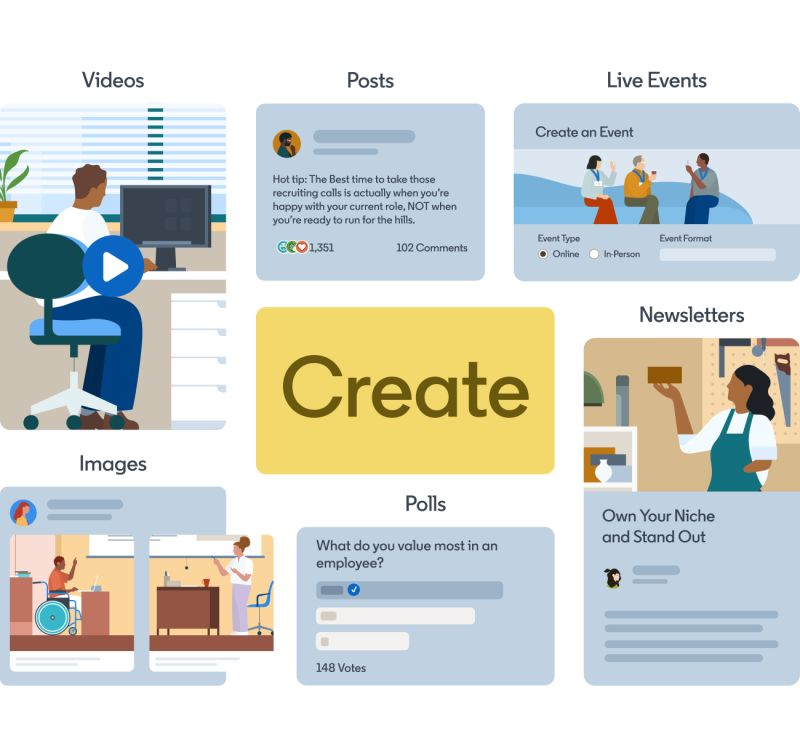
Introducing the brand-new Create on LinkedIn mini-site: a one-stop content creation companion packed with practical tips, posting strategies, and creator tools to help you stand out in the feed and grow your presence with purpose.
 

Whether you're a thought leader or just starting to build your personal brand, here’s why this launch is a game-changer, and how Vulse users can make the most of it.


Why LinkedIn’s New Creator Hub Matters
 

Let’s face it, LinkedIn isn’t just a digital CV anymore. It’s where professionals network, brands build thought leadership, and creators connect with a mission-driven audience. But creating content that performs? That’s the tricky part.
 

That’s why LinkedIn’s new mini-site is so timely. It brings together everything you need to thrive as a creator:
 

  • Foundational tips on what types of posts work (and why)
  • Best practices for writing, visuals, and video
  • Audience growth tactics grounded in actual platform trends
  • Access to creator tools like newsletters, LinkedIn Live, and post analytics


The Rise Of Video - And Why It’s Time To Get On Camera
 

One standout takeaway? Video isn’t just popular, it’s powerful. According to LinkedIn, watch time for videos on the platform is up 36% year-over-year, and video posts generate 1.4x more engagement than other formats.
 

Their advice?
 

  • Keep videos short and punchy (ideally under 60 seconds)
  • Add subtitles—because 85% of videos are watched on mute
  • Make your first 3 seconds count to stop the scroll


So, if you’re camera-shy, it might be time to embrace the lens. For Vulse users, integrating short-form video into their content planning is easier than ever with our scheduling and tone-matching tools.


Creator Mode: Your LinkedIn Power-Up
 

If you haven’t already switched to Creator Mode, it’s the fastest way to elevate your visibility.
 

Here’s what happens when you turn it on:
 

  • Your profile shifts to spotlight your content
  • The “Connect” button is swapped for “Follow”
  • You unlock exclusive tools like LinkedIn Live, Newsletters, and analytics dashboards
     

For Vulse users, combining Creator Mode with our content scoring system gives you a clear roadmap for what to post, and when, to maximize your reach.


More Than Just Tips: It’s A Content Mindset Shift
 

What we love most about this mini-site is that it’s not just about formats or hacks. It’s about mindset. LinkedIn is encouraging creators to be more intentional, strategic, and consistent.
 

Some of our favorite insights:
 

  • “Add your take”: Don’t just share an article—share why it matters.
  • “Be memorable”: Use humor, storytelling, or strong visuals to stand out.
  • “Post with purpose”: Ask yourself who your audience is and what they need.
     

These are core to how Vulse’s technology helps shape content suggestions, ensuring every post delivers value, not just vanity.


How Vulse + LinkedIn’s Creator Hub = Growth Engine
 

Here’s how Vulse and LinkedIn’s mini-site complement each other:

LinkedIn TipsWhat Vulse Adds
Posting strategiesData-powered post generator + calendar
Creator Mode & visibility toolsTone-matching, engagement scoring
Analytics reviewAuto-suggestions based on performance
Content formats (video, text)Smart formatting + platform-specific tools


It’s Never Been Easier to Start
 

If you’ve been hesitating to hit “post,” this is your sign to go for it. LinkedIn’s new hub demystifies the process, and with Vulse in your toolkit, you’ve got everything you need to create standout content that actually drives results.
 

Check out the Create on LinkedIn site for inspiration.

Then log in to Vulse and turn those insights into action.


Want help integrating these strategies into your content workflow? Vulse is here to make your LinkedIn life easier. Book a demo or try it free today.

Vulse ArtVulse ArtVulse Art
Vulse Art

You May also be interested in

  • blog img

    How To Measure ROI Of B2B Employee Personal Branding Programs

    Employee personal brands extend your company's reach, but without measurement, it is hard to justify resources.This guide helps B2B marketing and HR teams build a clear, defensible approach to reporting business outcomes from employee social activity on LinkedIn and other professional channels.Purpose: Turn activity into measurable outcomes.Scope: Awareness, engagement, lead signals, and talent impact.Outcome: A replicable measurement plan and dashboard checklist.Start with clear goals and mapped outcomesThe first step is to link employee activity to business outcomes. Use three goal buckets:Awareness: Reach, impressions, profile views.Engagement and trust: Comments, shares, follower growth, sentiment.Demand and talent signals: leads, meeting requests, job inquiries.For each bucket, define one primary KPI and two supporting metrics. That keeps reporting focused and aligns to stakeholders.Attribution models that work for employee advocacyEmployee posts are often organic and multi-touch. Use pragmatic attribution:Direct attribution for actions that clearly originate from an employee post, like a tracked link click that results in a demo booking.Assisted attribution for leads where employee content increased engagement during the buying process, measured via lead surveys or lead scoring uplift.Correlation tracking when direct links are missing: track timing of spikes in inbound inquiries after coordinated employee campaigns.Combine these with UTM parameters, dedicated landing pages, and short-form tracking to connect employee activity to conversions.Practical tipAlways append UTM tags to campaign links and add a hidden field or source on forms that captures "employee_post" values. This makes direct attribution clean and repeatable.Suggested KPI set for B2B teamsBelow is a compact KPI set that balances visibility and business outcomes.Reach: Total impressions and profile views from employee posts.Engagement rate: Likes, comments, shares divided by impressions.Lead signals: Demo requests, content downloads, or contact form submissions tied to employee campaigns.Talent signals: Inbound recruiter messages and job application volume resulting from employee content.Sales influence: Number of opportunities where a seller cites employee content as a touchpoint.Building a simple dashboardCombine platform analytics with CRM and web analytics to create a single source of truth. A typical dashboard has three panels:Activity panel: Posts, shares, and top-performing employees.Engagement panel: Impressions, engagement rate, and follower lift.Outcome panel: Leads attributed, demo requests, and talent inbound metrics.Use an employee advocacy solution to centralize post scheduling and analytics. See how built-in reporting can speed analysis on an employee advocacy analytics page.How to calculate a simple ROIROI for personal branding programs is often a mixture of direct revenue and soft value. Use this conservative formula to start:Sum direct revenue attributed to employee-driven leads over a period.Add estimated value of assisted conversions using a conservative uplift percentage.Divide by program cost including platform, content creation, and team time.This produces a monetary ROI figure you can present to leadership. Be explicit about assumptions and update them with real data over time.Operational checklist to scale measurementApply these practical rules to keep measurement consistent:Standardize UTMs and naming conventions across employee campaigns.Automate data ingestion from LinkedIn and your advocacy platform into your BI tool.Train employees to use trackable links and to tag campaigns in post copy when asked.Schedule a monthly review with marketing, sales, and HR to review dashboard insights.Vulse customers often pair the platform with a CRM to close the loop between post and pipeline. Learn more on our features page about LinkedIn analytics and reporting.Example: 90-day reporting cadenceRun this lightweight cadence for the first 90 days:Week 0: Baseline metrics for profiles, impressions, and leads.Week 1 to 8: Run two focused campaigns and collect UTM-tagged conversions.Week 12: Produce a stakeholder report with direct revenue, assisted conversions, and talent signal changes.Repeat and refine goals based on what moves the needle.Evidence and further readingResearch shows employee-shared content generates higher trust and click-through rates than brand-only content. For context, LinkedIn's guidance on employee advocacy provides practical benchmarks and best practices, which can help calibrate expectations: LinkedIn Marketing Solutions.For measuring social ROI and building dashboards, HubSpot's guide to social media ROI is a useful practical resource: HubSpot Blog.Frequently asked questionsQ: How soon can we expect measurable results?A: You can see awareness and engagement shifts within 30 days. Attribution to pipeline typically takes 60 to 90 days depending on sales cycles.Q: Do we need an employee advocacy tool to measure ROI?A: Tools make tracking and reporting far easier but you can start with manual UTMs and CRM tagging. A platform scales measurement and reduces manual work.Q: Which metric should executives care about most?A: That depends on priorities. For revenue-focused leaders show attributed pipeline and deals. For talent-focused teams highlight inbound candidate volume and recruiter touchpoints.

    Loading

    How To Measure ROI Of B2B Employee Personal Branding Programs

    by - Rob Illidge -

  • blog img

    How to Grow Your Presence On LinkedIn: New Data Insights Revealed

    LinkedIn has become the go-to platform for professionals to connect, share insights, and build brand reputation.With 1.2 billion members worldwide, including an estimated 480 million active users, the platform is experiencing record-high engagement levels.For businesses, founders, and professionals, the question is no longer “Should I be on LinkedIn?” but “How do I maximize my impact here?”According to Buffer’s latest LinkedIn study (covering over 2 million posts from more than 94,000 accounts), there’s one clear answer: posting frequency.Why Posting Frequency Matters on LinkedInLinkedIn’s algorithm is designed to reward activity.The more often you post, the more opportunities the system creates for your content to appear in front of your target audience.Put simply: more posts = more reach.And here’s the data to back it up:2–5 posts per week → +1,000 impressions per update6–10 posts per week → +5,000 impressions per update11+ posts per week → +16,000 impressions per updateNot only do impressions increase, but engagement (likes, comments, shares) also rises as a natural byproduct of greater visibility.Buffer notes that LinkedIn doesn’t impose a cap on reach when you post frequently — instead, it leans into your activity.Why This Matters for Professionals and BrandsLinkedIn is no longer just a recruitment tool, it’s a content platform.Conversations that used to happen on X are now shifting to LinkedIn, making it an increasingly valuable space for thought leadership, networking, and lead generation.For professionals, this means every post is an opportunity to:Showcase expertiseBuild trust with your networkReach potential clients, employers, or partnersSpark meaningful conversationsFor businesses, especially in B2B industries, LinkedIn has become one of the most cost-effective ways to build a brand presence and connect directly with decision-makers.According to LinkedIn’s Marketing Solutions data, 4 out of 5 people on the platform drive business decisions, making it a must-use channel for B2B growth.Best Practices for Posting on LinkedInWhile frequency is key, it’s not just about posting anything. To build a strong presence:Focus on value: Share content that educates, inspires, or sparks discussion.Mix formats: Use a combination of text posts, carousels, images, and video.Engage back: Reply to comments and interact with others’ content.Be consistent: Stick to a schedule — whether that’s 3 posts a week or daily updates.Test learn: Monitor impressions, clicks, and engagement to refine your approach.How Vulse Helps Agencies and Businesses Grow on LinkedInAt Vulse, we’ve seen firsthand how powerful LinkedIn can be when used strategically.Born from our own journey as an agency, we’ve built tools that make it easy to:Plan and schedule content for consistencyMatch tone of voice for employee advocacyTrack performance analytics to see what’s workingEngage with brand mentions to grow reputationBy combining Buffer’s insights on frequency with Vulse’s tools for strategy and execution, agencies and businesses can take their LinkedIn presence to the next level.LinkedIn is hungrier than ever for content. With more professionals shifting their conversations and thought leadership here, the opportunity to build visibility and influence is huge.The bottom line is post more often. Post with purpose. Post consistently.Do that, and you’ll unlock LinkedIn’s full potential for growth, connection, and opportunity.

    Loading

    How to Grow Your Presence On LinkedIn: New Data Insights Revealed

    by - Rob Illidge -

  • blog img

    Vulse vs Oktopost: Which LinkedIn Employee Advocacy Tool is Right for You?

    Choosing the right employee advocacy tool is a critical decision for B2B brands that want to amplify their reach on LinkedIn and beyond. In 2025, the two names that often come up in conversations are Vulse and Oktopost.While both platforms are designed to support employee advocacy, their approaches, features, and focus areas differ significantly.In this article, we break down the strengths of each tool, compare their features, and help you decide which platform best fits your business needs.Why Employee Advocacy Is Essential For B2B BrandsEmployee advocacy has become more than just a marketing strategy.It’s now one of the most effective ways to:Increase organic reach on LinkedInBuild trust and thought leadership within target industriesEmpower employees to become brand ambassadorsGenerate leads from authentic, employee-driven contentWith LinkedIn sunsetting My Company businesses need a dedicated tool to fill that gap.Vulse: The LinkedIn-Focused Employee Advocacy ToolVulse is designed specifically for B2B companies that want to maximize results on LinkedIn.Unlike general social media management platforms, Vulse leverages unique LinkedIn API access to create a more precise and effective employee advocacy experience.Key Features of Vulse:LinkedIn API integration for seamless publishing and analyticsTone-matching AI to keep employee content on-brandAccount scoring to measure advocacy effectiveness at an individual and company levelContent planning tools to simplify employee participationBuilt with B2B advocacy in mind rather than broad consumer marketingVulse is particularly strong for companies that want to focus their advocacy strategy where it matters most: LinkedIn.Oktopost: An Enterprise Social Media SuiteOktopost is positioned as a B2B social media management platform with employee advocacy included as part of its offering.Key Features of Oktopost:Broad social media scheduling and reporting across channelsEmployee advocacy as part of a larger, more expensive enterprise platformIntegrations with marketing automation and CRM toolsAnalytics for enterprise marketing teamsOktopost works best for organizations that want a high-budget, multi-channel advocacy program embedded within a broader social media strategy.Vulse vs Oktopost: Head-to-HeadFeatureVulseOktopostFocusLinkedIn employee advocacyBroad social mediaBest ForB2B companies prioritizing LinkedIn growthEnterprise teamsAI Content SupportTone-matching AI, account scoring, employee planning toolsSocial publishingEase of UseSimple and employee-friendlySuited for large, high-budget marketing teamsIntegrationsLinkedIn API, SaaS integrationsCRM, marketing automation, enterprise systemsWhich Tool is Right for You?Choose Vulse if your company is primarily focused on LinkedIn, wants AI-powered advocacy features, and values simplicity for employees.FAQs: Vulse vs Oktopost Employee AdvocacyQ1: What is the difference between Vulse and Oktopost?A: Vulse is a dedicated LinkedIn employee advocacy tool designed to boost organic reach and employee engagement, while Oktopost is a broader B2B social media management platform that also offers advocacy. Vulse focuses on simplicity, LinkedIn optimization, and employee adoption, while Oktopost emphasizes multi-channel campaign management.Q2: Which employee advocacy tool is better for LinkedIn?A: If your priority is LinkedIn employee advocacy, Vulse is purpose-built for it, with unique features like tone matching, content scoring, and LinkedIn API integration. Oktopost offers LinkedIn features too, but as part of a wider social media suite.Q3: Is Vulse more cost-effective than Oktopost?A: For companies focused on LinkedIn employee advocacy, Vulse is more cost-effective since it avoids paying for multi-channel features you may not need. Oktopost is better suited for enterprises managing complex, multi-platform campaigns.Q4: Why should companies invest in employee advocacy software?A: LinkedIn has continued limiting organic brand reach in 2025, making employee-driven sharing essential for visibility. Employee advocacy software like Vulse helps brands empower staff to amplify company content authentically.Q5: Can Vulse integrate with other marketing tools?A: Yes. Vulse integrates with LinkedIn and can be extended to other platforms, including CRMs, analytics tools, and multi-channel marketing stacks. The right choice depends on your company’s tech setup and advocacy goals.

    Loading

    Vulse vs Oktopost: Which LinkedIn Employee Advocacy Tool is Right for You?

    by - Rob Illidge -

Revolutionise Your LinkedIn Output Today

Got a question? Give us a call or start your free trail today