Vulse ArtVulse Art
Home/Linkedin Strategy

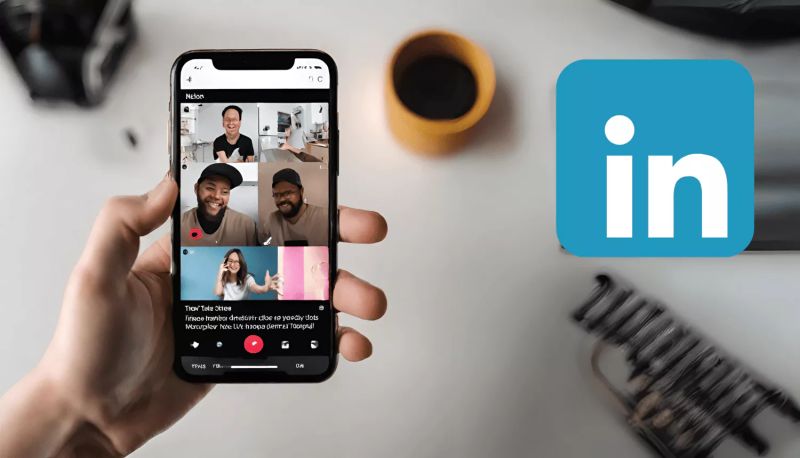
LinkedIn Is Testing TikTok-Style Short-Form Video

  • LinkedIn Strategy
blog-image

In professional networking, LinkedIn has long been known for its commitment to substantive content.


However, times are changing as LinkedIn unveils its latest innovation - a new video feature, which will revolutionise content consumption on the platform.


The Shift Towards Video Content


LinkedIn has been synonymous with informative articles and thought-provoking discussions. 


However, the rise of video content across social media platforms has prompted LinkedIn to adapt.


As Suzi Owens, a spokesperson for LinkedIn, revealed, the platform is now exploring new ways to facilitate the discovery of timely and relevant videos.


Introducing The Video Feature


Soon, users will notice a new "Video" option nestled alongside the familiar "Home" button in the app's navigation bar.


This feature promises to usher viewers into a curated feed of short-form videos, like popular formats found on Instagram Reels or TikTok.


This strategic move not only caters to evolving user preferences but also underscores LinkedIn's commitment to embracing diverse content formats.


Creator-Friendly Environment


Behind this transformation lies LinkedIn's concerted efforts to develop a more creator-friendly environment. 


Initiatives like the LinkedIn Creator Accelerator and a dedicated creator relations team have paved the way for this evolution.


By empowering creators, LinkedIn aims to enrich the platform with engaging and diverse content, ultimately enhancing the user experience.


The Implications for Professionals


For professionals and content creators alike, this development provides exciting opportunities.


The integration of video content creates new options for storytelling, personal branding, and knowledge sharing.


Whether it's showcasing expertise, providing insights, or connecting with audiences on a deeper level, the possibilities are endless.


What Video Content Means For LinkedIn Users


As LinkedIn jumps into the world of video content, it's shaking things up in a good way.


With this move, LinkedIn isn't just staying put - it's stepping up to become a leader in social networking, offering us a fresh and exciting way to connect and share.


As professionals, let's embrace this evolution and leverage the power of video to connect, inspire, and thrive.

Vulse ArtVulse ArtVulse Art
Vulse Art

You May also be interested in

  • blog img

    How To Use LinkedIn Articles To Build Thought Leadership And Get Cited by AI Search

    Most marketers default to short LinkedIn feed posts because they are quick to write and generate immediate engagement. But if authority, search visibility, and AI citations are part of your strategy, you are leaving value on the table by ignoring LinkedIn Articles. The data makes this clear. Long-form articles and newsletters account for 60% of all AI citations from LinkedIn content, according to LinkedIn's own internal data. Feed posts drive daily visibility. Articles build the compounding authority that gets your brand cited by ChatGPT, Perplexity, and Google when buyers research your industry. The most effective LinkedIn strategies use both formats for different purposes. This guide explains when to use each, how to publish Articles that perform, and why long-form content is now a critical part of any employee advocacy and thought leadership programme. LinkedIn Articles vs Posts: What Each Format Does Best Feed posts and Articles are not competing formats. They serve different stages of the content funnel, and understanding the distinction is what separates good LinkedIn strategies from great ones. Feed posts are best for daily visibility, conversation starters, quick takes, and staying top of mind. They perform well at 200 to 300 words, generate engagement within hours, and benefit from LinkedIn's real-time algorithmic distribution. But they fade quickly. A feed post's lifespan is measured in hours to days, and they are rarely surfaced by search engines or AI tools. LinkedIn Articles are best for establishing deep expertise, earning search engine visibility, and building citable authority. They support rich formatting including headings, images, embedded video, pull quotes, and hyperlinks. They live permanently on your profile, are fully indexed by Google and Bing, and can be cited by AI search tools when answering professional queries. Here is how the two formats compare across the metrics that matter: Discoverability. Feed posts depend almost entirely on the LinkedIn algorithm for distribution. Articles are indexed by external search engines, meaning they can drive traffic from Google, AI search, and direct links indefinitely. Depth and structure. Feed posts work best as single-idea content. Articles support the heading hierarchies, internal links, and detailed formatting that LinkedIn's algorithm now uses for topical authority scoring. Lifespan. A strong feed post generates most of its engagement within 48 hours. A strong Article can continue earning views, inbound enquiries, and AI citations for months. AI citation potential. 95% of all AI citations of LinkedIn content come from original posts, not reshares. But within that original content, long-form Articles and newsletters are cited most often because they provide the depth that AI systems need to extract reliable answers. Newsletter integration. Articles can be published as recurring Newsletters, which build a subscriber base that receives notifications each time you publish. Feed posts have no equivalent subscriber mechanism. Analytics depth. Both formats offer engagement metrics, but Articles provide firmographic analytics showing which industries, job titles, company sizes, and locations engage with your content. This data is invaluable for understanding whether you are reaching decision-makers. The practical takeaway: use feed posts to stay visible and start conversations. Use Articles to build the deep, searchable authority that compounds over time. The best strategies do both. Why LinkedIn Articles Matter for AI Search Discoverability AI search engines are increasingly citing LinkedIn as a primary source for professional queries. Profound's research ranks LinkedIn as the most cited domain for professional queries across major AI search platforms. This makes LinkedIn content a direct input into how AI tools answer questions about your industry, your company, and your area of expertise. Articles are particularly well-suited for AI citation because they provide the depth and structure that large language models need to extract reliable answers. A 1,000-word Article with clear headings, specific data points, and original analysis gives an AI system far more to work with than a short feed post. LinkedIn's own guidance confirms that content substantial enough to provide meaningful answers, often in the 800 to 1,200 word range, performs best for AI discoverability. Originality is also critical: the vast majority of AI citations come from original content, not reshared material. For a deeper look at how to structure content for AI citation, see our guide on optimising employee advocacy content for AI search. How to Publish a LinkedIn Article That Performs Write a Headline That Answers a Question Your headline determines whether someone clicks through from the feed or from a search result. Effective Article headlines communicate a complete idea and mirror the way professionals search for information. "How B2B Companies Use Employee Advocacy to Generate Pipeline" outperforms "Employee Advocacy Tips" because it tells both readers and AI systems exactly what the piece covers. LinkedIn uses the first line of your post or Article title as the basis for its URL structure, which influences how search engines categorise and rank your content. Make that first line count. Structure for Both Readers and AI Use clear heading hierarchies (H2 and H3 tags) to break your Article into scannable sections. Each section should answer a specific sub-question and make sense on its own if extracted by an AI tool. This approach aligns with LinkedIn's recommendation to write for snippets: assume your content will be pulled into AI-generated answers without its surrounding context. Lead with a summary or key takeaway at the top of the Article. This gives busy readers the core message immediately and provides AI systems with a clean excerpt to cite. Set SEO Metadata Before Publishing LinkedIn's Article editor includes fields for SEO title, description, and tags. Use these to control how your Article appears in search results. Write your meta description as a direct, concise answer to the primary question the Article addresses, and keep it between 140 and 160 characters. For guidance on SEO metadata best practices, see Google's documentation on search essentials. Include Original Data and Specific Examples Articles that contain original data, proprietary insights, or detailed case studies are significantly more likely to be cited and shared. Generic advice that could appear on any marketing blog does not earn citations from AI systems or engagement from professional readers. If your company has access to platform analytics, customer data, or campaign results, use those numbers in your Articles. Our analysis of 400 million LinkedIn impressions is an example of how first-party data can drive both engagement and authority. Review Performance with Firmographic Data After publishing, use LinkedIn's native analytics to track reach, engagement, and reader demographics. Pay attention to which industries, job titles, and company sizes engage with your content. This data tells you whether your Articles are reaching decision-makers or just generating views from the wrong audience. For a detailed look at what metrics matter most, see our post on LinkedIn posting best practices. How LinkedIn Articles Fit Into Your Content Strategy Repurpose Across Channels A single LinkedIn Article can feed multiple content touchpoints. Turn key sections into shorter LinkedIn feed posts. Include the Article link in email signatures and newsletters. Reference it in sales outreach when a prospect asks about a topic you have covered in depth. This repurposing strategy extends the Article's reach beyond LinkedIn's platform and creates a hub-and-spoke content structure where the Article serves as the pillar and shorter content pieces drive traffic back to it. Build a Newsletter Audience LinkedIn's Newsletter feature lets you convert Article readers into subscribers who receive notifications each time you publish. This is one of the few organic distribution channels on LinkedIn that does not depend on the feed algorithm for reach. Newsletters are particularly valuable for employee advocacy programmes. When subject matter experts within your company publish recurring Newsletters on their areas of expertise, they build a direct audience that compounds over time. Each edition reinforces their topical authority, which the LinkedIn algorithm rewards with better distribution for all of their content, including shorter feed posts. Empower Employees to Publish The most effective Article strategies are not limited to the marketing team. Encourage executives, sales leaders, and subject matter experts to publish Articles on topics where they have genuine expertise. Employee-published content generates 14 times more engagement than company page content, and that advantage extends to long-form Articles as well. The key is to support employees with topic suggestions, editing assistance, and a clear understanding of how publishing builds their personal brand alongside the company's. For a step-by-step framework, see our employee advocacy training guide. Amplify With Paid Distribution LinkedIn's Article and Newsletter Ads allow you to promote long-form content to targeted professional audiences. Use organic engagement data to identify which Articles resonate most, then amplify those with paid distribution. This approach is more cost-effective than promoting content blind, because you already have proof that the material drives engagement. For more on combining organic and paid strategies, see our guide on Thought Leader Ads. Content Best Practices for LinkedIn Articles in 2026 Lead with value, not preamble. Open with your most important insight or a clear summary of what readers will learn. The first two lines determine whether someone continues reading. Keep sections short and scannable. Use subheadings, short paragraphs, and formatting to guide readers through the piece. LinkedIn's algorithm measures dwell time, and well-formatted content keeps people reading longer. Aim for 800 to 1,200 words. This range provides enough depth to demonstrate expertise and satisfy AI extraction requirements without losing reader attention. LinkedIn's early testing suggests this length performs best for discoverability. Include specific numbers and evidence. Statements like "employee advocacy reduces cost per click to under $1 compared to $5 to $10 for LinkedIn Ads" are more citable and more credible than vague claims about "improving performance." Write in your own voice. LinkedIn's algorithm actively deprioritises generic AI-generated content. Use AI tools to support your workflow, but make sure the final output reflects genuine expertise and a human perspective. Update and refresh published Articles. Add a "Last updated" note when you revise content. AI search engines and LinkedIn's own system both use freshness as a ranking signal. Revisiting high-performing Articles every 6 to 12 months keeps them relevant and discoverable. Checklist Before You Publish Use this as a final review before hitting publish on any LinkedIn Article. Headline and cover image. Does the headline communicate a complete idea? Is the cover image relevant and professional? Summary or key takeaway. Does the Article open with a clear statement of what readers will learn or gain? Structure and formatting. Are headings, subheadings, and paragraphs structured logically? Can each section stand alone if extracted by an AI tool? Links and references. Have you linked to supporting resources, both internal and external? Are sources for data points and claims clearly attributed? SEO metadata. Have you set the SEO title, description, and tags in the Article settings? Promotion plan. Do you have a plan for sharing the Article through employee posts, email, and paid amplification if relevant? Frequently Asked Questions What is the ideal length for a LinkedIn Article? LinkedIn's own testing suggests that Articles in the 800 to 1,200 word range perform best for both reader engagement and AI search discoverability. The goal is to provide enough depth to demonstrate expertise without losing reader attention. Do LinkedIn Articles appear in Google search results? Yes. LinkedIn Articles are fully indexed by Google, Bing, and other search engines. They can also be cited by AI search tools like ChatGPT and Perplexity when answering professional queries. How are LinkedIn Articles different from Newsletters? Articles are standalone long-form posts. Newsletters are recurring Article series that allow readers to subscribe and receive notifications each time you publish. Newsletters build a direct distribution channel that does not depend on the feed algorithm. Should employees publish LinkedIn Articles or just feed posts? Both. Feed posts are better for daily engagement and visibility. Articles are better for establishing deep expertise on specific topics and building long-term discoverability through search engines and AI citation. The most effective employee advocacy programmes use a combination of both formats. Do LinkedIn Articles count toward topical authority in the algorithm? Yes. LinkedIn's algorithm evaluates the full body of content a person publishes, including Articles, when determining topical authority. Professionals who publish consistent, substantive Articles on a specific domain see that authority reflected in how all their content is ranked. Can I republish blog content as a LinkedIn Article? You can, but original content performs significantly better. If you repurpose blog content, adapt it for the LinkedIn audience by adding personal perspective, updating data points, and adjusting the format for on-platform readability. Avoid publishing exact duplicates. Ready to turn your team into LinkedIn thought leaders? Vulse helps marketing teams create, distribute, and measure employee content that builds authority and drives pipeline. Start your free trial or book a demo to see how it works.

    Loading

    How To Use LinkedIn Articles To Build Thought Leadership And Get Cited by AI Search

    by - Rob Illidge -

  • blog img

    LinkedIn Simplifies Thought Leader Ads For Easier Discovery

    LinkedIn has made it simpler for brands to discover and sponsor user-generated content (UGC) with a new, streamlined discovery feature in Campaign Manager.This update helps marketers find relevant posts that mention their brand or event across 1st, 2nd and 3rd+ degree connections - then request permission to promote them as Thought Leader Ads.What’s new in Campaign ManagerEasier content discovery: A built-in search and highlight function surfaces posts, articles and newsletter pieces that mention your brand or event.Wider reach: You can now discover content from beyond your immediate network (including 3rd+ degree connections).Partnerships tab: Sponsored content opportunities are shown in a dedicated “Partnerships” area, and you can filter by content type to streamline outreach.Why brands should careThought Leader Ads let companies amplify authentic voices, not just company posts, by sponsoring organic content created by others.LinkedIn reports these ads see about 2x higher click-through rates than comparable single-image ads, making them an attractive option for boosting engagement and credibility.Key benefits:Authenticity: Boosting real users’ posts can feel more trustworthy than brand-only messaging.Efficiency: Built-in discovery reduces time spent hunting for promotable content.Scale: Access to 3rd+ degree posts expands potential sponsorship candidates.How to use LinkedIn Thought Leader Ads (step-by-step)1) Find relevant contentUse the new discovery tools in Campaign Manager’s Partnerships tab to surface posts, LinkedIn articles or newsletters that mention your brand or event.2) Get permissionBefore promoting anything, request sponsorship permission from the content creator. LinkedIn’s workflow in Campaign Manager makes it easier to send and track those requests.3) Launch a campaignOnce approved, you can convert the organic post into a Thought Leader Ad and run it with your chosen targeting and budget.Creator monetization: a possible next stepWhile the current process focuses on sponsorship permission, the improved discovery flow could lay groundwork for future monetization for creators.If LinkedIn decides to share ad revenue with creators whose posts are sponsored, it could create a new incentive for posting brand-positive content.That said, brands and platforms should balance monetization with authentic dialogue; paid incentives can unintentionally skew commentary.Coverage and context on LinkedIn’s broader creator efforts:Best practices for brandsPrioritize relevancy: Sponsor posts that genuinely align with your messaging and values.Be transparent: Clearly communicate sponsorship terms with creators.Measure performance: Compare Thought Leader Ads’ CTR and engagement to other ad types to understand ROI.Respect authenticity: Avoid pressuring creators into overly promotional content; authentic endorsements perform best.LinkedIn’s updated discovery tools make Thought Leader Ads easier to find and activate, opening up new opportunities to amplify user voices and boost campaign performance.As this feature rolls out to more countries, it’s worth testing Thought Leader Ads alongside existing ad formats to see how UGC-driven promotions perform for your brand.

    Loading

    LinkedIn Simplifies Thought Leader Ads For Easier Discovery

    by - Rob Illidge -

  • blog img

    Why LinkedIn Content Now Shows Up in ChatGPT And What It Means for Employee Advocacy

    Google traffic is down. AI citations are up. And LinkedIn is suddenly one of the most trusted sources for AI tools like ChatGPT and Perplexity.For B2B marketers running employee advocacy programmes, this changes everything.The Shift from Search to AINew data from the Reuters Institute shows that Google search traffic to publishers declined by a third globally in the year to November 2025. Google Discover referrals dropped 21% year on year. Since May 2023, overall external referrals to publisher websites have fallen by 24%.The reason? AI is changing how people find information.Instead of clicking through search results, more people are asking ChatGPT, Perplexity, and Google's AI tools directly. These tools summarise content from across the web and provide answers in a conversational format. For many queries, users never visit the original source at all.According to Press Gazette, publishers expect traffic from search engines to decline by more than 40% over the next three years. This is not a temporary dip. It is a structural shift in how information is discovered and consumed.LinkedIn Is Now a Top Source for AI ToolsHere is where it gets interesting for B2B brands.Research from SEMRush, based on a study of 230,000 prompts across ChatGPT, Google AI, and Perplexity, found that LinkedIn is now the second most cited source in AI chatbot responses, trailing only Reddit.A separate study from Spotlight showed that AI tools are citing LinkedIn sources up to five times more often than before. ChatGPT cites LinkedIn 4.2 times more frequently, and Perplexity cites it 5.7 times more frequently.Of the 19,202 LinkedIn sources cited in the Spotlight analysis, over 15,000 came from LinkedIn Pulse articles specifically.As Social Media Today reported, AI chatbots are putting more trust in LinkedIn, and in LinkedIn articles in particular. This points to a new opportunity for brands and individuals who want to show up in AI-powered search results.What This Means for Employee AdvocacyIf your employees are posting regularly on LinkedIn, they are not just building brand awareness. They are building citable authority.When someone asks an AI tool a question about your industry, the answer may come from content your team published on LinkedIn. That is a level of discoverability that traditional SEO cannot match.This changes the value proposition of employee advocacy. It is no longer just about reach and engagement. It is about becoming a trusted source that AI tools reference when answering questions.For B2B companies, this is significant. Your buyers are already using AI tools for research. If your employees are visible, publishing valuable content, and building authority on LinkedIn, your brand is more likely to appear in those AI-generated answers.How to Optimise LinkedIn Content for AI CitationNot all LinkedIn content is created equal. If you want your posts and articles to be cited by AI tools, there are a few things to keep in mind.Publish LinkedIn articles, not just posts. The Spotlight data showed that the vast majority of LinkedIn citations came from Pulse articles. Long-form content is more likely to be indexed and referenced by AI systems.Answer specific questions. AI tools are looking for clear, authoritative answers to user queries. Structure your content around the questions your audience is asking. Use the question as your headline where possible.Verify your profile. LinkedIn profile verification is a trust signal. AI systems may use this as an indicator of authority when deciding which sources to cite.Keep your career history current. An up-to-date profile with a clear professional history reinforces credibility. AI tools are looking for signals that a source is legitimate and knowledgeable.Write factual, substantive content. AI tools favour content that is informative, well-structured, and easy to extract key points from. Avoid fluff. Get to the point and provide real value.Publish consistently. Topical authority builds over time. Regular publishing signals to AI systems that you are an active, engaged voice in your field.The Opportunity for B2B BrandsThis shift creates a real opportunity for companies investing in employee advocacy.While competitors focus on traditional SEO and paid advertising, you can build a library of LinkedIn content that AI tools trust and cite. Every article your team publishes is a potential answer to a question your buyers are asking.The companies that act now will have a head start. AI citation is not yet a crowded space. The brands that establish authority early will be harder to displace as these systems mature.Employee advocacy has always been about trust. People trust people more than they trust brands. Now AI tools are following the same pattern, favouring content from verified individuals over faceless corporate sources.What Vulse Customers Should Do NextIf you are already running an employee advocacy programme with Vulse, you are well positioned to take advantage of this shift. Here is how to maximise the opportunity:Encourage long-form content. In addition to regular posts, prompt your team to publish LinkedIn articles on topics where your company has expertise. These are more likely to be cited by AI tools.Focus on buyer questions. Create content that answers the questions your prospects are asking. Think about what someone might type into ChatGPT when researching your industry or evaluating solutions like yours.Build topical authority. Concentrate your team's content around specific themes. Consistent publishing on a focused topic signals expertise to AI systems.Track what is working. Use Vulse's analytics to identify which content is generating the most engagement. High-performing posts are likely candidates for expansion into full articles.The rules of discoverability are changing. Google traffic is declining. AI tools are rising. And LinkedIn content is becoming one of the most trusted sources for AI-generated answers.For B2B companies, this is not a threat. It is an opportunity. The brands that invest in employee advocacy now will be the ones AI tools cite tomorrow.

    Loading

    Why LinkedIn Content Now Shows Up in ChatGPT And What It Means for Employee Advocacy

    by - Rob Illidge -

Revolutionise Your LinkedIn Output Today

Got a question? Give us a call or start your free trail today