Vulse ArtVulse Art
Home/Linkedin Strategy

LinkedIn Tests New Navigation Layout with Unified Top Bar

  • LinkedIn Strategy
blog-image

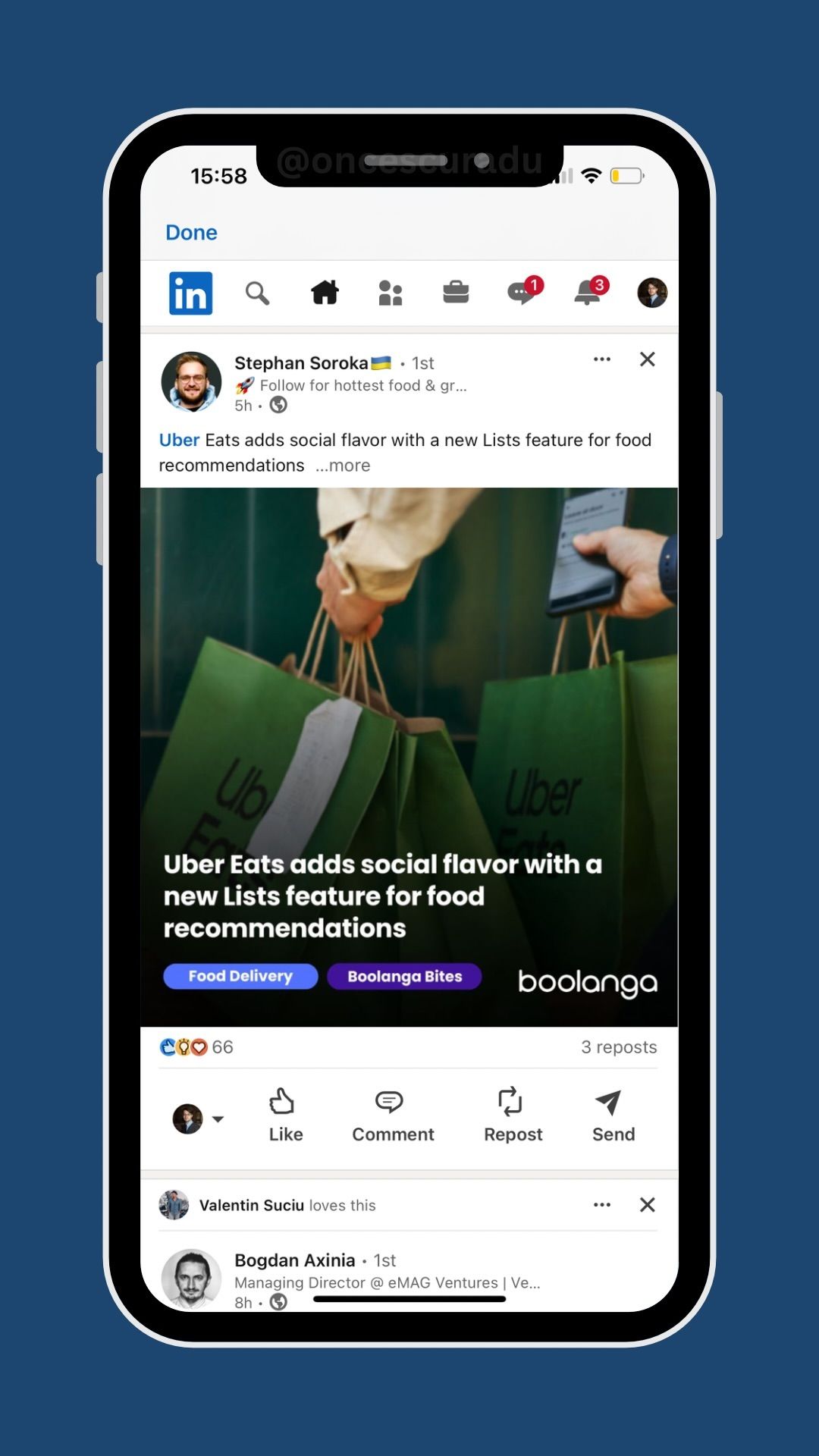
LinkedIn is testing a fresh user interface that could streamline the navigation experience by consolidating all in-app navigation options along a single top bar.


This design would place all primary shortcuts—notifications, messages, profile access, and search—into one line at the top of the screen, removing the navigation bar from the bottom.


What’s Changing in LinkedIn’s UI?


LinkedIn’s navigation divides functions between the top and bottom bars. Essential shortcuts like profile, search, inbox, and post composer sit on the top bar, while the bottom banner includes links to the home feed, “My Network” tab, notifications, and job search.


The “Video” tab also appears at the bottom for users with access to LinkedIn's video feature.


In this experimental layout, LinkedIn merges all these elements into a single top-row interface. This change would free up more screen space, allowing users to scroll through their feeds without interference from a bottom bar. However, some users have observed that the post composer icon is absent in this setup, raising concerns about its placement or potential relocation.


Potential Impact on User Experience


A unified top navigation bar could simplify navigation by making all options readily available in one area. Users would no longer need to shift between top and bottom bars, possibly leading to a more seamless experience. 


Removing the bottom bar could create a more immersive feed-scrolling experience, aligning LinkedIn’s layout more closely with other social media apps.


However, LinkedIn users may need time to adjust to this consolidated navigation. Changes to UI design can sometimes disrupt established user habits, potentially impacting engagement or content creation if users struggle to locate features like the post composer. LinkedIn would unlikely permanently remove the composer function, so the absence of this icon may be a temporary oversight in the testing phase.


Will the Update Enhance Engagement?


This new design could have mixed effects. On one hand, a streamlined top navigation bar could reduce visual clutter, creating a cleaner user experience. But significant design changes can alter how users interact with an app, especially for a platform like LinkedIn, where professionals rely on familiar functionality to stay connected and engaged.


Whilst still in the testing phase, this redesign may not ultimately be rolled out to all users. However, if successful, it could signal a shift toward a more integrated and visually streamlined LinkedIn experience, to optimize engagement by making notifications and messages more accessible.

Vulse ArtVulse ArtVulse Art
Vulse Art

You May also be interested in

  • blog img

    LinkedIn Content Benchmarks 2026: Which Post Format Drives Most Engagement

    If you are still guessing which LinkedIn content format to prioritise, new benchmark data from 1.3 million posts makes the answer clear: native document posts (uploaded PDFs displayed as carousels) generate the highest engagement rate of any content type on the platform at 7.00%, followed by multi-image posts at 6.45% and video at 6.00%. This matters because LinkedIn's overall engagement rate has actually increased 8% year-over-year to an average of 5.20%, even as organic reach continues to decline. The platform is rewarding depth and substance over volume, and the formats that keep people on the page longest are winning. This guide breaks down the latest Socialinsider 2026 LinkedIn Benchmarks data, explains what it means for your content strategy, and shows how employee advocacy programmes can use these insights to maximise performance. Document Posts Now Outperform Every Other LinkedIn Format The biggest finding from the Socialinsider study is that native document posts have overtaken all other content types for engagement. As Social Media Today reported, this is a significant departure from other social platforms where short-form video dominates. Here is how each format performed based on average engagement rate by impressions in 2025: Native documents: 7.00% (up 14% year-over-year) Multi-image posts: 6.45% Video: 6.00% (up 7% YoY) Image: 5.30% (up 9% YoY) Text: 4.50% (up 12% YoY) Poll: 4.20% Link: 3.25% The year-over-year trend is notable. Engagement grew across every content format except polls and links. Document posts saw the largest increase at 14%, but even simple text posts climbed 12%. LinkedIn users are engaging more across the board. Julia Holmqvist, Social Media Manager at Semrush, explained the document trend well in the Socialinsider report: documents perform because they deliver downloadable, practical value like frameworks, templates, and checklists in a format that is easy to scan and save for later. This aligns with what LinkedIn's own algorithm now rewards: dwell time. Document carousels require swiping through multiple slides, which keeps users on the post longer than almost any other format. That extended attention signals quality to the algorithm and triggers broader distribution. Multi-Image Posts Drive the Most Likes While documents lead on overall engagement rate, the data shows a different winner for likes specifically: multi-image posts generate the most likes across every page size. For pages with 100K to 1M followers, multi-image posts average 180 likes per post compared to 155 for video and 30 for native documents. The pattern holds for smaller pages too, though at lower absolute numbers. This creates a useful strategic distinction. If your goal is overall engagement (comments, shares, saves, clicks), prioritise documents. If your immediate goal is social proof through visible like counts, multi-image posts are your best option. For employee advocacy content, this distinction matters. Employees sharing document carousels will generate deeper engagement that drives profile visits and conversations. Employees sharing multi-image posts will generate higher visible reaction counts that build credibility in the feed. Both have a place in a well-rounded advocacy programme. Video Views Are Declining Despite More Video Being Posted One of the most counterintuitive findings in the data is that LinkedIn video views dropped 36% year-over-year across all page sizes, even as brands doubled their video posting frequency from 2 to 4 posts per month. The decline is consistent across every audience tier. Pages with 10K to 50K followers saw average video views drop from 1,000 to Even the largest pages (100K to 1M followers) saw views fall from 2,430 to 1,This does not mean video is dead on LinkedIn. Video still generates a 6.00% engagement rate, which is above the platform average. But it does suggest that the market is saturated with video content, and the returns are diminishing as more brands compete for attention in the same format. The Socialinsider report includes a useful insight from Semrush's social team: LinkedIn is not a video-first platform the way TikTok or Instagram are. Users do not open LinkedIn to scroll through video feeds. They come for professional knowledge sharing, and the formats built for that purpose (documents, text, images) are outperforming video on the metrics that matter. For employee advocacy, this reinforces the case for document carousels and well-crafted text posts over video. Most employees are more comfortable creating a PDF or writing a text post than recording and editing video, and the data shows those formats perform just as well or better. Impressions Vary Dramatically by Page Size and Format The benchmark data reveals how much content performance depends on audience size. The right format for a page with 5,000 followers is not the same as the right format for a page with 100,For pages with under 50K followers, multi-image posts consistently generate the most impressions per post. A page with 10K to 50K followers averages 1,850 impressions per multi-image post compared to 1,420 for video and 1,150 for native documents. For pages with over 50K followers, polls become the highest-impression format. Pages with 100K to 1M followers average 9,797 impressions per poll compared to 3,867 for multi-image posts. This is a significant finding for employee advocacy. Most employee LinkedIn profiles have follower counts in the low thousands, which means the multi-image and document formats are their best options for maximising both reach and engagement. Polls may work well for executive profiles with larger followings but are less effective for the broader employee base. Posting Frequency Is Increasing Across Visual Formats Brands are posting more on LinkedIn, particularly in visual formats. Image posts increased from an average of 5 to 7 per month. Video doubled from 2 to 4 per month. Native document posts rose from 1 to 2 per month. This increase in posting frequency aligns with Buffer's finding that top-performing LinkedIn accounts post more frequently and more consistently than the median account. The "no-post penalty" is real: accounts that skip a week consistently underperform their own baseline growth rate. For employee advocacy programmes, the practical takeaway is straightforward. Encourage employees to post at least 2 to 3 times per week. Provide them with a mix of content formats, particularly documents and multi-image posts. And make the content creation process as frictionless as possible so consistency does not feel like a burden. Our employee advocacy training guide covers how to build posting habits that sustain momentum without burning employees out. Audience Growth Is Slowing, Especially for Large Pages LinkedIn follower growth rates declined across every page size in Pages with 1K to 5K followers still saw a respectable 24.5% average growth rate, but pages with 100K to 1M followers saw growth slow sharply to just 6.4%, down from 21.6% the previous year. This slowdown has a direct strategic implication: growing an audience through your company page alone is increasingly difficult. The brands that maintain healthy growth rates are those that supplement company page content with employee-driven distribution. Our analysis of 400 million LinkedIn impressions found that employee posts generate 14 times more engagement than company page content. When audience growth on your company page stalls, activating employee voices is the most effective lever available. Employee networks are roughly 12 times larger than company follower bases, and the LinkedIn algorithm allocates approximately 65% of feed real estate to personal profiles versus just 5% for company pages. What This Means for Your LinkedIn Strategy in 2026 The Socialinsider data points to a clear set of priorities for marketing teams. Lead with documents and carousels. They generate the highest engagement rate and align with what LinkedIn's algorithm rewards: dwell time and substantive content. Invest in creating original frameworks, research summaries, checklists, and guides in PDF format. Use multi-image posts for visibility and social proof. When you need likes and impressions rather than deep engagement, multi-image posts are consistently the top performer across page sizes under 50K followers. Be strategic with video. Video still works on LinkedIn, but the declining returns mean it should complement your strategy rather than dominate it. Use video for content that genuinely benefits from the format, like executive interviews, behind-the-scenes footage, or product demonstrations, rather than defaulting to video for everything. Post consistently. Frequency matters. The data shows brands are increasing output across visual formats, and top performers post more often and more consistently than average accounts. Aim for at least 2 to 3 posts per week per employee in your advocacy programme. Invest in employee advocacy. With company page growth slowing and the algorithm favouring personal profiles, employee-driven content is the highest-leverage organic strategy available. Equip your team with document templates, multi-image assets, and clear guidelines. For practical guidance on getting started, see our employee advocacy buyer's guide. Personalise everything. The algorithm penalises mass-identical resharing. When employees share content from your advocacy programme, even a single line of personal commentary transforms a templated share into authentic content that performs dramatically better. Frequently Asked Questions What is the best content format on LinkedIn in 2026? Native document posts (uploaded PDFs displayed as carousels) generate the highest average engagement rate at 7.00%, according to Socialinsider's analysis of 1.3 million LinkedIn posts. Multi-image posts follow at 6.45%, and video at 6.00%. What is a good engagement rate on LinkedIn? LinkedIn's overall average engagement rate by impressions is 5.20% in Content above this threshold is performing better than typical. Native documents average 7.00%, making them the format most likely to exceed the benchmark. Are LinkedIn video views declining? Yes. Average video views dropped 36% year-over-year across all page sizes, even as brands doubled their video posting frequency. Video still generates above-average engagement rates, but the returns are diminishing as more content competes in the format. How often should a company post on LinkedIn? Benchmark data shows brands are increasing their posting frequency, particularly for images (7 per month) and video (4 per month). Top-performing accounts post more frequently and consistently than the median. For employee advocacy, aim for 2 to 3 posts per week per advocate. Why is LinkedIn audience growth slowing? Follower growth rates declined across all page sizes in Pages with 100Kfollowers saw the sharpest slowdown, from 21.6% to 6.4% average growth. The brands maintaining growth are those supplementing company page content with employee-driven distribution through advocacy programmes. Do document posts work for employee advocacy? Yes. Documents are an ideal format for employee advocacy because they showcase expertise through practical resources like frameworks, checklists, and research summaries. They generate the highest engagement rate on the platform and align with what LinkedIn's algorithm rewards: dwell time and substantive content. Ready to equip your team with the content formats that actually work on LinkedIn? Vulse helps marketing teams create, distribute, and measure employee content that drives real engagement. Start your free trial or book a demo to see how it works.

    Loading

    LinkedIn Content Benchmarks 2026: Which Post Format Drives Most Engagement

    by - Rob Illidge -

  • blog img

    How To Use LinkedIn Articles And Newsletters To Scale Employee Thought Leadership

    In this exclusive guide, we'll show you how B2B marketing and HR teams can use LinkedIn long-form content, specifically Articles and Newsletters, to build scalable employee thought leadership that drives trust, discoverability, and pipeline signals.Purpose: Practical steps to launch and scale employee-written LinkedIn Articles and Newsletters.Outcome: Increased discoverability, shareable assets, and repeatable workflows for employee advocates.Who this helps: Marketing managers, internal comms, and HR teams running employee advocacy programs.Why long-form content matters for employee personal brandsShort posts amplify reach, but Articles and Newsletters create lasting assets.They index on LinkedIn and search engines, demonstrate expertise, and give employees a reusable content hub for speaking, sales enablement, and recruiting.LinkedIn’s own guidance on newsletters and articles shows they help authors build a subscriber base and extend reach beyond a single post. See LinkedIn’s help center for how LinkedIn newsletters work.Three reasons to include Articles and Newsletters in your employee advocacy playbookSearchable credibility: Articles live on the author’s profile and can be found via Google and LinkedIn search.Subscriber momentum: Newsletters create an opt-in audience that notifies subscribers when new issues publish.Repurposable assets: Long-form pieces feed shorter posts, videos, and sales enablement collateral.How to run a low-risk pilot for employee Articles and NewslettersStart small with a 6-week pilot that focuses on coaching, templates, and measurement.Week 0: Select authors and set goalsChoose 4 to 8 employees across sales, product, and customer success.Set simple goals: subscribers, article views, and lead signals from comments or messages.Week 1-2: Train and templateRun a two-hour workshop on topic selection and storytelling. Use practical templates: intro hook, 3 insight sections, and action items.Provide a headline swipe file and SEO tips for LinkedIn Articles.Week 3-6: Publish and amplifyPublish one article per author and convert it into a weekly or biweekly newsletter issue if traction appears.Amplify through employee networks with a simple share kit: suggested post copy, hero image, and tagging guidelines.Editorial and governance rules that keep the program scalableLong form introduces brand and compliance risk if unmanaged.Put straightforward governance in place:Lightweight editorial review for claims and sensitive content.Ownership rules: authors own voice, company reviews for legal or customer references.Republishing policy: who can repurpose company blog content and how to credit sources.Measurement: metrics that matterMeasure both direct and downstream impact.Direct: article views, read time, newsletter subscribers, and engagement rate.Downstream: inbound messages, demo requests mentioning content, and link clicks to gated assets.Track a small set of KPIs and add qualitative win stories from sales and recruiting.Repurposing playbook: get more from each long form pieceExtract 3–5 short posts promoting key quotes or stats.Create a 60–90 second video summarizing the article for LinkedIn native video.Convert article sections into a downloadable slide or checklist for lead capture.Tools such as an employee advocacy platform can automate content distribution and track amplification across the team.Best practices and examplesEncourage authenticity and useful takeaways. HubSpot’s guide to LinkedIn Articles is a practical resource for structure and optimization.Also, review industry thought leadership research to understand what audiences value in long-form content.Tip: Start with customer problems, lessons learned, or unique frameworks rather than promotional pieces. Readers subscribe for insights, not pitches.Questions AnswersQ: Who should own editorial coaching for employee newsletters?A: A cross-functional content lead or communications manager should coach authors, supported by subject matter reviewers.Q: How often should employees publish newsletters?A: Start with biweekly or monthly cadence. Frequency should match the author's bandwidth and the audience response rate.Q: Can company content be republished as employee articles?A: Yes, with clear attribution and small edits to reflect the author voice. Include a republishing clause in your governance doc.

    Loading

    How To Use LinkedIn Articles And Newsletters To Scale Employee Thought Leadership

    by - Rob Illidge -

  • blog img

    LinkedIn Launches Conversational AI Search

    LinkedIn just added another AI layer to its platform: conversational search. Instead of tinkering with multiple filters, you can now type a plain-language request like 'ex-coworkers who became founders in healthcare in NY' and get people, pages, and posts that match your query.The feature is currently rolling out to LinkedIn Premium subscribers in the US and will reach more members soon.This change is part of LinkedIn's broader push to embed AI across the app, supported by parent company Microsofts continued investments in AI research and products. For context on Microsofts AI focus, see the Microsoft AI blog.How conversational search works and where it helpsPlain-language queries, smarter matchesConversational search lets you describe what you need in natural language. That lowers the barrier for non-technical users who previously had to combine multiple filters to locate specific people or content. Recruiters, partnership leads, and sales teams may find it especially useful for discovering niche expertise or overlooked connections in their network.Typical use casesFinding specialized talent, for example, ‘angels with FDA experience for an early biotech’Reconnecting with former colleagues who moved into relevant rolesFinding content or pages relevant to a niche topic without manual filteringPrivacy and accuracy considerationsWhile this feature sounds powerful, it raises some important questions:Data scope: LinkedIn can only search what users have shared on their profiles and posts. That limits results to publicly available or network-visible data.Representation: People tend to present their best professional selves on LinkedIn, so results may skew positive or omit relevant but unflattering details.Sensitive queries: Historically, features like Facebooks Graph Search exposed privacy risks by enabling granular searches. For more background, see the discussion of Graph Search and its implications at https://news.ycombinator.com/item?id=5100679 and consider how platforms must balance utility with privacy.LinkedIn will need strong guardrails to prevent enabling searches that could be used to surface sensitive personal information or to target people unfairly.Tips for professionals and recruiters using conversational searchFor job seekers and talentAudit your profile: Update headlines, skills, and experience to reflect how you want to be found.Use privacy settings: Review what information is public vs network-only to control visibility.Be authentic: AI can surface inconsistencies if you overstate skills or experience.For content creators and employee advocatesOptimize your profile and posts: Use clear keywords in your summary and content to improve discoverability with natural-language queries.Encourage teammates to update profiles: A consistent, accurate employee presence helps your company surface as a trusted source. Learn how employee advocacy can amplify reach at https://vulse.co/.What to watch nextLinkedIn has already added conversational language queries for job discovery, and its evolving AI toolkit keeps getting broader. Expect more targeted search enhancements and integration across LinkedIn experiences.At the same time, monitor how well the feature returns accurate and relevant matches, and whether it respects privacy boundaries.Conversational AI search promises convenience and faster discovery, but its value will depend on result quality and responsible roll-out.For organizations, this is a reminder to keep employee profiles up to date and to think strategically about how employees represent themselves online.For additional reporting on this feature, see LinkedIn's announcement and a coverage piece on how LinkedIn is using AI for job discovery.Want to make the most of LinkedIn's AI search for your brand or career?Explore our platform to learn how employee advocacy and optimized profiles can increase discoverability.

    Loading

    LinkedIn Launches Conversational AI Search

    by - Rob Illidge -

Revolutionise Your LinkedIn Output Today

Got a question? Give us a call or start your free trail today