Vulse ArtVulse Art
Home/Linkedin Strategy

LinkedIn Updates Ad Campaign Naming: What Marketers Need to Know

  • LinkedIn Strategy
blog-image

LinkedIn is making a small but significant change to its Campaign Manager, updating the names of key campaign elements to better align with industry standards.


While this update doesn’t affect functionality, it could confuse marketers who are used to the old naming conventions.


What’s Changing in LinkedIn Campaign Manager
 

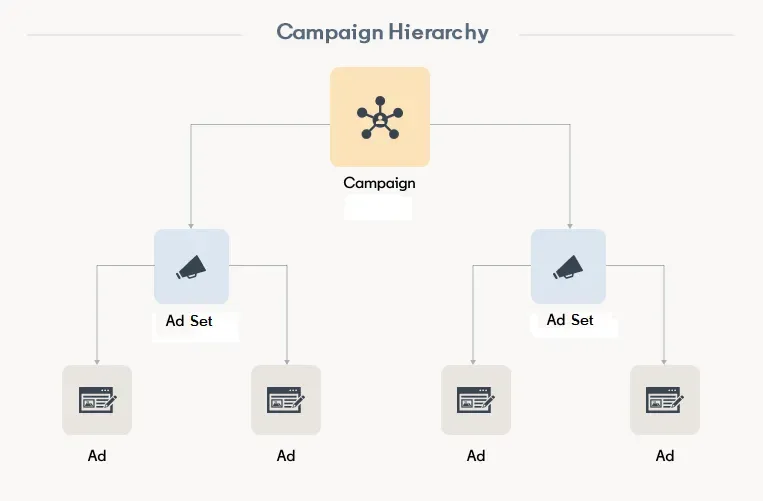
LinkedIn recently announced that it will rename some elements within the campaign hierarchy, also referred to as the ad campaign structure. As LinkedIn explains:
 

“To improve clarity across Campaign Manager, we’re updating the naming of entities within the campaign hierarchy. This hierarchy defines how campaigns are organized and managed.” 


Starting next month, the following changes will take effect:
 

Campaign Groups → now called Campaigns
 

Campaigns → now called Ad Sets
 

For a visual overview of LinkedIn’s updated ad structure, see this guide from Social Media Today.
 

Why LinkedIn is Updating Names
 

These updates are designed to simplify LinkedIn ad management and make it more intuitive for new advertisers. LinkedIn says:
 

“These updates align with industry-standard naming used in other ad management platforms, making it easier for new advertisers to get started. This also simplifies workflows and navigation, helping you manage campaigns more intuitively and enabling new features to perform at their full potential.”


In short, while the change is largely cosmetic, it brings LinkedIn more in line with other platforms like Facebook Ads and Google Ads, helping marketers transition between networks more easily.
 

What Marketers Should Do
 

For most marketers, there’s no action needed; your campaigns and ad sets will continue to run as normal.
 

However, if you’re used to LinkedIn’s previous structure, it’s worth noting the updates to avoid confusion when navigating Campaign Manager.
 

If you manage multiple campaigns or work with a marketing team, consider sharing this update with your colleagues to ensure everyone is on the same page.

Vulse ArtVulse ArtVulse Art
Vulse Art

You May also be interested in

  • blog img

    How LinkedIn's 2026 Algorithm Works and What It Means for Your Content Strategy

    LinkedIn has rebuilt its feed algorithm from the ground up. This means changes for everything we have been doing so far as marketers. Don't worry tough. At Vulse, we got you covered. The platform replaced five separate content retrieval systems with a single AI-powered ranking model that understands what posts actually mean, not just what keywords they contain. For marketing professionals, the practical impact is significant: organic reach per post has dropped roughly 50%, but the impressions that remain are far more targeted. Personal profiles now command an estimated 65% of feed allocation while company pages receive just 5%. This guide explains how the new algorithm works, what content it rewards and suppresses, and how to adapt your LinkedIn strategy to maintain visibility in What LinkedIn Changed and Why It Matters LinkedIn disclosed the technical details of this overhaul in a March 2026 engineering blog post written by TPM Tech Lead Hristo Danchev. The scale of the change is substantial. The previous feed architecture relied on five independent retrieval pipelines running in parallel, each with its own infrastructure, index, and optimisation logic. These included a chronological network activity feed, geography-filtered trending content, collaborative filtering based on similar members' interests, industry-specific modules, and multiple embedding-based retrieval systems. No single team could optimise across all five simultaneously. The ranking layer treated each impression independently, scoring posts in isolation with no awareness of what a member had recently read. The replacement is a unified system built on a large language model. As Social Media Today reported, the new architecture converts both user profiles and posts into dense mathematical representations within a shared space, then uses GPU-accelerated search to match content to members based on genuine relevance rather than simple keyword overlap. The result is a feed that behaves less like a chronological timeline and more like a personalised recommendation engine. LinkedIn now asks "what are you interested in?" rather than "who do you know?", and that interest model updates continuously based on your recent behaviour. How the Algorithm Now Evaluates Your Content Every post published on LinkedIn goes through a three-stage evaluation process that has become increasingly aggressive about quality filtering. Stage One: The Quality Gate The moment you publish, AI classifies your post as spam, low-quality, or high-quality. Engagement bait, repetitive templates, and obviously automated content may be filtered before they ever reach the ranking stage. LinkedIn VP of Engineering Tim Jurka confirmed the platform is actively reducing what he called "repetitive, click-driven posts" so the feed becomes "more relevant to your interests, and not a popularity contest." This means content that opens with prompts like "Comment YES if you agree" or uses recycled templates is now at risk of being suppressed before it reaches anyone. Stage Two: The Golden Hour Posts that pass the quality gate are shown to a small sample of the poster's audience during the first 60 minutes. The algorithm watches for signals of genuine engagement during this window. Thoughtful comments carry significantly more weight than reactions. Industry analysis suggests comments carry 8 to 15 times more algorithmic weight than likes. Dwell time also matters: posts that hold attention for 60 seconds or more see engagement rates around 15.6%, compared to just 1.2% for posts that generate under 3 seconds of attention. Responding to comments within the first hour produces approximately a 35% visibility boost. This makes the golden hour a critical window for anyone serious about LinkedIn reach. Stage Three: Scaled Distribution Posts that generate strong early engagement enter the broader distribution phase. The LLM-powered matching system can expand reach to second and third-degree connections and even non-followers whose professional interests align with the content's topic. This is where the new algorithm's semantic understanding becomes powerful. Someone interested in "electrical engineering" who engages with posts about "small modular reactors" will see related content on power grid optimisation and renewable energy infrastructure. These are connections that keyword-based systems would have missed entirely. What the Algorithm Rewards in 2026 LinkedIn's new system rewards content that demonstrates genuine expertise and provides professional value. Several patterns consistently perform well. Topical consistency builds authority. The algorithm's transformer-based model processes over 1,000 historical interactions per member. If you have been posting consistently about a specific professional topic, the system recognises that pattern and is more likely to surface your content to others interested in that subject. Niche depth beats broad reach. Original insight outperforms recycled ideas. The LLM can evaluate the semantic novelty of a post. Sharing a genuinely new perspective, first-party data, or a specific professional experience performs better than repackaging widely circulated advice. Meaningful engagement signals quality. A post that generates three thoughtful comments outperforms one with thirty reactions. The algorithm specifically weights active engagement (comments, shares, direct messages) higher than passive engagement (likes, views). Visual and document formats lead on engagement. Buffer's analysis of over one million LinkedIn posts found that carousels and document posts generate nearly 3 times more engagement than video and 6 times more than text-only posts. Native video delivers a 69% performance improvement over other formats, with LinkedIn Live generating 24 times more engagement than standard posts. Posts with standalone value perform best. Content that delivers its core message without requiring users to click an external link consistently outperforms content designed primarily to drive traffic elsewhere. External links can reduce reach by 25 to 68%, though LinkedIn's own editorial team has clarified that links are not penalised if the post itself delivers standalone value. What the Algorithm Suppresses LinkedIn is now actively demoting several content types that previously performed well through gaming tactics. Engagement bait. The platform's NLP models can detect engagement-bait phrases programmatically and demote them automatically. Posts asking for likes, comments, or shares in exchange for content access are penalised. Automation and engagement pods. LinkedIn is cracking down on comment automation tools, browser extensions, and engagement pods, stating these violate platform rules and undermine professional discourse. If you are relying on automated engagement to boost visibility, that strategy is now actively working against you. Generic AI-generated content. The algorithm can detect formulaic AI writing and actively deprioritises it. This does not mean AI tools cannot be part of your content workflow, but the output needs to be edited, personalised, and infused with genuine expertise to pass the quality filters. Mass-identical resharing. If 50 employees share the identical post word-for-word, the algorithm may only display it once, making 49 of those shares invisible. This has significant implications for employee advocacy programmes that rely on one-click sharing without personalisation. For more on how LinkedIn's platform changes affect advocacy programmes, see our analysis of what changed with LinkedIn employee advocacy. The Reach Decline in Context The headline numbers are stark. Richard van der Blom's Algorithm InSights report, based on analysis of roughly 400,000 profiles, found average post views declined approximately 50%, engagement dropped around 25%, and follower growth fell roughly 59% compared to previous periods. But these numbers tell only half the story. LinkedIn has confirmed that posting volume is up 15% year-over-year and comments have increased 24%, meaning there is more competition for attention within the feed. Engagement per post has actually risen 12 to 39% despite lower raw impressions. LinkedIn is comfortable trading raw reach for engagement quality. The platform now accounts for 41% of total B2B paid media budgets, and B2B return on ad spend reached 121% in The strategic intent is clear: LinkedIn wants its organic feed to deliver fewer but more relevant impressions while encouraging brands to invest in paid promotion for broader reach. For marketers, this means vanity metrics like total impressions matter less than ever. The question is whether your content reaches the right people and generates meaningful engagement with them. Why Employee Advocacy Is Now a Strategic Necessity The algorithm's preference for personal profiles over company pages makes employee advocacy the most effective organic distribution strategy on LinkedIn. The data is unambiguous. Analysis of 500,000 employee LinkedIn posts found that personal posts generate 9 times more total engagements, 9 times more clicks, 8.8 times more reactions, and 17 times more comments than curated company content. The economics are equally compelling. Employee advocacy delivers cost-per-clicks of $0.25 to $1.00 compared to LinkedIn Ads at $5 to $10 CPC. Leads from employee-shared content convert 7 times more frequently than leads from traditional channels. And employee networks are roughly 12 times larger than company follower bases. Our own analysis of 400 million LinkedIn impressions found that employee posts achieve 14 times higher engagement rates than company page content. The top performers in our dataset generated over 45,000 impressions per post by combining topical expertise with authentic personal voice. Personalisation Is the Differentiator One critical finding from the 2026 data is that personalisation separates high-performing advocacy content from invisible content. Only 3.6% of advocates actually edit content before sharing, but those who do see 3.6 times more total engagements, nearly 4 times more reactions, over 3 times more clicks, and more than 5 times more comments. Even minimal edits, such as adding a single line of personal context, yield nearly 3 times better performance than identical resharing. This is where the algorithm's mass-duplication penalty becomes critical. If your advocacy programme relies on employees sharing word-for-word identical posts, those shares are likely being suppressed. The solution is not to abandon shared content kits but to make personalisation easy and expected. For practical frameworks on building advocacy programmes that drive personalised sharing, see our employee advocacy training guide and our 2025 buyer's guide to advocacy software. Practical Strategy for Marketing Professionals Based on how the algorithm works in 2026, here is what marketing teams should prioritise. Focus on topical authority, not volume. The algorithm rewards consistent posting within a defined area of expertise. Help your team identify two to three content pillars where they have genuine knowledge and focus there. A data analyst sharing weekly insights about analytics trends will outperform someone posting daily about random business topics. Invest in the golden hour. The first 60 minutes after publishing determine how far your content travels. Post when your audience is active (Tuesday through Thursday tends to deliver peak engagement), and be ready to respond to comments immediately. Every reply within that window compounds the post's reach. Prioritise carousels and native video. Format matters. Carousel posts and document shares generate the highest average engagement, followed by native video. If you are still defaulting to text-only posts with external links, you are leaving significant reach on the table. Train employees to personalise, not just share. Provide content kits with templates, data points, and key messages, but make it clear that adding personal context is what makes advocacy posts perform. Even one sentence of original commentary transforms a templated share into authentic content. Our guide on LinkedIn posting best practices covers the specific techniques that work. Stop gaming and start adding value. Engagement pods, automation tools, and bait-style posts are now actively penalised. The algorithm is sophisticated enough to distinguish between genuine professional engagement and manufactured metrics. Focus on creating content that is genuinely useful to your target audience. Combine organic advocacy with paid amplification. Use organic employee posts to test what content resonates, then amplify top performers through Thought Leader Ads. This creates a flywheel where organic performance data informs paid strategy and paid distribution extends the reach of your best-performing employee content. Use scheduling tools without worry. LinkedIn has confirmed that scheduling tools are not penalised by the algorithm. Demographic attributes are also excluded from ranking signals, and the platform regularly audits its models to ensure fair distribution across creators. Frequently Asked Questions How does LinkedIn's 2026 algorithm rank content? LinkedIn now uses a unified LLM-powered system that converts posts and user profiles into mathematical representations, then matches them based on semantic relevance. Content passes through a quality gate, a 60-minute engagement evaluation window, and then scaled distribution based on topic matching and engagement quality. Why has my LinkedIn reach dropped in 2026? Average post reach has declined approximately 50% due to increased competition (posting volume is up 15% year-over-year) and LinkedIn's deliberate shift toward fewer but more relevant impressions. Engagement quality per post has actually improved, meaning the impressions you do receive are more targeted. Does LinkedIn penalise external links in posts? External links can reduce reach by 25 to 68%, but LinkedIn's editorial team has clarified that links are not penalised if the post itself delivers standalone value. The key is to make the post useful on its own rather than relying entirely on the link for content delivery. Are LinkedIn scheduling tools penalised by the algorithm? No. LinkedIn has confirmed that scheduling tools do not affect how the algorithm ranks your content. How important are comments versus likes for the algorithm? Very important. Thoughtful comments carry an estimated 8 to 15 times more algorithmic weight than likes. The algorithm distinguishes between active engagement (comments, shares, direct messages) and passive engagement (reactions, views), heavily favouring the former. Does employee advocacy still work with the new algorithm? Employee advocacy is more important than ever. Personal profiles receive approximately 65% of feed allocation compared to just 5% for company pages. Employee posts generate 9 times more engagement and deliver cost-per-clicks at a fraction of LinkedIn Ads pricing. However, personalisation is now essential because the algorithm penalises mass-identical sharing. Ready to build an employee advocacy programme that works with LinkedIn's 2026 algorithm? Vulse helps marketing teams create personalised content kits, coordinate employee sharing, and measure real impact on reach and engagement. Start your free trial or book a demo to see how it works.

    Loading

    How LinkedIn's 2026 Algorithm Works and What It Means for Your Content Strategy

    by - Rob Illidge -

  • blog img

    Why LinkedIn Content Now Shows Up in ChatGPT And What It Means for Employee Advocacy

    Google traffic is down. AI citations are up. And LinkedIn is suddenly one of the most trusted sources for AI tools like ChatGPT and Perplexity.For B2B marketers running employee advocacy programmes, this changes everything.The Shift from Search to AINew data from the Reuters Institute shows that Google search traffic to publishers declined by a third globally in the year to November 2025. Google Discover referrals dropped 21% year on year. Since May 2023, overall external referrals to publisher websites have fallen by 24%.The reason? AI is changing how people find information.Instead of clicking through search results, more people are asking ChatGPT, Perplexity, and Google's AI tools directly. These tools summarise content from across the web and provide answers in a conversational format. For many queries, users never visit the original source at all.According to Press Gazette, publishers expect traffic from search engines to decline by more than 40% over the next three years. This is not a temporary dip. It is a structural shift in how information is discovered and consumed.LinkedIn Is Now a Top Source for AI ToolsHere is where it gets interesting for B2B brands.Research from SEMRush, based on a study of 230,000 prompts across ChatGPT, Google AI, and Perplexity, found that LinkedIn is now the second most cited source in AI chatbot responses, trailing only Reddit.A separate study from Spotlight showed that AI tools are citing LinkedIn sources up to five times more often than before. ChatGPT cites LinkedIn 4.2 times more frequently, and Perplexity cites it 5.7 times more frequently.Of the 19,202 LinkedIn sources cited in the Spotlight analysis, over 15,000 came from LinkedIn Pulse articles specifically.As Social Media Today reported, AI chatbots are putting more trust in LinkedIn, and in LinkedIn articles in particular. This points to a new opportunity for brands and individuals who want to show up in AI-powered search results.What This Means for Employee AdvocacyIf your employees are posting regularly on LinkedIn, they are not just building brand awareness. They are building citable authority.When someone asks an AI tool a question about your industry, the answer may come from content your team published on LinkedIn. That is a level of discoverability that traditional SEO cannot match.This changes the value proposition of employee advocacy. It is no longer just about reach and engagement. It is about becoming a trusted source that AI tools reference when answering questions.For B2B companies, this is significant. Your buyers are already using AI tools for research. If your employees are visible, publishing valuable content, and building authority on LinkedIn, your brand is more likely to appear in those AI-generated answers.How to Optimise LinkedIn Content for AI CitationNot all LinkedIn content is created equal. If you want your posts and articles to be cited by AI tools, there are a few things to keep in mind.Publish LinkedIn articles, not just posts. The Spotlight data showed that the vast majority of LinkedIn citations came from Pulse articles. Long-form content is more likely to be indexed and referenced by AI systems.Answer specific questions. AI tools are looking for clear, authoritative answers to user queries. Structure your content around the questions your audience is asking. Use the question as your headline where possible.Verify your profile. LinkedIn profile verification is a trust signal. AI systems may use this as an indicator of authority when deciding which sources to cite.Keep your career history current. An up-to-date profile with a clear professional history reinforces credibility. AI tools are looking for signals that a source is legitimate and knowledgeable.Write factual, substantive content. AI tools favour content that is informative, well-structured, and easy to extract key points from. Avoid fluff. Get to the point and provide real value.Publish consistently. Topical authority builds over time. Regular publishing signals to AI systems that you are an active, engaged voice in your field.The Opportunity for B2B BrandsThis shift creates a real opportunity for companies investing in employee advocacy.While competitors focus on traditional SEO and paid advertising, you can build a library of LinkedIn content that AI tools trust and cite. Every article your team publishes is a potential answer to a question your buyers are asking.The companies that act now will have a head start. AI citation is not yet a crowded space. The brands that establish authority early will be harder to displace as these systems mature.Employee advocacy has always been about trust. People trust people more than they trust brands. Now AI tools are following the same pattern, favouring content from verified individuals over faceless corporate sources.What Vulse Customers Should Do NextIf you are already running an employee advocacy programme with Vulse, you are well positioned to take advantage of this shift. Here is how to maximise the opportunity:Encourage long-form content. In addition to regular posts, prompt your team to publish LinkedIn articles on topics where your company has expertise. These are more likely to be cited by AI tools.Focus on buyer questions. Create content that answers the questions your prospects are asking. Think about what someone might type into ChatGPT when researching your industry or evaluating solutions like yours.Build topical authority. Concentrate your team's content around specific themes. Consistent publishing on a focused topic signals expertise to AI systems.Track what is working. Use Vulse's analytics to identify which content is generating the most engagement. High-performing posts are likely candidates for expansion into full articles.The rules of discoverability are changing. Google traffic is declining. AI tools are rising. And LinkedIn content is becoming one of the most trusted sources for AI-generated answers.For B2B companies, this is not a threat. It is an opportunity. The brands that invest in employee advocacy now will be the ones AI tools cite tomorrow.

    Loading

    Why LinkedIn Content Now Shows Up in ChatGPT And What It Means for Employee Advocacy

    by - Rob Illidge -

  • blog img

    LinkedIn Simplifies Thought Leader Ads For Easier Discovery

    LinkedIn has made it simpler for brands to discover and sponsor user-generated content (UGC) with a new, streamlined discovery feature in Campaign Manager.This update helps marketers find relevant posts that mention their brand or event across 1st, 2nd and 3rd+ degree connections - then request permission to promote them as Thought Leader Ads.What’s new in Campaign ManagerEasier content discovery: A built-in search and highlight function surfaces posts, articles and newsletter pieces that mention your brand or event.Wider reach: You can now discover content from beyond your immediate network (including 3rd+ degree connections).Partnerships tab: Sponsored content opportunities are shown in a dedicated “Partnerships” area, and you can filter by content type to streamline outreach.Why brands should careThought Leader Ads let companies amplify authentic voices, not just company posts, by sponsoring organic content created by others.LinkedIn reports these ads see about 2x higher click-through rates than comparable single-image ads, making them an attractive option for boosting engagement and credibility.Key benefits:Authenticity: Boosting real users’ posts can feel more trustworthy than brand-only messaging.Efficiency: Built-in discovery reduces time spent hunting for promotable content.Scale: Access to 3rd+ degree posts expands potential sponsorship candidates.How to use LinkedIn Thought Leader Ads (step-by-step)1) Find relevant contentUse the new discovery tools in Campaign Manager’s Partnerships tab to surface posts, LinkedIn articles or newsletters that mention your brand or event.2) Get permissionBefore promoting anything, request sponsorship permission from the content creator. LinkedIn’s workflow in Campaign Manager makes it easier to send and track those requests.3) Launch a campaignOnce approved, you can convert the organic post into a Thought Leader Ad and run it with your chosen targeting and budget.Creator monetization: a possible next stepWhile the current process focuses on sponsorship permission, the improved discovery flow could lay groundwork for future monetization for creators.If LinkedIn decides to share ad revenue with creators whose posts are sponsored, it could create a new incentive for posting brand-positive content.That said, brands and platforms should balance monetization with authentic dialogue; paid incentives can unintentionally skew commentary.Coverage and context on LinkedIn’s broader creator efforts:Best practices for brandsPrioritize relevancy: Sponsor posts that genuinely align with your messaging and values.Be transparent: Clearly communicate sponsorship terms with creators.Measure performance: Compare Thought Leader Ads’ CTR and engagement to other ad types to understand ROI.Respect authenticity: Avoid pressuring creators into overly promotional content; authentic endorsements perform best.LinkedIn’s updated discovery tools make Thought Leader Ads easier to find and activate, opening up new opportunities to amplify user voices and boost campaign performance.As this feature rolls out to more countries, it’s worth testing Thought Leader Ads alongside existing ad formats to see how UGC-driven promotions perform for your brand.

    Loading

    LinkedIn Simplifies Thought Leader Ads For Easier Discovery

    by - Rob Illidge -

Revolutionise Your LinkedIn Output Today

Got a question? Give us a call or start your free trail today