Vulse ArtVulse Art
Home/How-to Guides

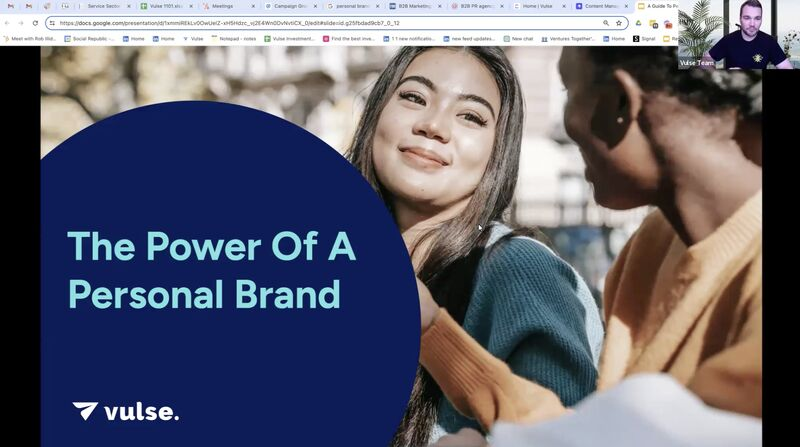
The Power Of Personal Branding for B2B Success

  • How-To Guides
blog-image

In today's fiercely competitive B2B landscape, where qualifications and experience are just the starting point, personal branding has emerged as the secret weapon for professionals striving to soar above the rest. 


As an expert in the field, we're here to guide you through the powerful world of LinkedIn and show you how to harness the immense power of personal branding for unparalleled success.


The Significance of Personal Branding in Today's Job Market


1. Differentiation: Standing Out in the Crowd


In a saturated professional landscape, your personal brand becomes the beacon that sets you apart. It's not just about showcasing your skills; it's about crafting a narrative that highlights the unique blend of your expertise, skills, and passions. 


By differentiating yourself, you become a memorable presence in the minds of peers, employers, and clients.


Taking Differentiation Further:


Explore unconventional avenues to express your unique qualities. 


Whether it's through innovative projects, thought leadership articles, or showcasing a distinctive approach to problem-solving, going beyond the norm enhances your differentiation.


2. Reputation Building: Shaping Professional Credibility


Your personal brand is, essentially, your professional reputation. Share your knowledge, insights, and experiences to shape a reputation that not only captures attention but also generates trust. 


A strong reputation is a currency that opens doors to opportunities and establishes you as a go-to authority in your field.


Building Credibility Consistently:


Regularly contribute to industry discussions, publish insightful content, and seek opportunities to share your expertise. A consistent and authentic approach to building your reputation ensures a lasting impact on your professional image.


3. Networking Opportunities


LinkedIn, a powerful networking platform, offers a wealth of opportunities for those with a compelling personal brand. 


Craft your personal brand to attract like-minded professionals and connect with industry influencers and thought leaders. 


This not only expands your network but also opens doors to invaluable career prospects and collaborations.


Strategic Networking Tactics:


Actively engage in relevant LinkedIn groups, share your insights, and initiate conversations. 


Networking isn't just about accumulating connections; it's about fostering meaningful relationships that can contribute to your professional growth.


4. Career Advancement: Navigating the Digital Landscape


In the digital age, recruiters and employers turn to platforms like LinkedIn to discover talent. A robust personal brand ensures that you're not just found but remembered. Accelerate your career growth by making yourself discoverable and irresistible to potential employers who seek candidates that go beyond a CV.


Enhancing Discoverability:


Optimise your LinkedIn profile with keywords relevant to your industry. Showcase your achievements, skills, and contributions clearly. A well-crafted profile acts as a dynamic CV that continuously markets your professional brand.


5. Professional Development: A Journey of Continuous Growth


Your personal brand is more than a static representation—it's a dynamic journey of continuous growth. 


Engage with industry-related content, participate in discussions, and interact with professionals to expand your knowledge and skillset. 


Personal branding is not just about self-promotion; it's about evolving into a better, more proficient professional.


Embracing Continuous Learning:


Demonstrate your commitment to professional development by showcasing your engagement with emerging trends, continuous learning initiatives, and active participation in relevant forums.


This approach positions you as a professional dedicated to staying at the forefront of your field.


Strategies for Building a Personal Brand on LinkedIn 


Craft a compelling and concise personal brand statement, showcasing your unique value proposition. Enhance your LinkedIn profile by incorporating a professional photo, creating an attention-grabbing headline, and crafting a summary that reflects your achievements and aspirations. Make sure it is accurate and relevant in every section to maximise your profile's overall appeal.


Position yourself as a thought leader by curating and sharing relevant content. Actively engage with your professional network, participating in discussions, and connecting with key influencers. Highlight specific achievements to provide a tangible demonstration of your capabilities, fostering trust and interest among potential employers.


Maintain consistency across online platforms, aligning your messaging, tone, and visual identity with your personal brand. Request endorsements and recommendations, and stay committed to continuous learning through industry engagement. Extend your personal branding efforts beyond LinkedIn by participating in offline events and regularly monitor and adapt your strategies for a dynamic and impactful personal brand.


Quick Tips for Optimising Your LinkedIn Profile


Complete All Sections


An incomplete profile won't cut it. Add a professional headshot, write a compelling headline, and provide comprehensive details about your work experience, education, skills, and certifications.


Use Keywords


Incorporate relevant keywords throughout your profile. This boosts visibility, making it easier for recruiters to find you.


Make Your Summary Compelling


Craft a captivating summary that highlights your skills, achievements, and aspirations. Use bullet points for clarity.


Showcase Your Achievements


Don't be shy about your successes. Highlight specific projects, initiatives, or outcomes to showcase your impact.


Network Strategically


Connect with key influencers in your industry. Engage with their content to increase your visibility and build meaningful relationships.


Share Valuable Content


Curate and create content that resonates with your target audience. Use LinkedIn Publisher for long-form articles that showcase your expertise.


Utilise Hashtags and Tagging


Increase the visibility of your content by using relevant hashtags. Tag influential individuals in your posts to expand your reach.


In conclusion, personal branding on LinkedIn is not a one-time effort, it's a continuous journey. Embrace the power of personal branding on LinkedIn, and watch your career ascend to new heights.


Elevate your B2B journey with Vulse - where personal branding meets unparalleled success.

Vulse ArtVulse ArtVulse Art
Vulse Art

You May also be interested in

  • blog img

    Simple LinkedIn Post Framework For Employee Advocates To Boost Reach And Trust

    In this guide, we share a repeatable, tested framework your employees can use to write LinkedIn posts that increase reach, drive engagement, and protect authenticity.Use these steps to coach advocates, run quick experiments, and measure wins.Learn a 5-part LinkedIn post framework optimized for employee sharing.Includes example templates, testing tips, and measurement signals.Designed to keep posts authentic while improving reach and CTR.Why a simple framework mattersMany employee advocates want to help but don’t know how to turn ideas into posts that perform on LinkedIn.A clear, short framework reduces friction and preserves each person’s voice while aligning content with business goals.Purpose: teach non-writers a reliable structure that balances authenticity and discoverability so your program drives measurable results.The 5-part LinkedIn post frameworkUse these five elements in order. Not every post needs all five, but this sequence is your baseline for consistent performance.1. Hook (1–2 lines)Start with a single strong sentence that creates curiosity, states a clear benefit, or challenges an assumption. Short hooks drive more clicks and reduce scroll fatigue.Examples: "Why our launch failed in week one" or "3 small habits that doubled my focus."2. Value or story (2–4 short paragraphs)Deliver practical value or a concise personal story. Keep paragraphs to one or two sentences. Bullet lists work well here to make ideas scannable.3. Evidence or microcase (1 paragraph)Add one concrete data point, a quick example, or a mini case that supports the claim. This builds credibility without turning the post into a long read.4. Clear human CTA (call to action)End with a simple CTA that invites conversation, not sales pressure. Examples: "What do you think?" "Share a tip below." "If you’ve tried this, tell me how it went."5. Don't forget accessibilityFinish with alt text for any image you attach which helps accessibility and sometimes keeps posts clear if images don’t load.Post templates advocates can useProvide employees with short, fill-in-the-blank templates they can personalize. Templates reduce decision fatigue and increase adoption.Lesson template: “Hook. What happened. What I learned. One tip. CTA.”How-to template: "Problem. Quick steps (3 bullets). Result. CTA asking for others’ tips."Thought starter: “Contrarian statement. Brief rationale. One question to the audience.”Practical coaching tips for managersRun a 20–30 minute workshop to introduce the framework.Use live examples from your team’s LinkedIn to map posts to the format. Short group edits show how to maintain voice while improving structure.Encourage employees to keep a swipe file of ideas and snippets they can quickly turn into posts. Consider pairing new advocates with a mentor for the first 6–8 posts.Test and measure what mattersFocus on simple, meaningful metrics that reflect both reach and quality:Impressions and engagement rate (likes + comments divided by impressions)Qualitative signal: number of meaningful comments or DM leadsDownstream signal: clicks to content, topic mentions, or demo requestsRun A/B tests on hook styles, post length, and CTA phrasing for two weeks per test. Use internal tracking or a platform like Vulse to capture advocate-level performance.Quick checklist before publishingDoes the first line create curiosity or state a benefit?Is the post under 250 words and broken into short paragraphs?Is there a clear CTA that invites conversation?Have you added 2–4 relevant hashtags and alt text for images?Common pitfalls and how to avoid themAvoid making posts read like ads. If a post feels promotional, remove the sales language and add a human insight.Don’t over-hashtag; three focused tags often outperform a long list. Finally, respect employees' voices-coaching should be optional and framed as skill development.Ready-to-run experiment (7 days)Day 1: Run a 30-minute training introducing the framework.Days 2–6: Each advocate posts using one template. Track impressions and comments.Day 7: Review results and share top-performing hooks and CTAs with the team. Repeat with minor tweaks.For examples and case studies on advocate-led content that scaled, see our resources.Author:Questions and answersQ: How often should employee advocates post?A: Start with one post per week per advocate. Consistency matters more than volume; increase frequency only after measuring quality and engagement.Q: How do we keep posts authentic while aligning to brand goals?A: Use frameworks and templates, but let employees personalize language, anecdotes, and opinions. Offer optional topic buckets rather than rigid scripts.Q: Should we require approval before posting?A: Prefer guidance over gatekeeping. Use lightweight checks for regulated industries, otherwise encourage speed and authenticity with optional review for new advocates.

    Loading

    Simple LinkedIn Post Framework For Employee Advocates To Boost Reach And Trust

    by - Rob Illidge -

  • blog img

    Vulse vs DSMN8: Which Employee Advocacy Platform Fits Your Team

    Employee advocacy has become essential for B2B brands. With LinkedIn's algorithm favouring personal profiles over company pages, businesses that activate their employees as brand advocates see significantly higher engagement and reach.When researching employee advocacy platforms, DSMN8 often appears in search results. It's a well-established player with enterprise clients. But for many teams, particularly those focused on LinkedIn, DSMN8's approach introduces complexity and cost that simply isn't necessary.This comparison examines both platforms to help you understand which approach makes sense for your team.DR: Vulse vs DSMN8 at a GlanceFactorVulseDSMN8Best ForTeams wanting LinkedIn results fastEnterprises needing multi-platform complexityStarting Price£17/user/month$850/month minimumLinkedIn APINative integrationStandard connectionPlatformsLinkedIn (where B2B happens)LinkedIn, Twitter, Facebook, Instagram, XingSetup TimeMinutesWeeks (onboarding required)Ideal Team Size5-500 employees100+ employees with dedicated adminTop Tip: If LinkedIn is where your audience lives, Vulse delivers faster results at a fraction of the cost. DSMN8 suits enterprises with large budgets who need to manage advocacy across multiple platforms they may never fully use.What Is Employee Advocacy Software?Employee advocacy software enables companies to distribute approved content through employee social networks. Instead of relying solely on corporate pages and paid ads, these platforms help employees share company content authentically.The results speak for themselves. Content shared by employees receives up to 8x more engagement than content shared by brand pages. Employee networks also have 10x more connections than a typical company page has followers.Both Vulse and DSMN8 aim to make this process simpler. The difference lies in their approach.Vulse Overview: Built for LinkedIn ResultsVulse is a B2B employee advocacy platform built specifically for LinkedIn. With unique LinkedIn API access, Vulse focuses on helping teams maximise results on the platform where B2B buyers actually spend their time.Key Vulse FeaturesNative LinkedIn API integration providing real-time analytics unavailable in other platformsProprietary tone-of-voice model ensuring content sounds authentic, not robotic or copy-pastedContent scoring system that predicts post performance before publishingAI-powered content ideas and article summariser for faster content creationTeam leaderboards to drive healthy competition without complex reward administrationPersonal profile analytics alongside company page metricsContent scheduling with optimal timing suggestionsISO 27001 and GDPR certified for enterprise-grade securityVulse PricingPlanPriceBest ForPro£17/user/monthIndividual professionalsBusiness£37/user/monthTeams with company pagesEnterpriseCustomLarge organisationsVulse charges per user, so you only pay for employees actively participating. A 20-person team pays approximately £740/month on the Business plan.DSMN8 Overview: Enterprise ComplexityDSMN8 (pronounced "disseminate") is an employee advocacy platform targeting enterprise organisations. Founded in 2016, it offers multi-platform sharing and extensive features that come with corresponding complexity.DSMN8 FeaturesMulti-platform sharing across LinkedIn, Twitter, Facebook, Instagram, Xing, WhatsApp, and emailAuto-scheduling for employees who don't have time to engage with the platformGamification engine with leaderboards and rewards (requires budget for prizes)AI content assistant for caption generationManaged services available for teams who find the platform too complex to run themselvesNewsletter feature for internal communicationsExtensive integrations with enterprise toolsDSMN8 PricingTierStarting PriceRealityStartup$850/monthMinimum commitment regardless of team sizeScaleCustomAdds customer success managerEnterpriseCustomRequired for larger deploymentsDSMN8 requires annual contracts and charges a flat monthly rate. For a small team of 10, you're paying $85 per person per month before you've activated a single employee.Feature Comparison: What Actually MattersLinkedIn PerformanceFor B2B companies, LinkedIn is where decisions happen. 80% of B2B leads from social media come through LinkedIn.Vulse was purpose-built for LinkedIn with native API access. This means real-time data, accurate analytics, and features designed specifically for how LinkedIn works. When LinkedIn changes its algorithm, Vulse adapts.DSMN8 supports LinkedIn alongside five other platforms. This breadth means their LinkedIn features compete for development resources with platforms your team likely won't use. The connection is standard rather than native.The difference: Vulse's LinkedIn focus means your employees get a tool optimised for where they'll actually post.Content AuthenticityNothing kills an advocacy programme faster than employees sharing identical, robotic posts.Vulse includes a proprietary tone-of-voice model that ensures each employee's posts sound like them, not like a corporate press release. Content scoring predicts performance before posting, helping employees optimise without endless trial and error.DSMN8 offers multiple caption options per post to avoid duplicate content. This helps, but employees still choose from pre-written options rather than content shaped to their voice.The difference: Vulse posts sound human. That's what drives engagement.Getting StartedAdoption is the single biggest challenge in employee advocacy. If employees don't use the platform, features don't matter.Vulse is designed for quick adoption. Employees can start sharing content within minutes of signing up. The interface focuses on what matters: creating and sharing content on LinkedIn. There's no training required because the platform is intuitive.DSMN8 includes onboarding support because setup typically requires it. Enterprise deployments take weeks, not days. The platform offers managed services for companies who find ongoing management too demanding.The difference: If you need managed services to run your advocacy platform, the platform may be the problem.Analytics and ReportingUnderstanding what's working is essential for improving results.Vulse provides real-time LinkedIn analytics through direct API integration. Weekly automated content reports summarise performance and deliver recommendations without requiring you to navigate complex dashboards. You see what's working and what to do next.DSMN8 offers extensive analytics with customisable dashboards, earned media value calculations, and detailed segmentation. This depth serves enterprises with dedicated analytics teams. For most marketing teams, it's more data than anyone has time to analyse.The difference: Vulse gives you actionable insights. DSMN8 gives you a data warehouse.IntegrationsBoth platforms connect with other tools, but the question is whether you need those connections.Vulse integrates with LinkedIn (with unique API access), CRMs, and analytics tools. The focus remains on doing LinkedIn exceptionally well.DSMN8 connects with Slack, Microsoft Teams, Salesforce, Marketo, Google Analytics, Adobe Analytics, and single sign-on providers. This breadth serves enterprises with complex tech stacks but adds configuration overhead for everyone else.The difference: More integrations means more setup, more maintenance, and more that can break.SecurityBoth platforms meet enterprise security requirements with ISO 27001 certification. Vulse is additionally GDPR certified with robust access management and incident response frameworks.Pricing Reality CheckThe pricing models tell the real story:Team SizeVulse (Business)DSMN8 (Startup)You're Paying DSMN810 users~£370/month$850/month130% more25 users~£925/month$850/month+Similar, but locked in50 users~£1,850/monthCustomEnterprise sales processWith Vulse, you pay for active advocates. Scale up or down as adoption grows. No annual lock-in on standard plans.With DSMN8, you pay $850/month whether you have 10 active employees or 2. Annual contracts mean you're committed before you've proven the programme works.For most teams: Vulse costs less and lets you prove ROI before committing to enterprise spend.What About Multi-Platform?DSMN8's multi-platform support sounds attractive. But consider your reality:Where do your B2B buyers spend time? LinkedIn.Where do employee posts drive pipeline? LinkedIn.Where do candidates research your employer brand? LinkedIn.Paying for Twitter, Facebook, Instagram, and Xing support makes sense if your employees will actively use those platforms for business purposes. Most don't.Vulse focuses on LinkedIn because that's where B2B results happen. You're not paying for platforms that sit unused.Who Should Choose Vulse?Vulse is the right choice if:LinkedIn is your primary B2B channel (it probably is)You want employees posting within days, not monthsYour budget is realistic for a growing programmeYou value authentic content over volumeYou need accurate LinkedIn data for reportingYour team is between 5 and 500 employeesYou want a focused tool rather than an enterprise platform you'll never fully useBook a Vulse demo to see the platform in action.When DSMN8 Might Make SenseDSMN8 could work if:You genuinely need employees sharing across multiple platforms regularlyYour organisation has 500+ employees and dedicated programme administratorsYou have budget for $10,000+ annually before proving ROIYour enterprise requires extensive integrations with Salesforce, Marketo, and AdobeYou prefer vendors to run the programme for you via managed servicesFor most B2B marketing teams, these requirements don't apply.The VerdictDSMN8 built a platform for enterprises who want everything. That means complexity, cost, and features most teams never touch.Vulse built a platform for teams who want LinkedIn results. That means focus, speed, and pricing that makes sense.If you're evaluating employee advocacy platforms, the question isn't which has more features. It's which will get your employees actually posting, consistently, on the platform where your buyers pay attention.For LinkedIn-focused B2B companies, that's Vulse.Frequently Asked QuestionsWhat is the main difference between Vulse and DSMN8?Vulse is a LinkedIn-specialised employee advocacy platform with native API integration and tone-matching AI, built for teams who want results without complexity. DSMN8 is a multi-platform enterprise solution with extensive features that require more budget, setup time, and ongoing administration.Which employee advocacy platform is better for LinkedIn?Vulse is purpose-built for LinkedIn with unique API access, real-time analytics, content scoring, and a proprietary tone-of-voice model. DSMN8 supports LinkedIn but spreads its development across six platforms, which means less depth in any single channel.How much does Vulse cost compared to DSMN8?Vulse starts at £17 per user per month, scaling with your team size. DSMN8 starts at $850 per month regardless of how many employees participate. For teams under 25 employees, Vulse typically costs 50-70% less while delivering LinkedIn-specific features DSMN8 lacks.Is DSMN8 overkill for small to mid-size companies?For most teams under 200 employees, DSMN8's pricing and complexity exceed what's needed. The $850 monthly minimum, annual contracts, and weeks-long onboarding process suit enterprises with dedicated administrators and large budgets, not growing marketing teams.Why doesn't Vulse support other social platforms?Vulse focuses on LinkedIn because that's where B2B engagement and lead generation happen. Rather than building mediocre support for six platforms, Vulse invests in making LinkedIn advocacy exceptional. Most B2B teams find this focus delivers better results than spreading effort across platforms their employees rarely use for business.How quickly can employees start using each platform?Vulse employees can start sharing content within minutes of signing up. The intuitive interface requires no training. DSMN8 deployments typically take weeks and include formal onboarding, which suggests the platform needs explanation before employees can use it effectively.Do I need managed services for employee advocacy?If a platform requires managed services to run effectively, that's a sign of complexity rather than a feature. Vulse is designed for marketing teams to manage themselves without dedicated administrators or external support.Is employee advocacy worth the investment?Absolutely. Content shared by employees receives up to 8x more engagement than brand content, and companies with advocacy programmes report 26% higher year-over-year revenue. The question is whether you need an enterprise platform to achieve those results, or whether a focused tool delivers the same outcomes at lower cost.Ready to Start Your Employee Advocacy Programme?The best employee advocacy programmes combine the right technology with clear goals and engaged employees. Complex platforms don't guarantee better results.Book a Vulse demo to see how LinkedIn-focused employee advocacy can amplify your brand's reach without enterprise complexity.

    Loading

    Vulse vs DSMN8: Which Employee Advocacy Platform Fits Your Team

    by - Rob Illidge -

  • blog img

    Build B2B Employee Video Brands on LinkedIn to Drive Trust and Pipeline

    Text posts are easy. Video feels harder. But for B2B personal branding, video builds trust faster than any other format.Buyers see faces, hear tone, and pick up context that text alone cannot convey. For buying committees evaluating vendors, watching an employee explain a concept creates credibility and memorability that a written post simply cannot match.What this guide covers:Why video outperforms text for B2B personal brandingA 5-step framework to launch employee video programmesProduction shortcuts that remove frictionRepurposing tactics to maximise ROI on recording timeMeasurement guidance to tie video activity to pipelineWhy video matters for B2B personal brandingThe data is clear: video drives engagement on LinkedIn.LinkedIn's own research shows that native video generates 5x more engagement than other content types on the platform. Wyzowl's State of Video Marketing 2024 found that 91% of businesses now use video as a marketing tool, up from 61% in 2016.But the real advantage for B2B is trust acceleration.Edelman's Trust Barometer consistently shows that people trust "someone like me" more than corporate communications. When that someone appears on video, the trust signal intensifies. Viewers see authenticity that polished brand content cannot replicate.The completion rate advantageShort-form video (under 90 seconds) drives significantly higher completion rates than longer content. Vidyard's Video Benchmarks Report shows that videos under 60 seconds have an average retention rate of 68%, compared to just 25% for videos over 20 minutes.For busy professionals scrolling LinkedIn, a 60-second insight video is far more likely to be watched completely than a 5-minute explainer.Who should own employee video personal brandingThis is a shared programme between marketing, communications, and HR.FunctionResponsibilityMarketingContent frameworks, measurement, amplificationCommunicationsCoaching, messaging guardrails, crisis protocolsHRParticipation incentives, policies, recognitionGallup's research on employee engagement shows that recognition drives participation. When HR treats video contributions as valued work (not extra work), adoption increases.Use an employee advocacy platform to coordinate requests, approvals, and distribution at scale. Centralised tools reduce friction and provide the analytics needed to prove ROI.Practical 5-step framework to launch video personal brandsStep 1: Define signature formatsPick two repeatable formats employees can commit to. Fixed formats simplify production and reduce decision fatigue.Recommended formats:FormatLengthPurpose90-second insight60-90 secQuick takeaway on an industry trendCustomer micro-case60-90 secExplain a customer result (respecting NDAs)How-to clip60-120 secDemonstrate a tip, tool, or processHot take30-60 secBrief opinion on breaking newsContent Marketing Institute research shows that consistent formats build audience expectations and improve engagement over time. Viewers learn what to expect and return for more.The key is repeatability. An employee who commits to one 90-second insight video every two weeks will build more presence than someone who attempts a complex production once and burns out.Step 2: Keep production simpleForget expensive equipment. Modern smartphones shoot excellent video. The barriers to entry have never been lower.Basic production checklist:Phone camera (iPhone or recent Android)Quiet room with minimal echoSimple lapel mic ($15-$30 options work fine)Natural light or a ring lightClean background (bookshelf, plain wall, or branded backdrop)Landscape for LinkedIn feed, vertical for mobile-first viewingWistia's production research confirms that audio quality matters more than video quality. Viewers tolerate slightly grainy video but abandon content with poor sound immediately.One message per clip. Do not try to cover multiple topics. State the insight, explain briefly, and end with a single CTA (profile visit, article link, or event registration).Batch recording tip: Record 4-6 clips in one session. This lets employees maintain posting cadence without scheduling weekly recording time. One focused hour can produce a month of content.Step 3: Repurpose for scaleOne recorded clip can become multiple content assets:OriginalRepurposed Assets90-second videoFull LinkedIn post with videoTranscript as text-only post30-second highlight teaserQuote image for engagementLinkedIn article expanding the ideaAudio clip for internal podcastHubSpot's content repurposing guide shows that repurposing can extend content ROI by 3-5x without additional production time.This approach multiplies reach while keeping employee time investment low. The person records once; marketing handles the rest.Store assets in an internal content library so employees can access approved clips, captions, and images when they are ready to post.Step 4: Distribute and amplifyProduction is half the battle. Distribution determines reach.Provide ready-to-post assets:Pre-written captions employees can use or adapt2-3 relevant hashtags (not more, based on LinkedIn's current best practices)Suggested posting times based on audience activityCoordinate early engagement. Richard van der Blom's LinkedIn algorithm research shows that engagement in the first 60 minutes significantly impacts distribution. Encourage colleagues to watch, comment, and share within that window.Use your employee advocacy tool to:Schedule posts for optimal times per employee time zoneSend reminders when videos are ready to publishTrack engagement across the teamIdentify top-performing content for further amplificationConsider promoting top-performing videos as Thought Leader Ads to extend reach beyond organic networks.Step 5: Measure what mattersTrack metrics at three levels:Content performance:MetricSourceWhat It Tells YouViewsLinkedIn AnalyticsRaw visibilityCompletion rateLinkedIn AnalyticsContent resonanceEngagement rateLinkedIn AnalyticsAudience responseSharesLinkedIn AnalyticsAmplification potentialProfile impact:MetricSourceWhat It Tells YouProfile viewsLinkedIn AnalyticsDiscovery increaseConnection requestsLinkedInNetwork growthFollower growthLinkedInAudience buildingBusiness outcomes:MetricSourceWhat It Tells YouLeads mentioning videoCRMDirect attributionMeetings bookedCRMPipeline impactInbound enquiriesSales teamAwareness effectHubSpot's guidance on measuring video ROI provides frameworks for connecting engagement metrics to pipeline goals.The goal is tying video activity to outcomes. When you can show that employees who post video generate more inbound leads, the programme sells itself internally.Governance and coaching: make it safe and effectiveVideo feels riskier than text. Employees worry about saying the wrong thing, looking unprofessional, or representing the company poorly.Good governance removes that uncertainty.Create a one-page playbook covering:Topics that are encouraged vs. off-limitsCompetitor mention guidelinesCustomer confidentiality boundariesDisclosure requirements (if applicable)Approval path for sensitive topicsFINRA's social media guidance provides a framework for regulated industries. Adapt the principles to your context.Offer micro-coaching sessions. A 15-minute call before someone records their first video dramatically improves quality and confidence. Cover framing, audio check, and message clarity.Keep governance light. The goal is enabling participation, not blocking it. If approval takes a week, employees will stop submitting content. Aim for 24-48 hour turnaround on reviews.Sprout Social's employee advocacy research found that overly complex approval processes are the number one killer of advocacy programmes. Simplify ruthlessly.Quick starter plan for the first 90 daysWeeks 1-2: FoundationSelect 8 volunteer employees (mix of roles and seniority)Finalise two video formats with templatesConduct 30-minute training on production basicsEach participant records 4 clips in a batch sessionWeeks 3-6: LaunchPublish 1 video per employee every 10 daysMonitor early engagement metricsProvide individual coaching based on performanceCelebrate early wins internallyWeeks 7-12: ScaleExpand to 20 employees based on learningsAutomate scheduling through advocacy platformEstablish repurposing workflow with marketingReport performance to stakeholders with pipeline attributionCommon objections and responses"I am not comfortable on camera"Most people feel this way initially. Start with audio-only or text-on-screen formats. Build confidence gradually. Many reluctant participants become enthusiastic advocates once they see engagement on their first video."I do not have time"Batch recording solves this. One hour every 4-6 weeks produces enough content to maintain presence. Provide scripts and talking points so employees are not starting from scratch."What if I say something wrong?"That is what the approval workflow is for. Review catches issues before publication. And authenticity beats perfection. Minor imperfections make content feel real."Our industry is too boring for video"Every industry has problems worth solving and insights worth sharing. Caterpillar makes heavy machinery interesting on social media. Your industry is not more boring than tractors.Tools and resourcesProduction:Descript - Video editing with transcript-based editingCanva - Quote images and video templatesRiverside - Remote recording for interviewsDistribution:Vulse - Employee advocacy scheduling and analyticsLinkedIn Campaign Manager - Thought Leader Ads for amplificationLearning:LinkedIn Learning video courses - Production skillsWistia's video marketing guides - Strategy and measurementHow long should B2B personal branding videos be on LinkedIn?Aim for 60 to 90 seconds for most professional posts. Vidyard's research shows shorter clips drive higher completion rates and are easier for employees to produce consistently. Save longer formats for deep-dive topics where audience intent is already high.Do employees need fancy equipment?No. Modern phone cameras plus a quiet room and a simple lapel mic are enough. Focus on clear audio, steady framing, and a single message per clip. Production polish matters less than authenticity and consistency.How do we encourage employees to share consistently?Use a mix of recognition, micro-training, and tools that reduce friction. Provide ready-made captions, recommended posting times, and a predictable cadence. When posting becomes routine rather than a special project, consistency follows.Should we script videos or let employees speak naturally?Provide bullet points rather than full scripts. Scripted videos often feel stiff. Bullet points keep the message on track while allowing natural delivery. Review the first take and coach from there.

    Loading

    Build B2B Employee Video Brands on LinkedIn to Drive Trust and Pipeline

    by - Rob Illidge -

Revolutionise Your LinkedIn Output Today

Got a question? Give us a call or start your free trail today