Vulse ArtVulse Art
Home/Company News

Vulse Joins AI Tech Delegation On Pioneering Mission To Hong Kong

  • Company News
blog-image

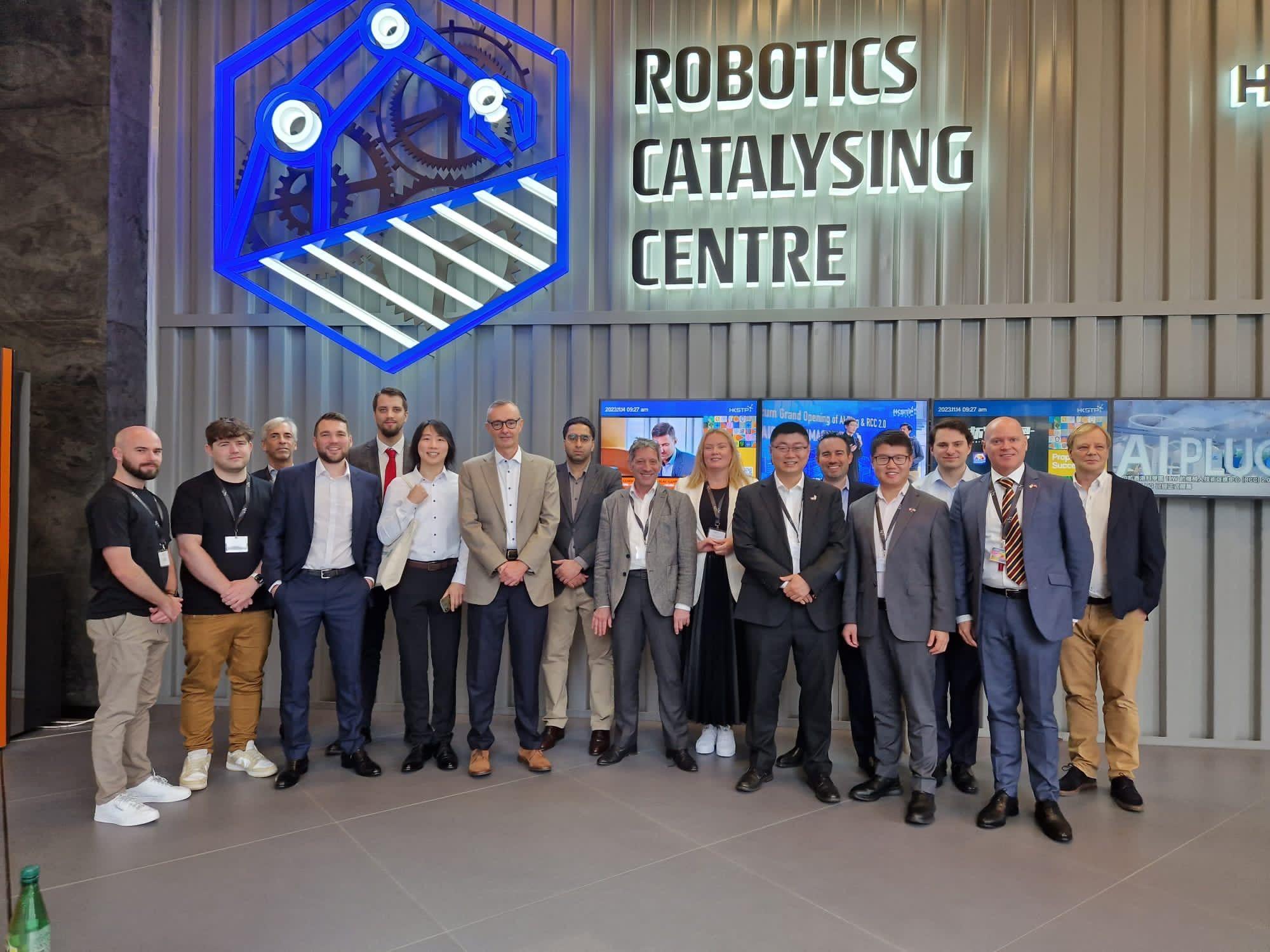
Vulse recently joined a select group of leading UK technology businesses on a groundbreaking AI tech trade mission to Hong Kong.


The mission aimed to explore new partnerships and opportunities in the rapidly evolving Asian market.

A diverse delegation showcased the UK's vibrant tech scene, emphasising the city's commitment to improving global technology collaborations.


Vulse, known for revolutionising LinkedIn content strategies with AI-powered tools, saw this mission as a pivotal step towards expanding its international footprint.


Our CEO, Rob Illidge commented:


"This mission to Hong Kong marks a new chapter for Manchester tech companies in a post-pandemic world.


The trip was a perfect opportunity to showcase our technology to new markets and demonstrate how AI can transform content marketing strategies.


We're excited about the prospects this opens up, not just for us but for the entire Manchester tech community."

Naomi Timperley, a Manchester tech enabler, added:


"The city's strategic location, coupled with its robust infrastructure and business-friendly environment, makes it an ideal launchpad for companies looking to expand in Asia and beyond. There is a huge amount of support available for UK businesses wanting to set up in Hong Kong,”.

The mission's success reflects the growing significance of the UK as a hub for technological innovation and international trade.

Vulse ArtVulse ArtVulse Art
Vulse Art

You May also be interested in

  • blog img

    Katie Gallagher OBE Joins Vulse Board

    Vulse is delighted to announce the appointment of Katie Gallagher OBE, Managing Director of Manchester Digital, to our board.With a distinguished career spanning over two decades in the digital and tech sectors, Katie will provide industry insights as Vulse continues its rapid growth.Katie Gallagher, a well-respected leader in the digital industry, has played a pivotal role in advancing Manchester's tech ecosystem through her leadership at Manchester Digital, the largest trade body for digital and tech businesses in the North West.Her commitment to building a vibrant digital economy was recognised with an OBE for services to the digital economy in 2023.Commenting on her appointment, Katie Gallagher OBE said:"I am thrilled to join the board of Vulse, a company that is at the forefront of enhancing how businesses engage with their employees and amplify their voices on LinkedIn.The team at Vulse, led by Rob and Annika, has developed an innovative platform that empowers employees to advocate for their organisations. I look forward to contributing to Vulse's mission and helping the company tobecome the next British unicorn."Annika Sanderson, Co-founder of Vulse, added:"We are incredibly excited to welcome Katie to our board. Her extensive experience in the digital industry and her leadership at Manchester Digital will be invaluable as we continue to grow and evolve.Having a female mentor like Katie, who has such a deep understanding of the challenges and opportunities within the digital sector, will be an incredible asset to Vulse.Her guidance will be instrumental as we work towards our vision of transforming how businesses harness the power of employee advocacy."Katie Gallagher OBE joins dotDigital founder, David Ivy, on our board.

    Loading

    Katie Gallagher OBE Joins Vulse Board

    by - Rob Illidge -

  • blog img

    Using Vulse To Grow Sales: How Planit Testing Does It - Exclusive Interview With Ryan Short

    We sat down with Ryan Short, a software and technology sales professional with over a decade of experience. Ryan's journey into the tech world is anything but conventional. Initially pursuing a degree in archaeology, he quickly realised the limited financial prospects. This led him from "digging for gold" to metaphorically "calling for it" in sales.Ryan's career began in cybersecurity, where he first leveraged the power of LinkedIn for marketing and sales promotion. Over the past ten years, LinkedIn has transformed significantly, evolving from a professional platform into a critical tool for business networking and promotion. Following his time in cybersecurity, Ryan transitioned into various roles within SaaS and AI firms, ultimately landing at Planit Testing. Here, he leads the UK sales team, focusing on new business campaigns and leveraging innovative tools like Vulse to drive success.In this interview, Ryan shares insights into his background, the evolution of LinkedIn, and how Planit Testing is making a difference in the realm of software quality assurance. He also discusses the importance of AI in content generation and the future trends that will shape the industry.Tell us about your background and your current role.I’m Ryan Short. I’ve worked in software and technology sales for the past ten years, which has been a bit of an interesting journey. I started off studying archaeology at university and found there was no money in that so I went from digging for gold to calling for it.I started in cybersecurity which was my first entry into using LinkedIn for marketing and sales promotion. Helping to build relationships and back then, ten years ago, LinkedIn was a different beast. It was completely different. It was a new world for a lot of people. And I don’t think many people knew how to use it.From cybersecurity, I changed over into a SaaS product house and then into an AI firm to where I am now, Planit Testing. We specialise in software quality assurance, and I’m leading the sales team in the UK, responsible for developing new business campaigns, and lots of fun stuff, which is why I use Vulse.Tell us about Planit Testing, what the company does, and your role.We’re experts in quality engineering. For the longest time, some of the biggest issues with DevOps, launching any kind of new systems, platforms, or anything technology-wise are defects in the codebase. Over time, these issues can scale which causes performance issues of the applications, ruining customer experiences.A great example is that of Sainsbury’s. Their ordering platform failed recently so orders weren’t going out causing loss of revenue and an unhappy customer base. I’ve heard of other cases, where stock is impossible to get ahold of, or locating where it is for various retailers just because their systems aren’t working.What people think are quite easy, functional things that should work quite often is a lot more of a laborious process. Even when you look at startups, for instance, you need to get your product to market as quickly as possible, but if it’s a bug-ridden mess, that doesn’t work too well. It’s kind of a bit of a dead duck on entry, unfortunately. So you have to sit there as a founder with your head in your hands.We help startups to enterprises on large projects, including AI, data, and quality assurance functioning, from initial consultation to the end of projects. I’m applying my years of experience, to support Planit Testing, in bringing new products to the UK market, building awareness, and elevating sales.How does the company currently utilise LinkedIn, both from a company page perspective and also employees as brand advocates?We utilise LinkedIn through Vulse as a brand awareness platform; promoting covering events, company updates, and our thought leadership pieces around AI, differentiating ourselves in a crowded space with AI-powered tools and AI tools.We also focus on B2B marketing to reach our business customers effectively.It’s an important time, as most businesses are being forced to implement some element of AI, as you may have seen from our recent LinkedIn post, 80% of CIOs are looking to introduce AI into their systems, increasing brand awareness. The problem lies in the data research and assurance to power those processes. LinkedIn is great for us providing valuable assets and guides on these topics through the LinkedIn content platform.Our employees post regularly, acting as brand advocates, sharing their unique journeys and how we’re helping customers, enhancing our brand identity. Especially when we’re helping businesses avoid huge headaches with flawed software systems when they hit the market.We also leverage digital marketing strategies to enhance our online presence. We also utilise email marketing to engage with our audience and share valuable content.How have you seen LinkedIn evolve in terms of personal content sharing?I find LinkedIn interesting. In terms of my role as a sales leader, I have seen it change quite drastically over ten years when users didn’t know what it was or what it did. I’ve found now that real personal human stories resonate, and generate interactions.As I started to develop my content approach, I noticed that the algorithm has changed rapidly and that without a platform like Vulse, it can be a challenge to keep up with the algorithm and understand what posts will reach more users.A lot of creators and “influencers” have been posting and trying to see what sticks for the longest time so it’s nice to have a service like Vulse that understands the latest algorithm updates, and allows brand advocacy in a safe space, whereby, you know, it’s going to do well.Before using Vulse, what were your challenges in terms of utilising LinkedIn?Before using Vulse, what were your challenges in terms of utilising LinkedIn for your marketing efforts?It would be understanding the LinkedIn algorithm, knowing what is going to be preferred in feeds, and if it will be seen by audiences. That’s what I find interesting about content marketing, is that you need to create valuable assets that are shared with audiences, and for it to resonate with them.That was initially difficult to gauge, making sure you’re not just content at a wall. You needed to have a real understanding or knowledgeable insights and that’s where thought leadership took over. Beforehand, it has been the equivalent of working in the dark, whereas now Vulse is the solution that lights up that room.What do you enjoy the most about Vulse? What kind of features do you use?I like to use the Content Theme Planer and Article Summariser as a marketing tool. Solutions that save me time, and put it back in my diary. Some of the topics I like to discuss can be complex, they’re effectively a niche within a niche, so the content I share needs to be bespoke and focused.As soon as I tried these features, I found that the output was incredibly precise, and matched my tone of voice, especially on technical themes. They allow me to add a theme, which then develops a post idea, which is a great starting point for the content creation process. And you know, it’s going to be seen in the feeds of my LinkedIn users.It’s allowed me to launch my personal brand, build thought leadership, and be noticed by potential customers, who are keen to learn more about our services, enhancing both my personal branding and personal brands.What is the future of AI and content generation?I think it’s important to remember there’s IA (Intelligent Automation) and AI (Artificial Intelligence), being able to create content, and understanding how it will perform before I hit post. So as a user, I can take that data and understand that if I tweak certain elements it’s likely to generate more engagement.For LinkedIn in particular, as the algorithm develops, we’ll be able to look at content trends in real-time, for example, a brand may look to post about a celebrity about a partnership, yet that person has in the past few hours negatively impacted their reputation by committing a crime.Tools will be able to analyse that public sentiment, warning content creators that they may wish to change their messaging.I’m looking forward to the advancements in customer sentiment analysis, and the ability to identify content that will add value to potential customers. For example, using intent data to say that specific target audiences are most interested in X and the current post discusses Y, which alerts you to make a change.

    Loading

    Using Vulse To Grow Sales: How Planit Testing Does It - Exclusive Interview With Ryan Short

    by - Rob Illidge -

  • blog img

    Vulse Attends Parliamentary Panel By Lumi.Network and Accenture

    Vulse recently attended a Parliamentary Panel discussion titled Bridging the Skills and Innovation Gap, hosted by Lumi.Networkand Accentureand held in the Palace of Westminster, London.The session brought together leading voices from government, education, industry, and the UK tech ecosystem to explore how the UK can bridge its widening digital skills gap through initiatives that equip people with essential skills and build innovative problem-solving to drive economic growth.As a data-driven social content platform with deep roots in the UK tech ecosystem, Vulse contributed to the post-panel discussion that explored the challenges and opportunities shaping AI adoption nationwide.Below is a summary of the key themes from the session, and why they matter for businesses across the UK.1. Behavioural Cultural Change: AI Upskilling Is a TransformationAttendees emphasised that AI skills development is not just training, it’s behaviour change.AI success depends on building confidenceand agency, not fear.Human-AI collaboration is becoming essential in every UK organisation.Soft AI skills such as adaptability, communication, and digital literacy must be prioritised.At Vulse, we see that the UK teams who grow fastest with AI are those who embrace experimentation, curiosity and a culture of continuous learning.2. Confusing Landscape: UK Businesses Need Clearer Access to AI ProgramsDespite many government-backed AI courses, businesses, especially SMEs, shared that:They don’t know where to find trusted, high-quality training.Free programmes are often perceived as lower quality.There is no unified narrative helping SMEs understand their options.The panel highlighted the need for clearer communication from both industry and government. Vulse supports this mission by providing accessible, practical AI tools and education to teams of all sizes.3. Reaching Underrepresented Groups Across the UKA major concern was that SMEs and disadvantaged communities risk falling behind.The discussion highlighted the need to focus on:Underserved UK regionsSocial mobility challengesGender representation in techEnsuring SMEs can access the same AI opportunities as large enterprisesVulse is committed to democratising access to AI tools and insights, regardless of business size or location.4. Public-Private Partnerships Are Essential for UK AI GrowthThe UK’s digital skills strategy faces funding gaps and uncertainty.The panel emphasised:Many successful initiatives now rely heavily on private partners.Businesses need to see a clear ROI to take part in government upskilling efforts.A joined-up national strategy is essential.The panel highlighted the power of collaborative public-private partnerships to drive the UK's AI competitiveness.5. AI Risk Mitigation: Balancing Speed and SafetyPanellists discussed the tension between innovationand compliance:Companies want to move fast with AI adoption to stay competitive.Legal and compliance teams are urging caution.Recruitment is a key battleground - some employers are stepping back due to legal fears, while others push ahead to stay aligned with public use.Vulse supports organisations in adopting AI safely, responsibly and transparently.FAQ: AI Upskilling UK Workforce - What Businesses Need to Know1. What did the Parliamentary Panel involve?Panellists included Minister Lloyd, Minister for Digital Economy, Department for Science, Innovation and Technology, Dame Chi Onwurah MP, Chair of the Science, Innovation and Technology Committee, Freha Arshad, Managing Director at Accenture and Prashant Raizada, Founder and CEO at Lumi. The discussion was centred around the panellists’ experience across government, industry and education, followed by questions from the audience.2. Why did Vulse attend?Vulse attended as a UK-based AI company with expertise in helping teams adopt AI responsibly and effectively through real-world tools, content automation and workforce insights.3. What are the biggest AI skill gaps in the UK right now?Soft skills, AI confidence, data literacy, responsible AI usage, and practical hands-on experience, especially within SMEs and underrepresented regions.4. Are there government-funded AI training programmes for SMEs?Yes, but awareness is low. Many SMEs report confusion around where to start. The panel identified this as a priority area for improvement.5. How can UK businesses adopt AI safely?By balancing innovation with proper risk management, transparency, and clear internal guidance. Tools like Vulse help teams adopt AI confidently and in line with compliance needs.6. How does Vulse support AI upskilling?Vulse provides an AI-powered platform for content creation, employee advocacy, training support, and analytics, helping organisations build confidence and capability in day-to-day workflows.

    Loading

    Vulse Attends Parliamentary Panel By Lumi.Network and Accenture

    by - Rob Illidge -

Revolutionise Your LinkedIn Output Today

Got a question? Give us a call or start your free trail today