Vulse ArtVulse Art
Home/How-to Guides

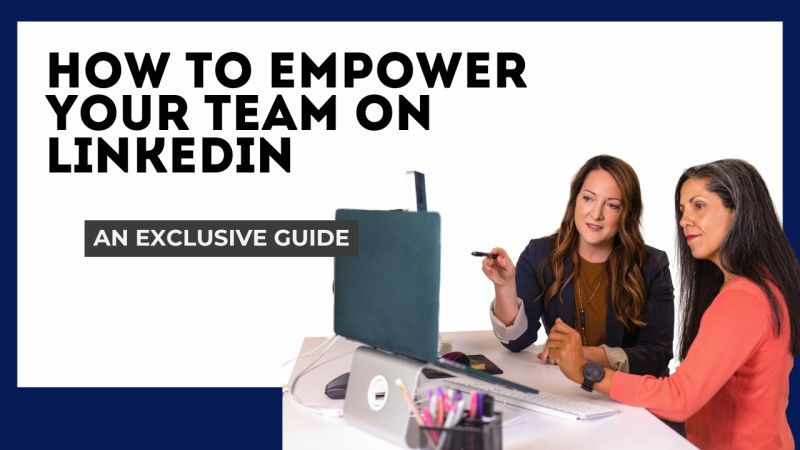
How To Empower Your Team on LinkedIn: An Exclusive Guide

  • How-To Guides|
  • LinkedIn Strategy
blog-image

LinkedIn continues to act as the leading platform for professional networking, brand promotion, and thought leadership.


While many organizations focus on creating a strong corporate presence, the untapped potential lies in activating employees to become brand ambassadors on LinkedIn.


Encouraging and facilitating employee engagement on this platform can significantly enhance brand visibility, credibility, and business growth.​


The Growth Of Employee Engagement On LinkedIn
 

Employee advocacy on LinkedIn serves as a powerful extension of a company's brand.


When employees share company content, achievements, and insights, they amplify the organization's reach to their personal networks, fostering trust and authenticity. According to research, content shared by employees receives significantly higher engagement than that shared through official corporate channels. ​


Ways To Activate Employees On LinkedIn
 

Profile Optimization


Assist employees in creating comprehensive and professional LinkedIn profiles. A well-crafted profile not only enhances the individual's professional image but also reflects positively on the company. Encourage the inclusion of accurate job titles, detailed descriptions, and appropriate skills.
 

Content Sharing and Creation


Motivate employees to share company updates, industry news, and original content. Providing a repository of pre-approved content can simplify this process. Additionally, recognizing and sharing employee-generated content on the company's official page can boost morale and encourage further participation.


Training and Workshops


Conduct regular sessions to educate employees on the benefits of LinkedIn engagement, best practices for networking, and guidelines for content sharing. Empowering employees with the necessary skills and knowledge can lead to more confident and effective participation. 


Recognition and Incentives


Implement programs that acknowledge and reward employees who actively contribute to the company's LinkedIn presence. This could include featuring top contributors in internal communications or offering incentives for consistent engagement. ​


Leadership Involvement


Encourage executives and managers to lead by example. When leadership actively participates on LinkedIn, it sets a precedent and underscores the platform's importance, inspiring broader employee involvement. ​


Benefits Of An Activated Workforce On LinkedIn


Enhanced Brand Visibility


Collective employee engagement can exponentially increase the reach of company content, leading to greater brand awareness and recognition. 


Authentic Representation


Employees serve as genuine voices, providing authentic perspectives that resonate more effectively with audiences compared to traditional corporate messaging.


Talent Attraction and Retention


A strong LinkedIn presence showcases the company's culture and values, 
attracting potential talent and fostering a sense of pride and belonging among current employees.


Business Development


Engaged employees can leverage their networks to identify and cultivate business opportunities, driving growth and innovation. ​


Activating employees on LinkedIn is not merely about increasing online activity; it's about harnessing the collective power of your workforce to authentically represent and elevate your brand. By implementing strategic initiatives to encourage and support employee engagement on LinkedIn, organizations can unlock new avenues for visibility, credibility, and business success.

Vulse ArtVulse ArtVulse Art
Vulse Art

You May also be interested in

  • blog img

    The Complete Guide To Employee Advocacy Training For High-Impact LinkedIn Results

    This article explains how to build a practical, repeatable microlearning program to turn employees into confident LinkedIn advocates.Here's our step-by-step 6-week plan, module ideas, delivery tips, and ways to measure and sustain participation.Short, weekly modules increase completion and confidence.Design modules for profile polish, content curation, posting, and compliance.Use cohort challenges, badges, and reporting to reinforce habits and show value.Why microlearning works for employee advocacyLong training sessions are a participation killer. Microlearning breaks onboarding into tiny, targeted bursts that employees can finish on a commute or between meetings.For employee advocacy, the goal is not to create social media experts but to build repeatable, brand-safe habits.Micro-modules reduce friction, increase retention, and let you iterate content based on performance and feedback.6-week microlearning onboarding planThis ready-made plan balances skill, confidence, and compliance. Each week includes a 5–12 minute lesson, a practical task, and a quick quiz or reflection.Week 1: Why advocacy matters and low-friction first stepsExplain program purpose, expectations, and benefits. Task: like or share one company post with a personal note.Week 2: LinkedIn profile polishTeach headline, summary, and experience tweaks that improve discoverability. Task: update headline and add a short summary line aligned with role.Week 3: Content types and curationShow the 3 content types you want (company news, thought leadership, human stories). Task: save or suggest 3 shareable pieces from a provided content pack.Week 4: Simple post frameworksTeach a 3-part post formula: hook, value, CTA. Task: draft and publish a short post using the template.Week 5: Compliance and brand guardrailsCover what employees can and cannot say, privacy rules, and how to escalate questions. Task: complete a 3-question compliance quiz.Week 6: Amplify and measureShow how advocacy ties to metrics: reach, profile views, referral traffic. Task: compare week 1 and week 6 metrics and share one learning.Essential micro-modules to includeProfile optimization checklist3 quick post templates with examplesContent curation playbook and a monthly content packShort compliance scenarios and a one-question escalation flowSimple metrics dashboard and how to read itDelivery formats and tools that improve completionChoose formats that match how your people work. Mobile-first video, bite-sized emails, and chat nudges outperform long PDFs.Short videos (60–120 seconds) and captionsInteractive quizzes and reflection promptsSlack or Teams nudges and cohort channels for peer feedbackMicro-certificates or badges delivered via email or LMSUse your employee advocacy platform for content distribution and tracking. For example, integrate with your content hub to push curated packs and track clicks.Motivation, reinforcement, and measurementTraining is only useful if habits stick. Combine social proof, recognition, and visible metrics to keep momentum.Cohort challenges: small groups complete tasks together and share results.Visible leaderboards: show top contributors and sample wins.Recognition rituals: highlight stories in internal newsletters or town halls.Tie your program to outcomes. Use simple KPIs like participation rate, average reach per post, and referral traffic to campaigns. If you need a measurement framework, see our guide on proving advocacy impact.Common roadblocks and how to fix themLow completion: reduce module length and add a 1-minute reward (badge or recognition).Fear of posting: offer templates, peer review, and a private practice channel.Compliance concerns: build clear do/don't examples and a fast escalation path.Content scarcity: provide a monthly content pack and allow employees to suggest ideas.Scaling beyond onboardingAfter the initial 6-week program, keep momentum with monthly micro-modules - product updates, customer wins, or personal storytelling prompts.Couple learning with incentives and recognition programs to sustain long-term participation and measurable results.Q: How long should each micro-module be?A: Aim for 5–12 minutes of content plus a 5-minute task. Shorter modules increase completion and repeat engagement.Q: What metrics prove training success?A: Participation rate, active advocates, average reach per post, profile views, and referral clicks to campaigns are practical starting KPIs.Q: Can we run onboarding without a dedicated advocacy platform?A: Yes, but platforms dramatically ease distribution, tracking, and content packaging. If you lack one, use a mix of email, Slack channels, and a simple spreadsheet for tracking.

    Loading

    The Complete Guide To Employee Advocacy Training For High-Impact LinkedIn Results

    by - Rob Illidge -

  • blog img

    How To Use LinkedIn Articles And Newsletters To Scale Employee Thought Leadership

    In this exclusive guide, we'll show you how B2B marketing and HR teams can use LinkedIn long-form content, specifically Articles and Newsletters, to build scalable employee thought leadership that drives trust, discoverability, and pipeline signals.Purpose: Practical steps to launch and scale employee-written LinkedIn Articles and Newsletters.Outcome: Increased discoverability, shareable assets, and repeatable workflows for employee advocates.Who this helps: Marketing managers, internal comms, and HR teams running employee advocacy programs.Why long-form content matters for employee personal brandsShort posts amplify reach, but Articles and Newsletters create lasting assets.They index on LinkedIn and search engines, demonstrate expertise, and give employees a reusable content hub for speaking, sales enablement, and recruiting.LinkedIn’s own guidance on newsletters and articles shows they help authors build a subscriber base and extend reach beyond a single post. See LinkedIn’s help center for how LinkedIn newsletters work.Three reasons to include Articles and Newsletters in your employee advocacy playbookSearchable credibility: Articles live on the author’s profile and can be found via Google and LinkedIn search.Subscriber momentum: Newsletters create an opt-in audience that notifies subscribers when new issues publish.Repurposable assets: Long-form pieces feed shorter posts, videos, and sales enablement collateral.How to run a low-risk pilot for employee Articles and NewslettersStart small with a 6-week pilot that focuses on coaching, templates, and measurement.Week 0: Select authors and set goalsChoose 4 to 8 employees across sales, product, and customer success.Set simple goals: subscribers, article views, and lead signals from comments or messages.Week 1-2: Train and templateRun a two-hour workshop on topic selection and storytelling. Use practical templates: intro hook, 3 insight sections, and action items.Provide a headline swipe file and SEO tips for LinkedIn Articles.Week 3-6: Publish and amplifyPublish one article per author and convert it into a weekly or biweekly newsletter issue if traction appears.Amplify through employee networks with a simple share kit: suggested post copy, hero image, and tagging guidelines.Editorial and governance rules that keep the program scalableLong form introduces brand and compliance risk if unmanaged.Put straightforward governance in place:Lightweight editorial review for claims and sensitive content.Ownership rules: authors own voice, company reviews for legal or customer references.Republishing policy: who can repurpose company blog content and how to credit sources.Measurement: metrics that matterMeasure both direct and downstream impact.Direct: article views, read time, newsletter subscribers, and engagement rate.Downstream: inbound messages, demo requests mentioning content, and link clicks to gated assets.Track a small set of KPIs and add qualitative win stories from sales and recruiting.Repurposing playbook: get more from each long form pieceExtract 3–5 short posts promoting key quotes or stats.Create a 60–90 second video summarizing the article for LinkedIn native video.Convert article sections into a downloadable slide or checklist for lead capture.Tools such as an employee advocacy platform can automate content distribution and track amplification across the team.Best practices and examplesEncourage authenticity and useful takeaways. HubSpot’s guide to LinkedIn Articles is a practical resource for structure and optimization.Also, review industry thought leadership research to understand what audiences value in long-form content.Tip: Start with customer problems, lessons learned, or unique frameworks rather than promotional pieces. Readers subscribe for insights, not pitches.Questions AnswersQ: Who should own editorial coaching for employee newsletters?A: A cross-functional content lead or communications manager should coach authors, supported by subject matter reviewers.Q: How often should employees publish newsletters?A: Start with biweekly or monthly cadence. Frequency should match the author's bandwidth and the audience response rate.Q: Can company content be republished as employee articles?A: Yes, with clear attribution and small edits to reflect the author voice. Include a republishing clause in your governance doc.

    Loading

    How To Use LinkedIn Articles And Newsletters To Scale Employee Thought Leadership

    by - Rob Illidge -

  • blog img

    How to Grow Your Presence On LinkedIn: New Data Insights Revealed

    LinkedIn has become the go-to platform for professionals to connect, share insights, and build brand reputation.With 1.2 billion members worldwide, including an estimated 480 million active users, the platform is experiencing record-high engagement levels.For businesses, founders, and professionals, the question is no longer “Should I be on LinkedIn?” but “How do I maximize my impact here?”According to Buffer’s latest LinkedIn study (covering over 2 million posts from more than 94,000 accounts), there’s one clear answer: posting frequency.Why Posting Frequency Matters on LinkedInLinkedIn’s algorithm is designed to reward activity.The more often you post, the more opportunities the system creates for your content to appear in front of your target audience.Put simply: more posts = more reach.And here’s the data to back it up:2–5 posts per week → +1,000 impressions per update6–10 posts per week → +5,000 impressions per update11+ posts per week → +16,000 impressions per updateNot only do impressions increase, but engagement (likes, comments, shares) also rises as a natural byproduct of greater visibility.Buffer notes that LinkedIn doesn’t impose a cap on reach when you post frequently — instead, it leans into your activity.Why This Matters for Professionals and BrandsLinkedIn is no longer just a recruitment tool, it’s a content platform.Conversations that used to happen on X are now shifting to LinkedIn, making it an increasingly valuable space for thought leadership, networking, and lead generation.For professionals, this means every post is an opportunity to:Showcase expertiseBuild trust with your networkReach potential clients, employers, or partnersSpark meaningful conversationsFor businesses, especially in B2B industries, LinkedIn has become one of the most cost-effective ways to build a brand presence and connect directly with decision-makers.According to LinkedIn’s Marketing Solutions data, 4 out of 5 people on the platform drive business decisions, making it a must-use channel for B2B growth.Best Practices for Posting on LinkedInWhile frequency is key, it’s not just about posting anything. To build a strong presence:Focus on value: Share content that educates, inspires, or sparks discussion.Mix formats: Use a combination of text posts, carousels, images, and video.Engage back: Reply to comments and interact with others’ content.Be consistent: Stick to a schedule — whether that’s 3 posts a week or daily updates.Test learn: Monitor impressions, clicks, and engagement to refine your approach.How Vulse Helps Agencies and Businesses Grow on LinkedInAt Vulse, we’ve seen firsthand how powerful LinkedIn can be when used strategically.Born from our own journey as an agency, we’ve built tools that make it easy to:Plan and schedule content for consistencyMatch tone of voice for employee advocacyTrack performance analytics to see what’s workingEngage with brand mentions to grow reputationBy combining Buffer’s insights on frequency with Vulse’s tools for strategy and execution, agencies and businesses can take their LinkedIn presence to the next level.LinkedIn is hungrier than ever for content. With more professionals shifting their conversations and thought leadership here, the opportunity to build visibility and influence is huge.The bottom line is post more often. Post with purpose. Post consistently.Do that, and you’ll unlock LinkedIn’s full potential for growth, connection, and opportunity.

    Loading

    How to Grow Your Presence On LinkedIn: New Data Insights Revealed

    by - Rob Illidge -

Revolutionise Your LinkedIn Output Today

Got a question? Give us a call or start your free trail today