Vulse ArtVulse Art
Home/How-to Guides

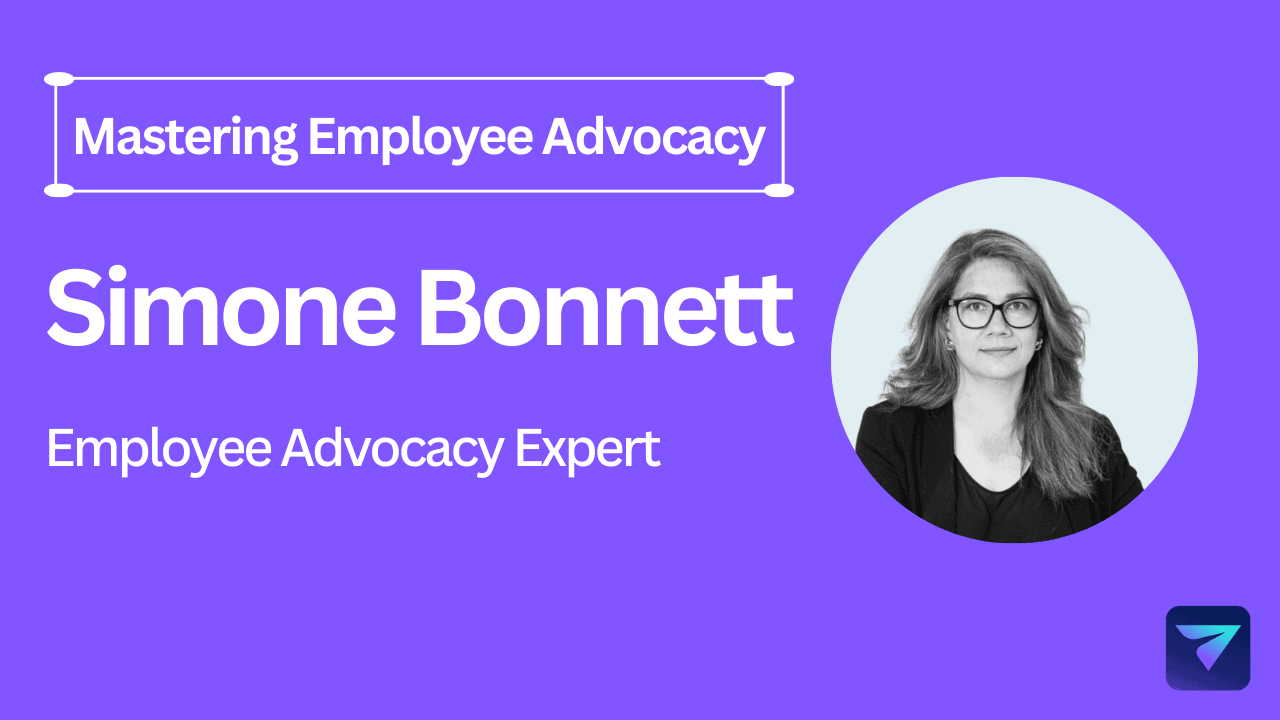
Mastering Employee Advocacy: Insights From Expert Simone Bonnett

  • How-To Guides|
  • Employee Advocacy
blog-image

Employee advocacy is a growing pillar of modern marketing strategies, transforming how businesses connect with audiences, utilizing employees.


To share insight on this topic, we interviewed Simone Bonnett, an expert in employee advocacy with a background in design and marketing. 


In this blog, she shares insights, tips, and trends shaping the future of employee advocacy, focusing on strategies businesses can adopt today.


What Is Employee Advocacy, and Why Does It Matter?


According to Simone, employee advocacy is “the ability to amplify your business by taking your team along for the journey in such a way that they're excited to cheerlead for it.”


This approach not only boosts visibility but fosters a positive workplace culture, making advocacy a win-win for businesses and employees.


Today’s consumers value authenticity, and employee advocacy taps into that by showcasing real voices from within the organization. This strategy builds trust, enhances employer branding, and drives organic traffic—all while engaging your team in a meaningful way.


Overcoming Employee Advocacy Challenges


Implementing an employee advocacy strategy isn’t without challenges. Simone notes that education about social media—particularly LinkedIn—is often the first stumbling block.


“A robust employee training program and collaborative workshops are the key to allaying fears and getting everyone social media literate,” she says.


Investing in training ensures that employees feel confident and supported, laying the groundwork for an effective program.


How Vulse Simplifies Employee Advocacy


Platforms play a pivotal role in enabling successful advocacy programs, and Simone highlights Vulse as a standout option.


“Vulse is an intuitive and user-friendly way to run an employee advocacy program. The barrier to entry is really low compared to other platforms which require much more training,” she explains.


With its easy-to-use interface and emphasis on collaboration, Vulse empowers businesses to launch and sustain impactful advocacy initiatives without extensive onboarding.


Metrics That Matter


To gauge the success of an employee advocacy program, Simone advises focusing on metrics such as:
 

  • Engagement on social media platforms.
     
  • Organic website traffic driven by shared content.
     
  • Click-through rates (CTR) to assess content effectiveness.
     

Tracking these indicators helps businesses refine their strategies and demonstrate ROI.


The Role of LinkedIn in Advocacy Strategies


Simone emphasizes LinkedIn as the go-to platform for professional networking and advocacy:
 

“LinkedIn is THE professional social media platform. Its tools, like linking your employment to your employer and content recommendation features, make it ideal for employee advocacy.”


By leveraging LinkedIn, businesses can align their professional branding with individual employee profiles, creating a seamless advocacy framework.


Encouraging Employee Participation


One of the biggest misconceptions about employee advocacy is that it’s a simple copy-paste exercise. Simone argues that true advocacy is much more collaborative and rewarding when done right.


To encourage participation without it feeling forced:
 

  • Offer training and emphasize the personal benefits for employees.
     
  • Use incentives to recognize contributions.
     
  • Make advocacy collaborative and authentic, ensuring employees feel ownership of their role.


Trends Shaping the Future of Employee Advocacy


Looking ahead, Simone predicts several key trends that will shape employee advocacy in the next 5–10 years:
 

  1. Personal Branding: Employees will become more proactive about developing their personal brands, integrating advocacy into their efforts.
     
  2. Organic Social Strategies: Advocacy will become a vital component of any successful organic social media strategy.
     
  3. Authenticity: Companies will increasingly showcase their teams in genuine, authentic ways, strengthening trust and connection with their audience.


Simone insights underscore the transformative power of employee advocacy for businesses of all sizes. By prioritizing training, embracing collaborative platforms like Vulse, and measuring the right metrics, businesses can harness advocacy to enhance visibility, drive traffic, and build a thriving workplace culture.
 

As employee advocacy continues to evolve, one thing is clear: the businesses that empower their teams to become authentic brand ambassadors will lead the way in the social media age.

Vulse ArtVulse ArtVulse Art
Vulse Art

You May also be interested in

  • blog img

    How To Measure ROI Of B2B Employee Personal Branding Programs

    Employee personal brands extend your company's reach, but without measurement, it is hard to justify resources.This guide helps B2B marketing and HR teams build a clear, defensible approach to reporting business outcomes from employee social activity on LinkedIn and other professional channels.Purpose: Turn activity into measurable outcomes.Scope: Awareness, engagement, lead signals, and talent impact.Outcome: A replicable measurement plan and dashboard checklist.Start with clear goals and mapped outcomesThe first step is to link employee activity to business outcomes. Use three goal buckets:Awareness: Reach, impressions, profile views.Engagement and trust: Comments, shares, follower growth, sentiment.Demand and talent signals: leads, meeting requests, job inquiries.For each bucket, define one primary KPI and two supporting metrics. That keeps reporting focused and aligns to stakeholders.Attribution models that work for employee advocacyEmployee posts are often organic and multi-touch. Use pragmatic attribution:Direct attribution for actions that clearly originate from an employee post, like a tracked link click that results in a demo booking.Assisted attribution for leads where employee content increased engagement during the buying process, measured via lead surveys or lead scoring uplift.Correlation tracking when direct links are missing: track timing of spikes in inbound inquiries after coordinated employee campaigns.Combine these with UTM parameters, dedicated landing pages, and short-form tracking to connect employee activity to conversions.Practical tipAlways append UTM tags to campaign links and add a hidden field or source on forms that captures "employee_post" values. This makes direct attribution clean and repeatable.Suggested KPI set for B2B teamsBelow is a compact KPI set that balances visibility and business outcomes.Reach: Total impressions and profile views from employee posts.Engagement rate: Likes, comments, shares divided by impressions.Lead signals: Demo requests, content downloads, or contact form submissions tied to employee campaigns.Talent signals: Inbound recruiter messages and job application volume resulting from employee content.Sales influence: Number of opportunities where a seller cites employee content as a touchpoint.Building a simple dashboardCombine platform analytics with CRM and web analytics to create a single source of truth. A typical dashboard has three panels:Activity panel: Posts, shares, and top-performing employees.Engagement panel: Impressions, engagement rate, and follower lift.Outcome panel: Leads attributed, demo requests, and talent inbound metrics.Use an employee advocacy solution to centralize post scheduling and analytics. See how built-in reporting can speed analysis on an employee advocacy analytics page.How to calculate a simple ROIROI for personal branding programs is often a mixture of direct revenue and soft value. Use this conservative formula to start:Sum direct revenue attributed to employee-driven leads over a period.Add estimated value of assisted conversions using a conservative uplift percentage.Divide by program cost including platform, content creation, and team time.This produces a monetary ROI figure you can present to leadership. Be explicit about assumptions and update them with real data over time.Operational checklist to scale measurementApply these practical rules to keep measurement consistent:Standardize UTMs and naming conventions across employee campaigns.Automate data ingestion from LinkedIn and your advocacy platform into your BI tool.Train employees to use trackable links and to tag campaigns in post copy when asked.Schedule a monthly review with marketing, sales, and HR to review dashboard insights.Vulse customers often pair the platform with a CRM to close the loop between post and pipeline. Learn more on our features page about LinkedIn analytics and reporting.Example: 90-day reporting cadenceRun this lightweight cadence for the first 90 days:Week 0: Baseline metrics for profiles, impressions, and leads.Week 1 to 8: Run two focused campaigns and collect UTM-tagged conversions.Week 12: Produce a stakeholder report with direct revenue, assisted conversions, and talent signal changes.Repeat and refine goals based on what moves the needle.Evidence and further readingResearch shows employee-shared content generates higher trust and click-through rates than brand-only content. For context, LinkedIn's guidance on employee advocacy provides practical benchmarks and best practices, which can help calibrate expectations: LinkedIn Marketing Solutions.For measuring social ROI and building dashboards, HubSpot's guide to social media ROI is a useful practical resource: HubSpot Blog.Frequently asked questionsQ: How soon can we expect measurable results?A: You can see awareness and engagement shifts within 30 days. Attribution to pipeline typically takes 60 to 90 days depending on sales cycles.Q: Do we need an employee advocacy tool to measure ROI?A: Tools make tracking and reporting far easier but you can start with manual UTMs and CRM tagging. A platform scales measurement and reduces manual work.Q: Which metric should executives care about most?A: That depends on priorities. For revenue-focused leaders show attributed pipeline and deals. For talent-focused teams highlight inbound candidate volume and recruiter touchpoints.

    Loading

    How To Measure ROI Of B2B Employee Personal Branding Programs

    by - Rob Illidge -

  • blog img

    How To Use LinkedIn Articles And Newsletters To Scale Employee Thought Leadership

    In this exclusive guide, we'll show you how B2B marketing and HR teams can use LinkedIn long-form content, specifically Articles and Newsletters, to build scalable employee thought leadership that drives trust, discoverability, and pipeline signals.Purpose: Practical steps to launch and scale employee-written LinkedIn Articles and Newsletters.Outcome: Increased discoverability, shareable assets, and repeatable workflows for employee advocates.Who this helps: Marketing managers, internal comms, and HR teams running employee advocacy programs.Why long-form content matters for employee personal brandsShort posts amplify reach, but Articles and Newsletters create lasting assets.They index on LinkedIn and search engines, demonstrate expertise, and give employees a reusable content hub for speaking, sales enablement, and recruiting.LinkedIn’s own guidance on newsletters and articles shows they help authors build a subscriber base and extend reach beyond a single post. See LinkedIn’s help center for how LinkedIn newsletters work.Three reasons to include Articles and Newsletters in your employee advocacy playbookSearchable credibility: Articles live on the author’s profile and can be found via Google and LinkedIn search.Subscriber momentum: Newsletters create an opt-in audience that notifies subscribers when new issues publish.Repurposable assets: Long-form pieces feed shorter posts, videos, and sales enablement collateral.How to run a low-risk pilot for employee Articles and NewslettersStart small with a 6-week pilot that focuses on coaching, templates, and measurement.Week 0: Select authors and set goalsChoose 4 to 8 employees across sales, product, and customer success.Set simple goals: subscribers, article views, and lead signals from comments or messages.Week 1-2: Train and templateRun a two-hour workshop on topic selection and storytelling. Use practical templates: intro hook, 3 insight sections, and action items.Provide a headline swipe file and SEO tips for LinkedIn Articles.Week 3-6: Publish and amplifyPublish one article per author and convert it into a weekly or biweekly newsletter issue if traction appears.Amplify through employee networks with a simple share kit: suggested post copy, hero image, and tagging guidelines.Editorial and governance rules that keep the program scalableLong form introduces brand and compliance risk if unmanaged.Put straightforward governance in place:Lightweight editorial review for claims and sensitive content.Ownership rules: authors own voice, company reviews for legal or customer references.Republishing policy: who can repurpose company blog content and how to credit sources.Measurement: metrics that matterMeasure both direct and downstream impact.Direct: article views, read time, newsletter subscribers, and engagement rate.Downstream: inbound messages, demo requests mentioning content, and link clicks to gated assets.Track a small set of KPIs and add qualitative win stories from sales and recruiting.Repurposing playbook: get more from each long form pieceExtract 3–5 short posts promoting key quotes or stats.Create a 60–90 second video summarizing the article for LinkedIn native video.Convert article sections into a downloadable slide or checklist for lead capture.Tools such as an employee advocacy platform can automate content distribution and track amplification across the team.Best practices and examplesEncourage authenticity and useful takeaways. HubSpot’s guide to LinkedIn Articles is a practical resource for structure and optimization.Also, review industry thought leadership research to understand what audiences value in long-form content.Tip: Start with customer problems, lessons learned, or unique frameworks rather than promotional pieces. Readers subscribe for insights, not pitches.Questions AnswersQ: Who should own editorial coaching for employee newsletters?A: A cross-functional content lead or communications manager should coach authors, supported by subject matter reviewers.Q: How often should employees publish newsletters?A: Start with biweekly or monthly cadence. Frequency should match the author's bandwidth and the audience response rate.Q: Can company content be republished as employee articles?A: Yes, with clear attribution and small edits to reflect the author voice. Include a republishing clause in your governance doc.

    Loading

    How To Use LinkedIn Articles And Newsletters To Scale Employee Thought Leadership

    by - Rob Illidge -

  • blog img

    Vulse vs Oktopost: Which LinkedIn Employee Advocacy Tool is Right for You?

    Choosing the right employee advocacy tool is a critical decision for B2B brands that want to amplify their reach on LinkedIn and beyond. In 2025, the two names that often come up in conversations are Vulse and Oktopost.While both platforms are designed to support employee advocacy, their approaches, features, and focus areas differ significantly.In this article, we break down the strengths of each tool, compare their features, and help you decide which platform best fits your business needs.Why Employee Advocacy Is Essential For B2B BrandsEmployee advocacy has become more than just a marketing strategy.It’s now one of the most effective ways to:Increase organic reach on LinkedInBuild trust and thought leadership within target industriesEmpower employees to become brand ambassadorsGenerate leads from authentic, employee-driven contentWith LinkedIn sunsetting My Company businesses need a dedicated tool to fill that gap.Vulse: The LinkedIn-Focused Employee Advocacy ToolVulse is designed specifically for B2B companies that want to maximize results on LinkedIn.Unlike general social media management platforms, Vulse leverages unique LinkedIn API access to create a more precise and effective employee advocacy experience.Key Features of Vulse:LinkedIn API integration for seamless publishing and analyticsTone-matching AI to keep employee content on-brandAccount scoring to measure advocacy effectiveness at an individual and company levelContent planning tools to simplify employee participationBuilt with B2B advocacy in mind rather than broad consumer marketingVulse is particularly strong for companies that want to focus their advocacy strategy where it matters most: LinkedIn.Oktopost: An Enterprise Social Media SuiteOktopost is positioned as a B2B social media management platform with employee advocacy included as part of its offering.Key Features of Oktopost:Broad social media scheduling and reporting across channelsEmployee advocacy as part of a larger, more expensive enterprise platformIntegrations with marketing automation and CRM toolsAnalytics for enterprise marketing teamsOktopost works best for organizations that want a high-budget, multi-channel advocacy program embedded within a broader social media strategy.Vulse vs Oktopost: Head-to-HeadFeatureVulseOktopostFocusLinkedIn employee advocacyBroad social mediaBest ForB2B companies prioritizing LinkedIn growthEnterprise teamsAI Content SupportTone-matching AI, account scoring, employee planning toolsSocial publishingEase of UseSimple and employee-friendlySuited for large, high-budget marketing teamsIntegrationsLinkedIn API, SaaS integrationsCRM, marketing automation, enterprise systemsWhich Tool is Right for You?Choose Vulse if your company is primarily focused on LinkedIn, wants AI-powered advocacy features, and values simplicity for employees.FAQs: Vulse vs Oktopost Employee AdvocacyQ1: What is the difference between Vulse and Oktopost?A: Vulse is a dedicated LinkedIn employee advocacy tool designed to boost organic reach and employee engagement, while Oktopost is a broader B2B social media management platform that also offers advocacy. Vulse focuses on simplicity, LinkedIn optimization, and employee adoption, while Oktopost emphasizes multi-channel campaign management.Q2: Which employee advocacy tool is better for LinkedIn?A: If your priority is LinkedIn employee advocacy, Vulse is purpose-built for it, with unique features like tone matching, content scoring, and LinkedIn API integration. Oktopost offers LinkedIn features too, but as part of a wider social media suite.Q3: Is Vulse more cost-effective than Oktopost?A: For companies focused on LinkedIn employee advocacy, Vulse is more cost-effective since it avoids paying for multi-channel features you may not need. Oktopost is better suited for enterprises managing complex, multi-platform campaigns.Q4: Why should companies invest in employee advocacy software?A: LinkedIn has continued limiting organic brand reach in 2025, making employee-driven sharing essential for visibility. Employee advocacy software like Vulse helps brands empower staff to amplify company content authentically.Q5: Can Vulse integrate with other marketing tools?A: Yes. Vulse integrates with LinkedIn and can be extended to other platforms, including CRMs, analytics tools, and multi-channel marketing stacks. The right choice depends on your company’s tech setup and advocacy goals.

    Loading

    Vulse vs Oktopost: Which LinkedIn Employee Advocacy Tool is Right for You?

    by - Rob Illidge -

Revolutionise Your LinkedIn Output Today

Got a question? Give us a call or start your free trail today