LinkedIn's AI Slop Button: 1m Reports With 40% Fewer Views
- LinkedIn Strategy
Published 24 August 2026•By Rob Illidge
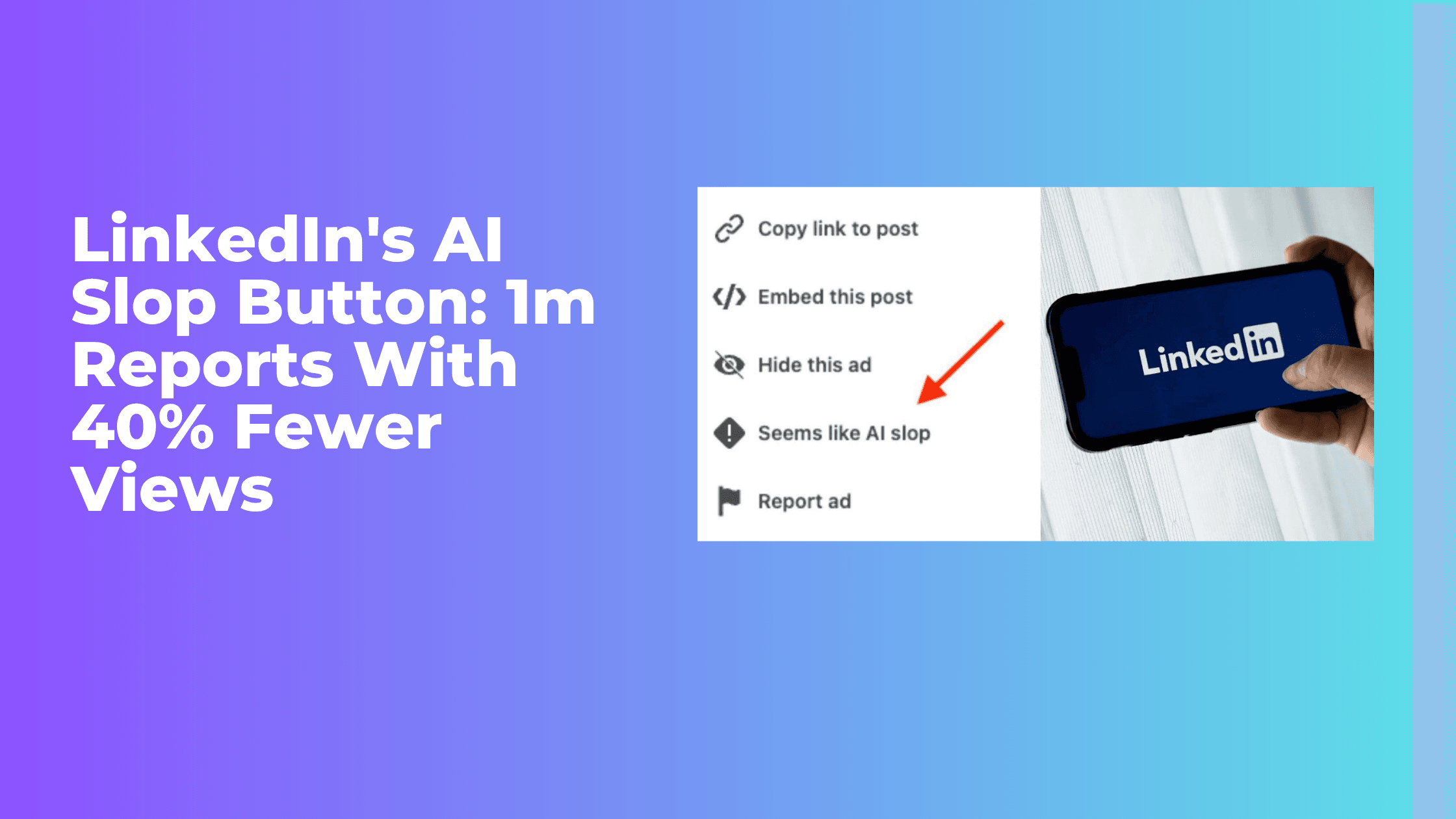
LinkedIn just gave every user a way to flag posts that "seem like AI slop," and in a matter of weeks more than one million people have pressed it.
On August 20, 2026, the platform confirmed that content flagged this way is now getting roughly 40% fewer views than it did before the button existed. For anyone who has leaned on AI to churn out daily posts, this is the clearest signal yet that polished-but-empty content is about to cost you reach.
What LinkedIn Actually Announced
Earlier in August, LinkedIn rolled out a "seems like AI slop" reporting option that lets any user flag a post they think is low-effort, machine-generated filler. According to reporting from Social Media Today, the feature has already been used more than a million times since launch.
The company was deliberate about how it defines the problem. LinkedIn Creator Product Lead Sam Corrao Clannon put it this way: "We internally define AI slop as content that is potentially sophisticated or polished in its presentation, but lacks substance." In other words, this is not about whether you used AI to help draft a post. It is about whether the finished post actually says anything.
The headline metric is the one worth writing down: posts that get flagged as AI slop are now seeing about 40% fewer overall views than comparable content did just weeks earlier. Outlets including Engadget and TechSpot reported the same figures, framing the launch as evidence that the button is doing what LinkedIn hoped.
How the Reporting System Really Works
Before anyone panics, LinkedIn made three clarifications that change how you should read this.
First, a single report does not automatically suppress a post across the platform. Flags are a signal, not an instant penalty.
Second, the effect is largely personalized. When you flag something as slop, it mostly shapes what shows up in your feed, not everyone's. The 40% aggregate drop reflects the combined weight of many people filtering similar content, not one person hitting a kill switch.
Third, this is a feed-preference tool, not a policy-enforcement tool. Reporting a post as AI slop is different from reporting it for a terms-of-service violation. LinkedIn is asking "do you want to see less of this?" rather than "should this be removed?"
There is one more piece that creators should take seriously. LinkedIn is beginning to notify accounts that pick up repeated slop reports, giving them a heads-up that their content is landing badly. If you start seeing those alerts, treat them as an early warning, not a badge of honor.
Why This Matters for Your Reach
The AI slop button does not exist in isolation. It sits on top of LinkedIn's broader 2026 feed algorithm changes, which already shifted the platform toward substance over volume. That update rebuilt the feed around large language models that understand the meaning of a post, prioritize genuine expertise and timely industry news, and actively filter engagement bait like "Comment 'Yes' if you agree" and recycled thought-leadership templates.
Put the two together and the direction is unmistakable. LinkedIn is squeezing low-value content from two sides at once: the algorithm demotes it automatically, and now human readers can pile on manually. If you want a fuller breakdown of how the underlying ranking works, our guide to how LinkedIn's 2026 algorithm works walks through the signals in detail.
The practical takeaway is not "stop using AI." Plenty of excellent posts are drafted with AI assistance. The takeaway is that generic AI output, the kind that reads smoothly and says nothing, now carries a real distribution cost. The bar for what earns reach has moved.
Is Your Content at Risk?
You do not need a tool to run a quick self-audit. Ask whether a typical post of yours clears these checks:
- Does it contain a specific claim, number, or example? Vague encouragement and recycled platitudes are exactly what readers flag.
- Could only you have written it? If a competitor could publish the identical post, it reads as templated.
- Does it earn the length? A long post that restates one thin idea is more likely to get flagged than a short, sharp one.
- Would you send it to a colleague? If not, it probably belongs in the "slop" bucket in a reader's mind.
Content that fails these checks was already underperforming. The button simply makes the penalty faster and more visible.
How to Adapt: A Practical Playbook
Here is how marketers, founders, and personal-brand builders can respond without abandoning their publishing cadence.
1. Lead with a point of view, not a summary
The fastest way to sound like slop is to summarize something everyone already knows. Instead, take a position. Share what you learned, what surprised you, or what you disagree with. Opinion backed by experience is the hardest thing for a generative model to fake and the easiest thing for readers to value.
2. Anchor every post in first-hand detail
Numbers from your own work, a client story, a mistake you made, a screenshot of a result. Specifics are the antidote to "polished but empty." They also happen to be what the 2026 algorithm rewards, since the system now reads for genuine expertise.
3. Use AI as a drafting partner, not a ghostwriter
Let AI help you structure and tighten a post you have something to say about. Do not let it invent the substance. The finished piece should still carry your voice, your data, and your judgment.
4. Publish less, but make each post count
If the choice is between five thin posts and two strong ones, the math now favors the two. Reach is increasingly tied to depth, so a slower, higher-quality cadence is the safer bet.
5. Watch your analytics for early signals
A sudden drop in views on posts that used to perform is a clue that your content is being filtered. Tracking reach, engagement, and comment quality over time helps you spot the shift before it becomes a trend. Tools built for LinkedIn analytics and personal branding make that pattern easier to catch, and you can find more tactics on the Vulse blog.
The Bigger Picture
LinkedIn is pairing the AI slop button with profile verification and verified-user filtering, part of a wider push to keep the platform feeling human as generative content floods every network. The message to creators is consistent across all of it: authenticity and substance are now ranking factors, not just nice-to-haves.
That is arguably good news for anyone willing to do the work. As the volume of forgettable content gets throttled, genuinely useful posts have more room to stand out. The creators who treat this as a prompt to raise their standards, rather than a threat to their output, are the ones who will gain ground over the rest of 2026.
Frequently Asked Questions
What is LinkedIn's "AI slop" button?
It is a reporting option that lets any LinkedIn user flag a post that appears to be low-effort, AI-generated content that looks polished but lacks real substance. LinkedIn launched it in August 2026, and it has already been used more than one million times.
Will one report get my post removed or penalized?
No. LinkedIn has confirmed that a single report does not automatically suppress a post platform-wide. Reports mainly personalize the individual reporter's feed, and the tool is a feed-preference signal rather than a policy-enforcement action.
Why are flagged posts getting 40% fewer views?
The 40% drop reflects the combined effect of many users filtering similar low-substance content, layered on top of LinkedIn's 2026 algorithm, which already demotes engagement bait and rewards genuine expertise. Together they reduce distribution for content readers consistently mark as slop.
Does this mean I should stop using AI to write LinkedIn posts?
No. LinkedIn is not penalizing AI assistance itself. It is penalizing content that lacks substance. AI is fine as a drafting partner as long as the finished post carries your own insight, data, and point of view.
How do I know if my content is being flagged?
LinkedIn is rolling out notifications to accounts that receive repeated AI slop reports. Beyond that, an unexplained drop in views on posts that used to perform well is a strong signal, which is why tracking your LinkedIn analytics over time is worthwhile.