EMPLOYEE ADVOCACY GUIDE
Brand Safety and Compliance for Employee Advocacy on LinkedIn
Practical guardrails for regulated and brand-conscious teams: what to pre-approve, and how to stay consistent while sounding authentic.
Write A One-Page Policy
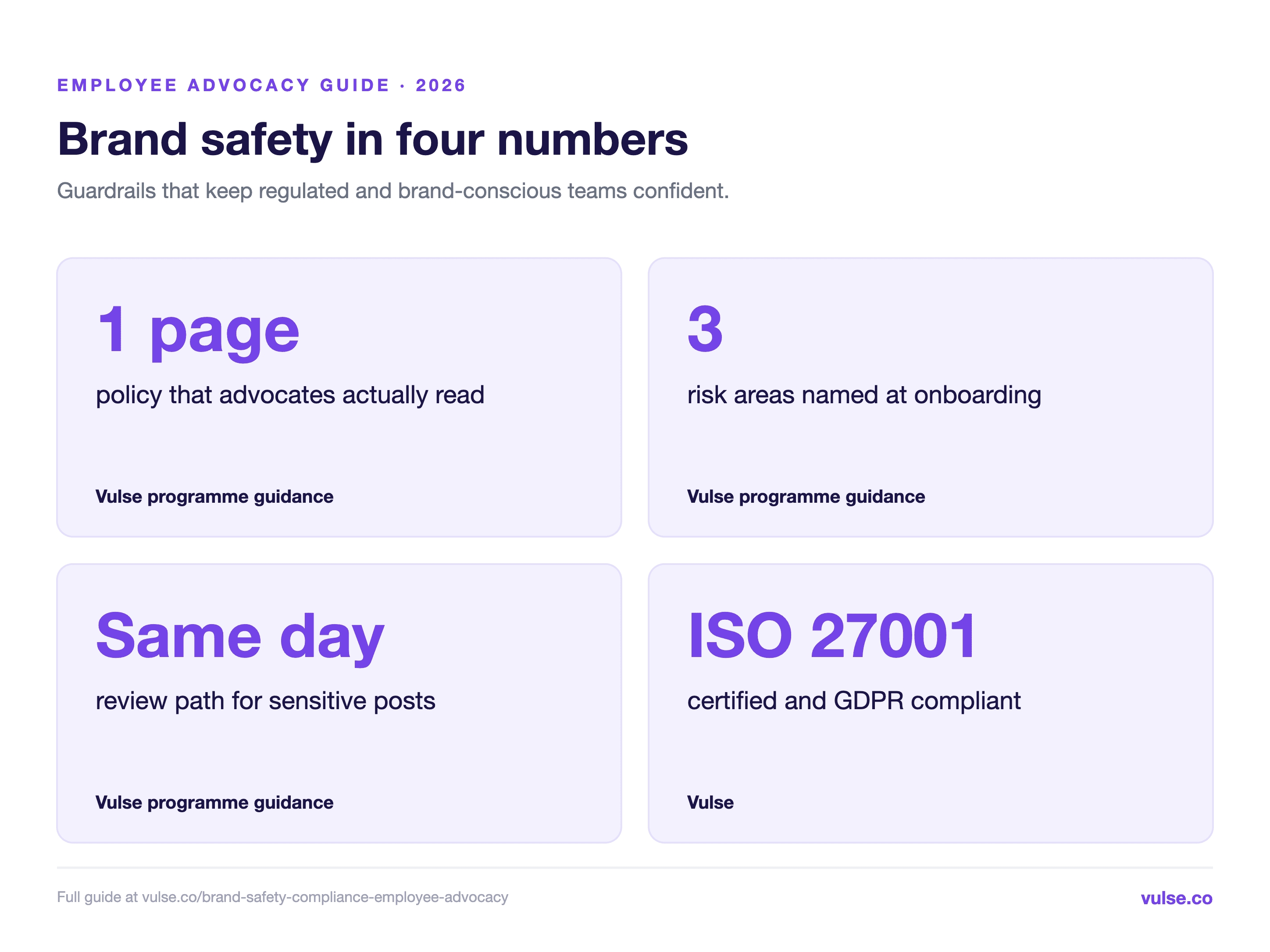
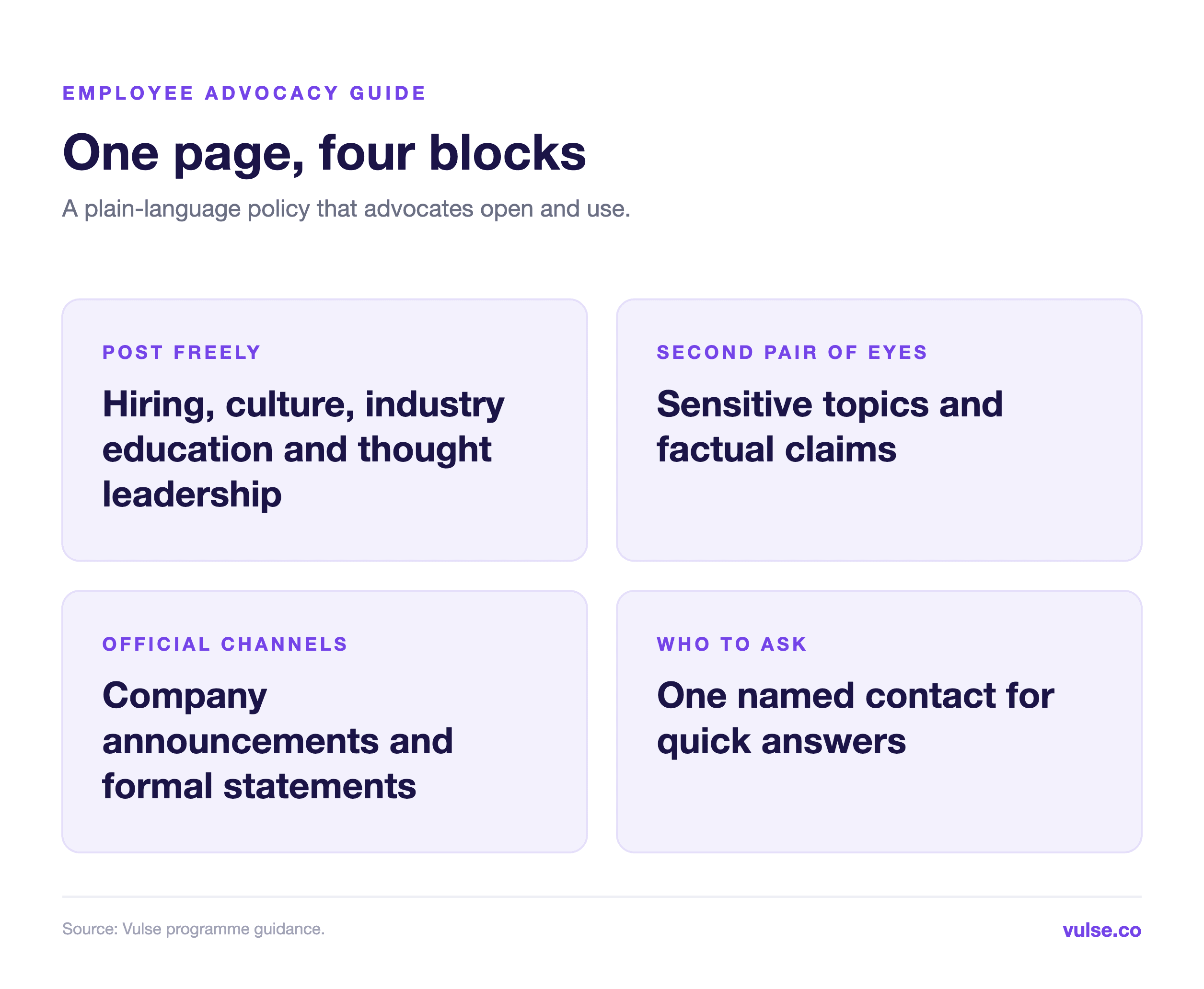
A short, plain-language policy that advocates actually read works well and gets referenced often. Aim for one page with four blocks: what advocates can post freely, what needs a second pair of eyes, what belongs with official channels and who to ask. Plain language matters more than legal completeness here. A policy that fits on one page gets opened on a busy Tuesday, which is exactly when the guidance is needed.
Cover The Obvious Risks Early
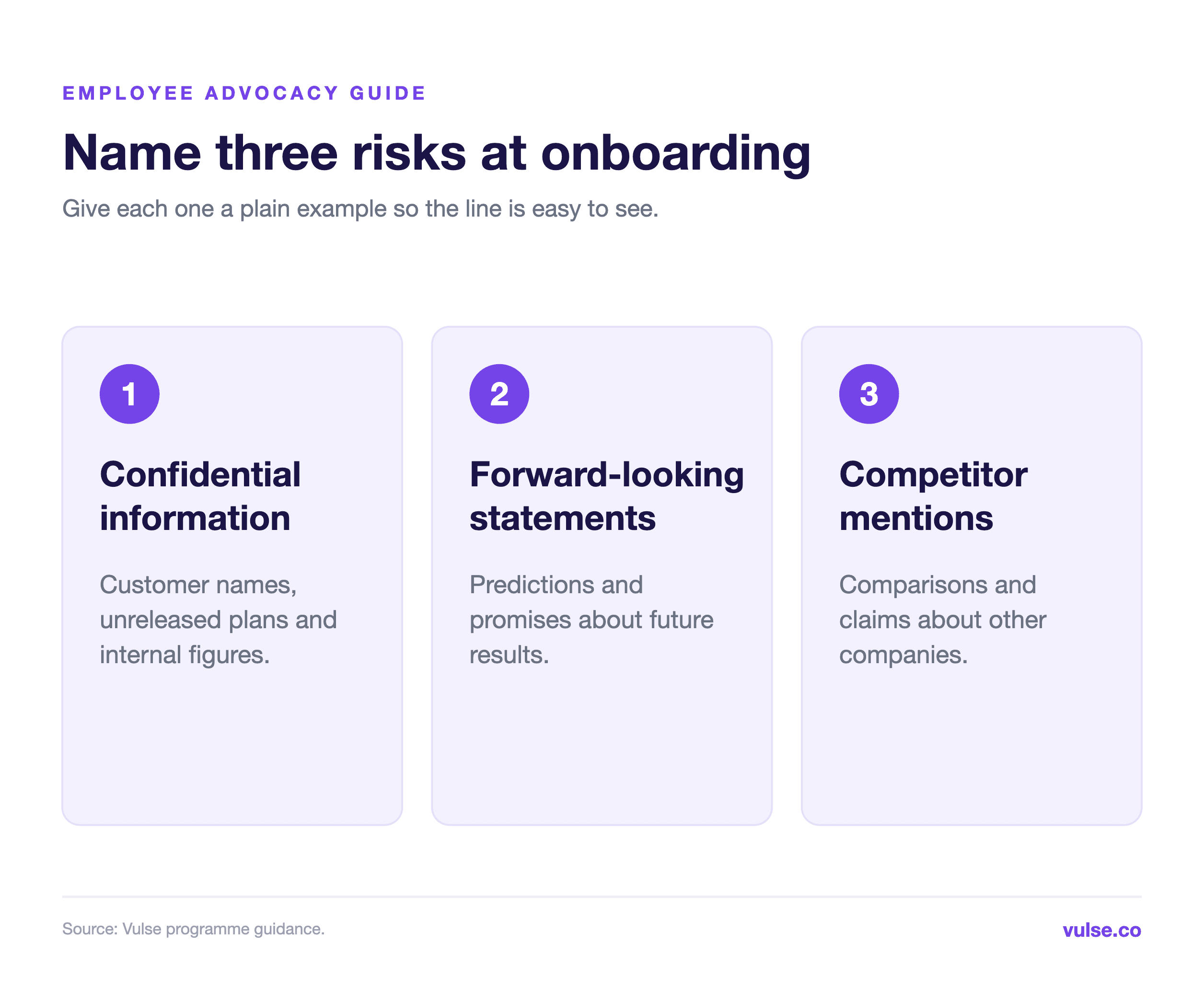
Address confidential information, forward-looking statements and competitor mentions during onboarding. Give each one a plain example so advocates can see the line for themselves. Most advocacy content sits comfortably clear of these areas: hiring, culture, industry education and thought leadership. Naming the three risk areas once, at the start, lets everyone post freely everywhere else.
Let Compliance Shape Pillars
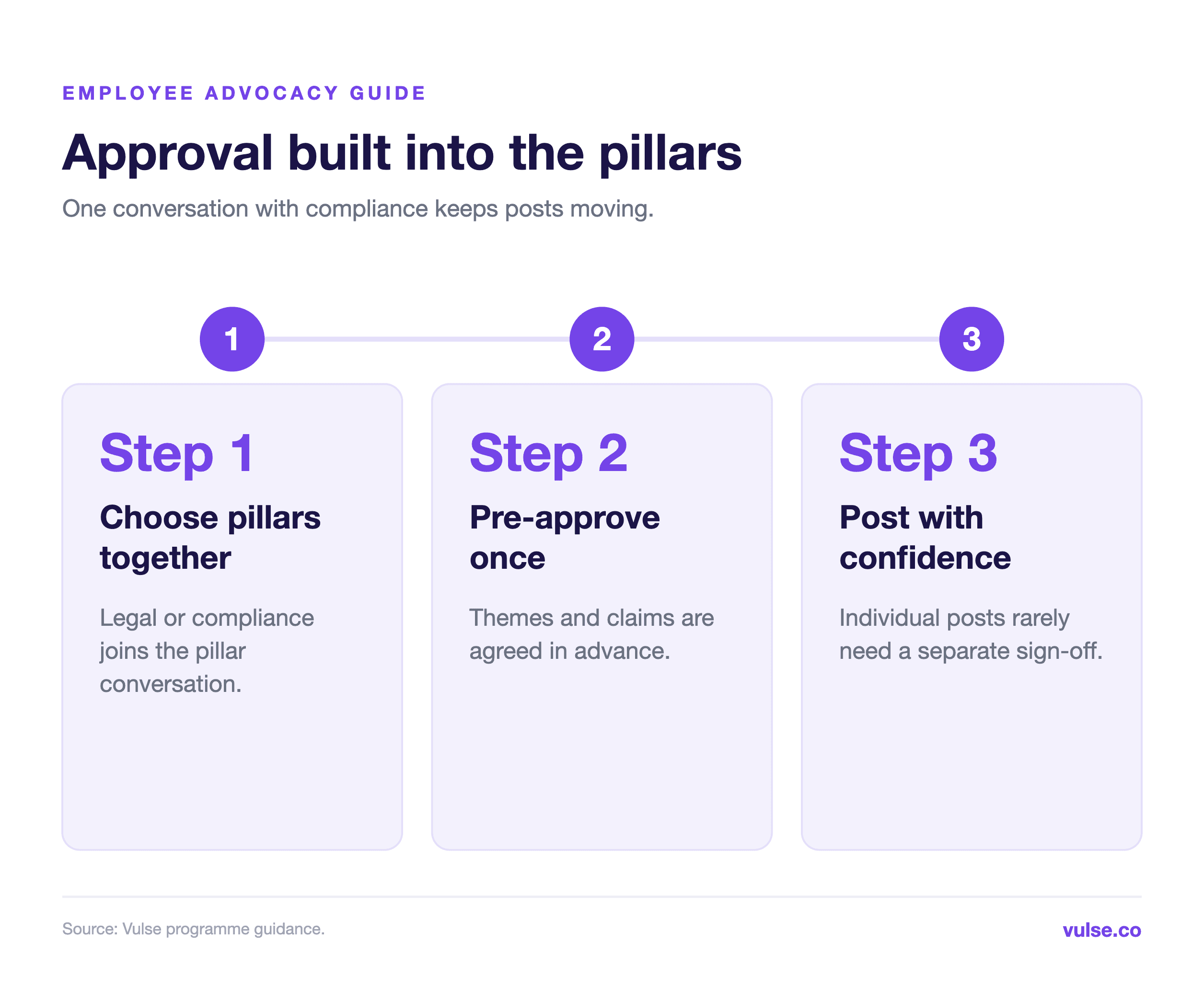
Involve legal or compliance when pillars are chosen, so approval feels built in from the start. Pre-approving themes and claims once means individual posts rarely need a separate sign-off. Ask compliance to review each pillar's one-line brief and to mark any topic that always deserves a check. That short conversation is where advocacy and compliance start working as one team.
Choose Infrastructure Compliance Teams Can Audit
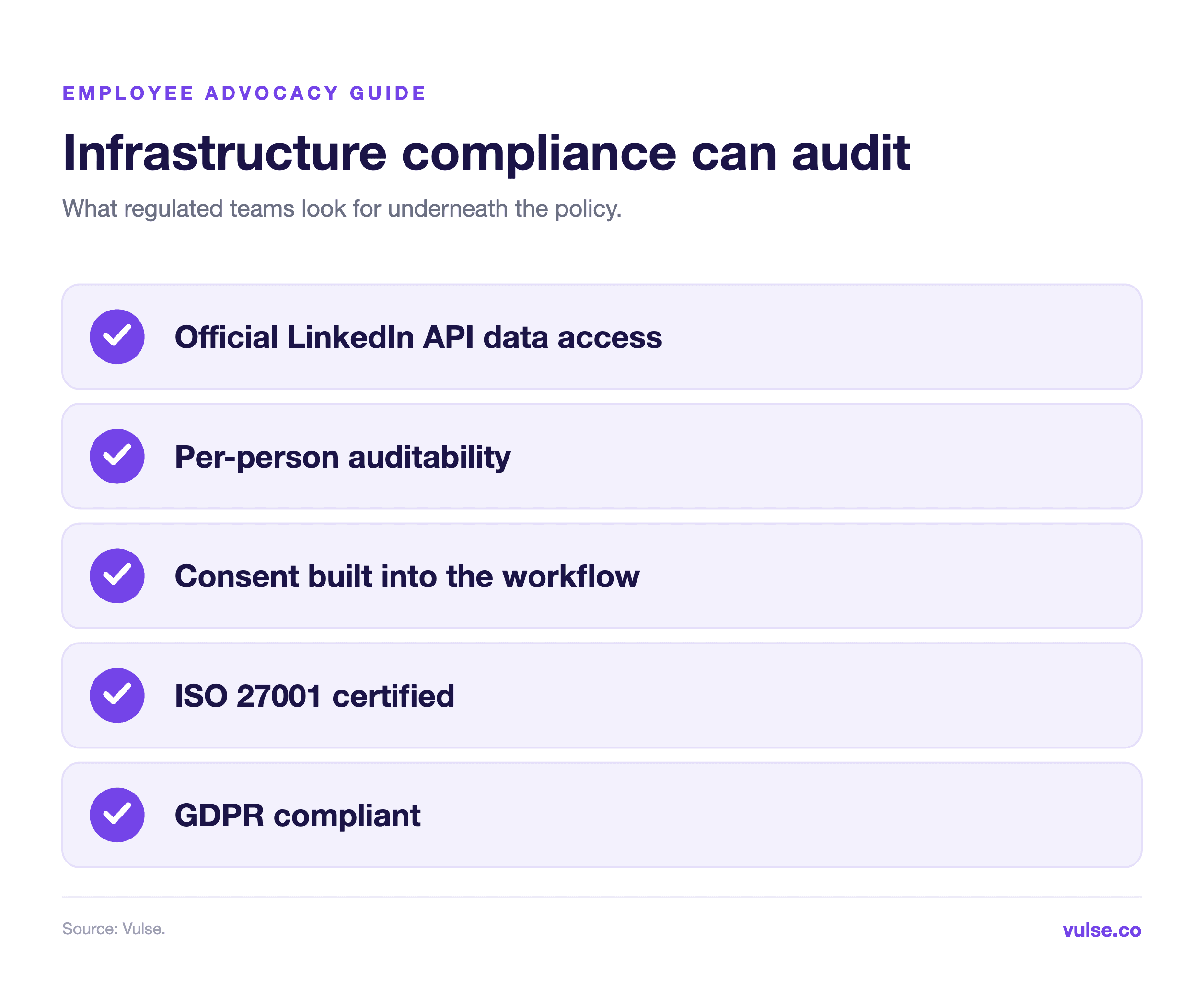
Regulated teams need solid infrastructure underneath the policy: official LinkedIn API data access, per-person auditability and consent built into the workflow. Official access keeps data collection inside LinkedIn's own terms and gives compliance a clean record of what was published and by whom. Vulse is ISO 27001 certified and GDPR compliant, which is why teams in financial services and other regulated sectors run their programmes on it.
Keep Voices Authentic Inside The Guardrails
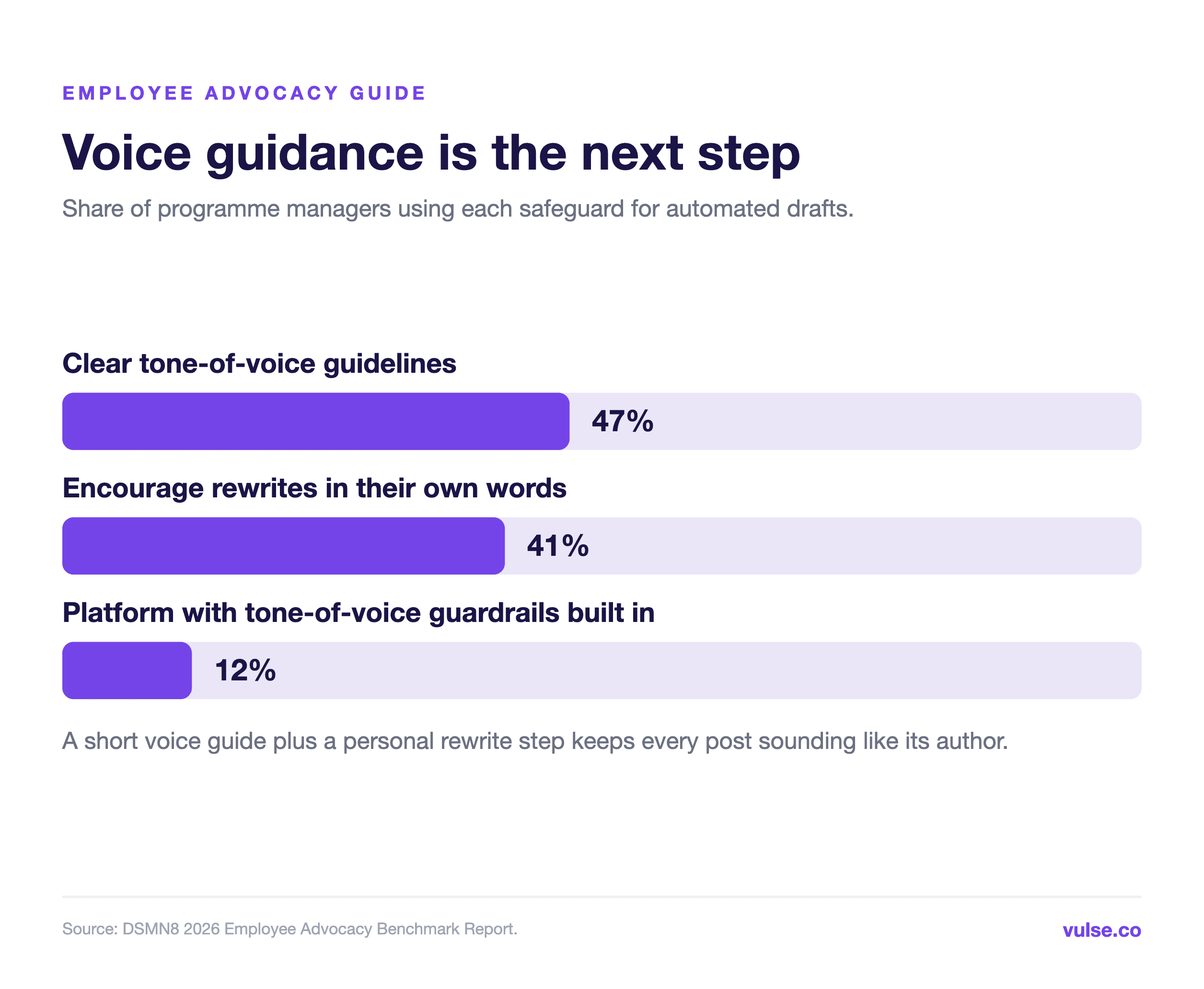
Guardrails and authenticity work together when the rules cover claims and the voice stays personal. Set boundaries on topics and factual claims, then let every advocate write in their own words. Tone-of-voice guidance is where many programmes have room to grow. In DSMN8's 2026 benchmark, 47% of programme managers have clear tone-of-voice guidelines for automated drafts, 41% encourage employees to rewrite drafts in their own words and 12% use a platform with tone-of-voice guardrails built in. A short voice guide plus a personal rewrite step keeps every post sounding like the person who publishes it.
Review Flagged Posts Together
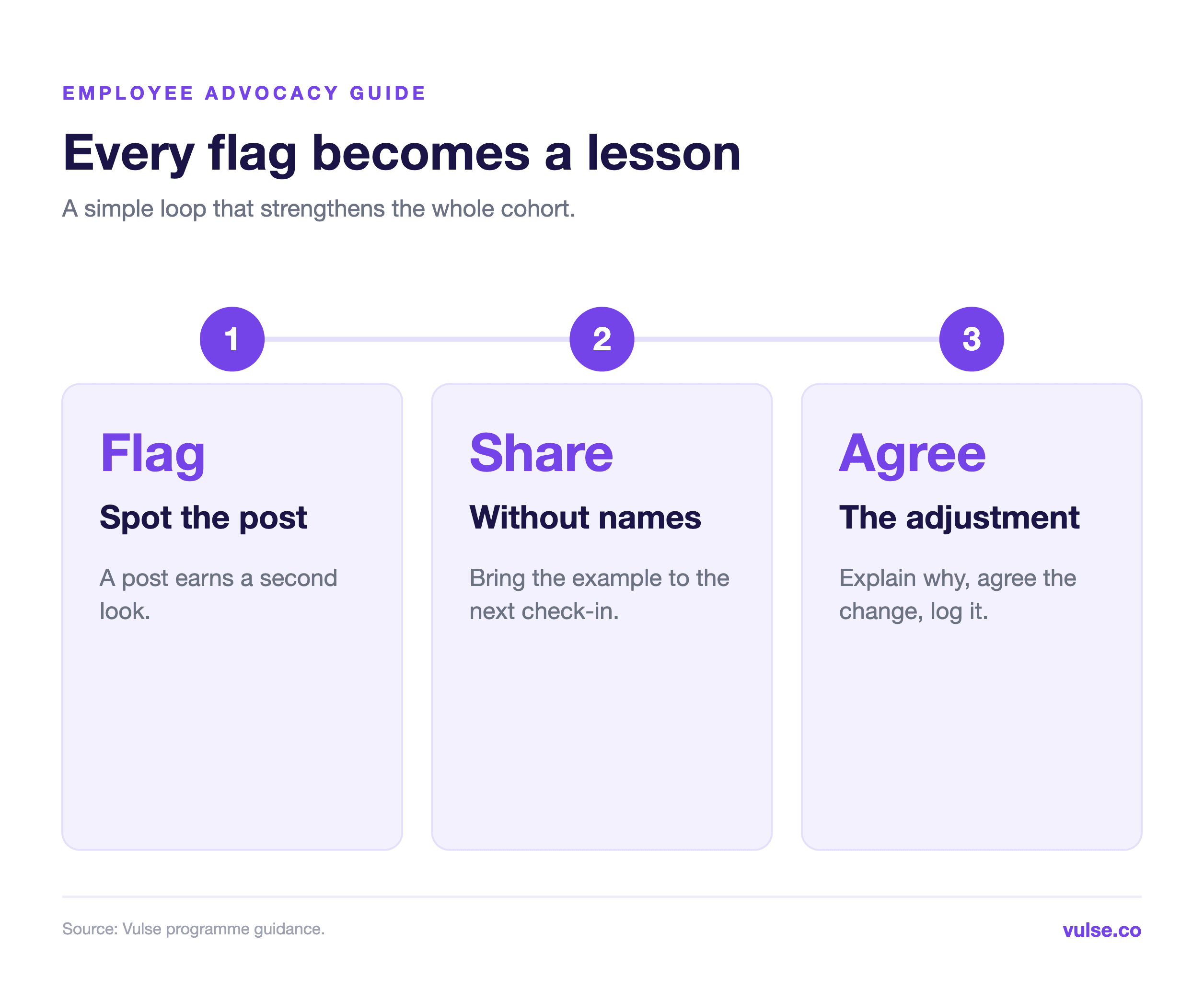
Treat a flagged post as a training moment for the whole cohort, strengthening the programme going forward. Share the example without names at the next check-in, explain what made it worth a second look and agree the adjustment together. Keep a simple log of what was shared and any flags raised. A short record makes any compliance review straightforward and shows leadership that the programme learns quickly.

Pre-Approve Themes
Set clear boundaries on topics and claims, then let advocates write every post in their own words.

Give Legal A Fast Review Path
A same-day review step for sensitive posts keeps compliant teams moving quickly.

Keep A Record Of What Was Shared
A simple log of published posts makes any compliance review straightforward.

Separate Claims From Opinion
Draw a clear line between factual claims that need sign-off and personal opinion that flows freely.

This tool is the one to use. The best thing is that the people at Vulse listen to their users on what they need to make the product better and as a result, it is constantly evolving and moving with the times.
Claire Woods, Director, Kennedy Woods
Employee advocacy brand safety and compliance: frequently asked questions
A set of guardrails that lets employees post about their work with confidence: a plain-language policy, pre-approved themes and claims, a fast review path for sensitive posts and a record of what was published.
One page with four blocks: what advocates can post freely, what needs a second pair of eyes, what belongs with official channels and who to ask. Plain language gets the policy read and referenced.
Confidential information, forward-looking statements and competitor mentions. Cover each with a plain example during onboarding, so advocates can post freely across hiring, culture, industry education and thought leadership.
With pre-approved themes and claims, official LinkedIn API data access, per-person auditability and consent built into the workflow. Vulse is ISO 27001 certified and GDPR compliant, and teams in financial services and other regulated sectors run their programmes on it.
A lighter model usually works better. Pre-approve themes and claims once, then route only sensitive posts through a same-day review path so compliant teams keep moving quickly.
Set rules for topics and factual claims, then let advocates write in their own words. In DSMN8's 2026 benchmark, 47% of programme managers have clear tone-of-voice guidelines for automated drafts and 41% encourage employees to rewrite drafts in their own words.
Yes. Every post can route through a review step before it goes live: a manager or admin sees the draft, approves or sends it back, and nothing publishes without that sign-off when you turn it on. It runs on the same official, profile-level LinkedIn data behind your analytics, so compliance gets a clean record of what was published, by whom, alongside the numbers it produced.
Approvals decide what is ready to publish, and the official API is how approved posts reach LinkedIn. In Vulse, a manager or admin reviews a post before it goes live, and the post then publishes to the employee's profile through LinkedIn's official Community Management API access, so nothing publishes without the review step you set. Vulse is ISO 27001 certified and GDPR compliant, and the platform overview and security pages describe the details.