EMPLOYEE ADVOCACY GUIDE
Choosing Content Pillars for Employee Advocacy
A simple framework for picking three to five themes that keep every advocate's posts relevant, on-brand and easy to plan around.
Start From What Advocates Know
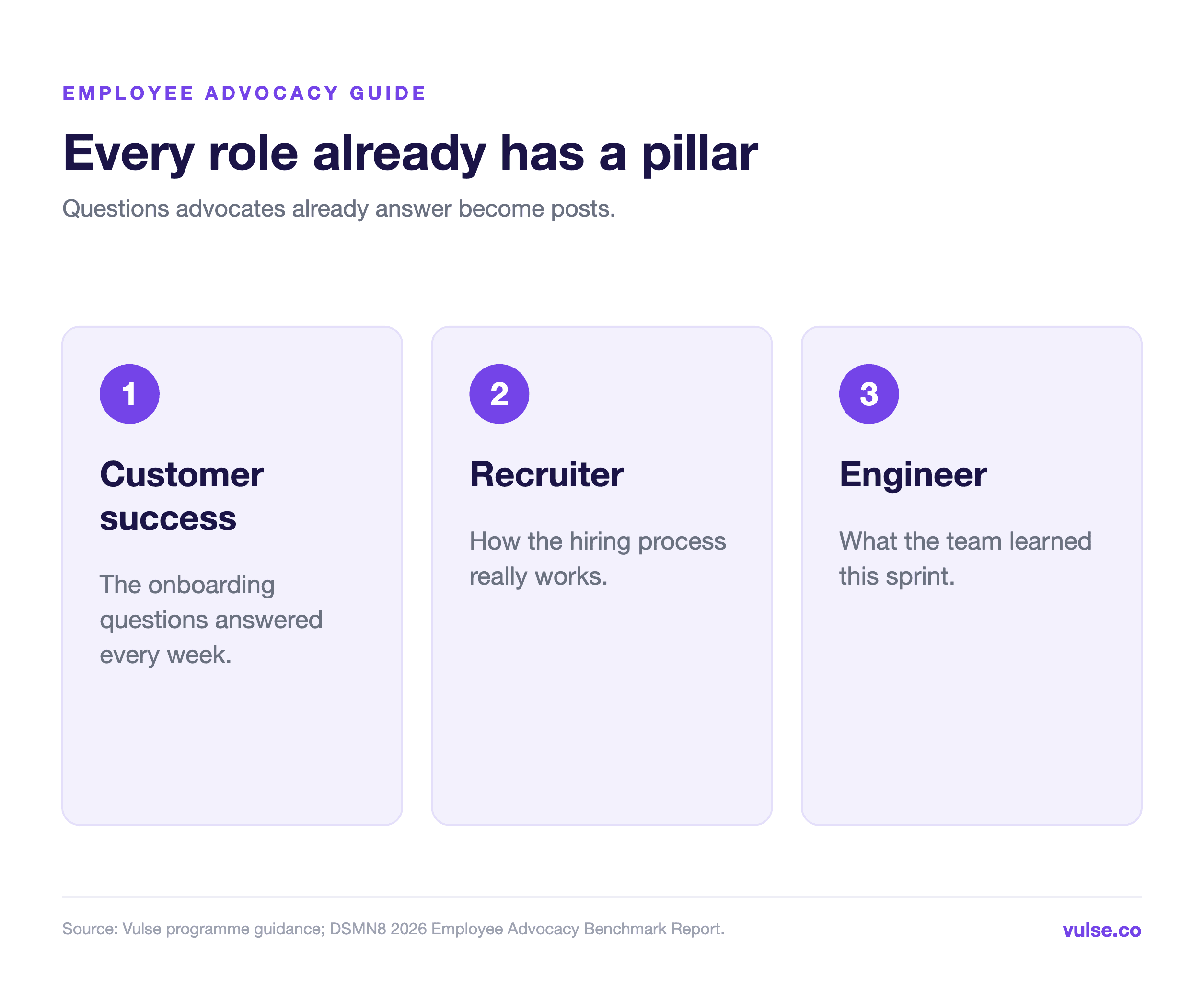
The strongest pillars come from questions advocates already get asked in their day-to-day role. A customer success lead answers onboarding questions weekly, a recruiter explains the hiring process, an engineer shares what they learned this sprint. Each answer is a post waiting to be written. Starting here removes the most common blocker in advocacy. In DSMN8's 2026 benchmark, 18% of advocates say they are unsure what to share. Pillars built from real expertise give every person a supply of topics they can speak about with confidence.
Keep The List Short: Three To Five Pillars
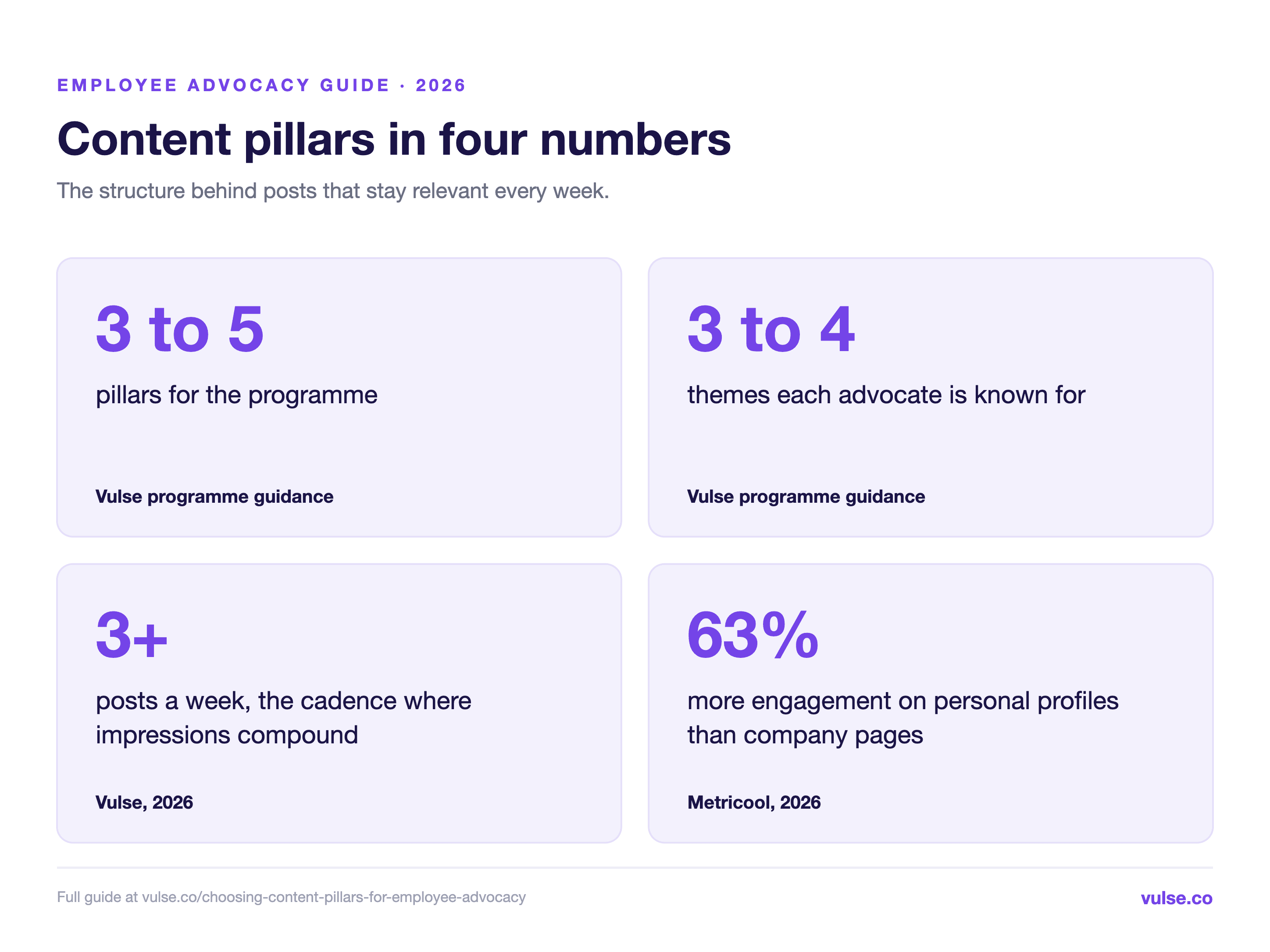
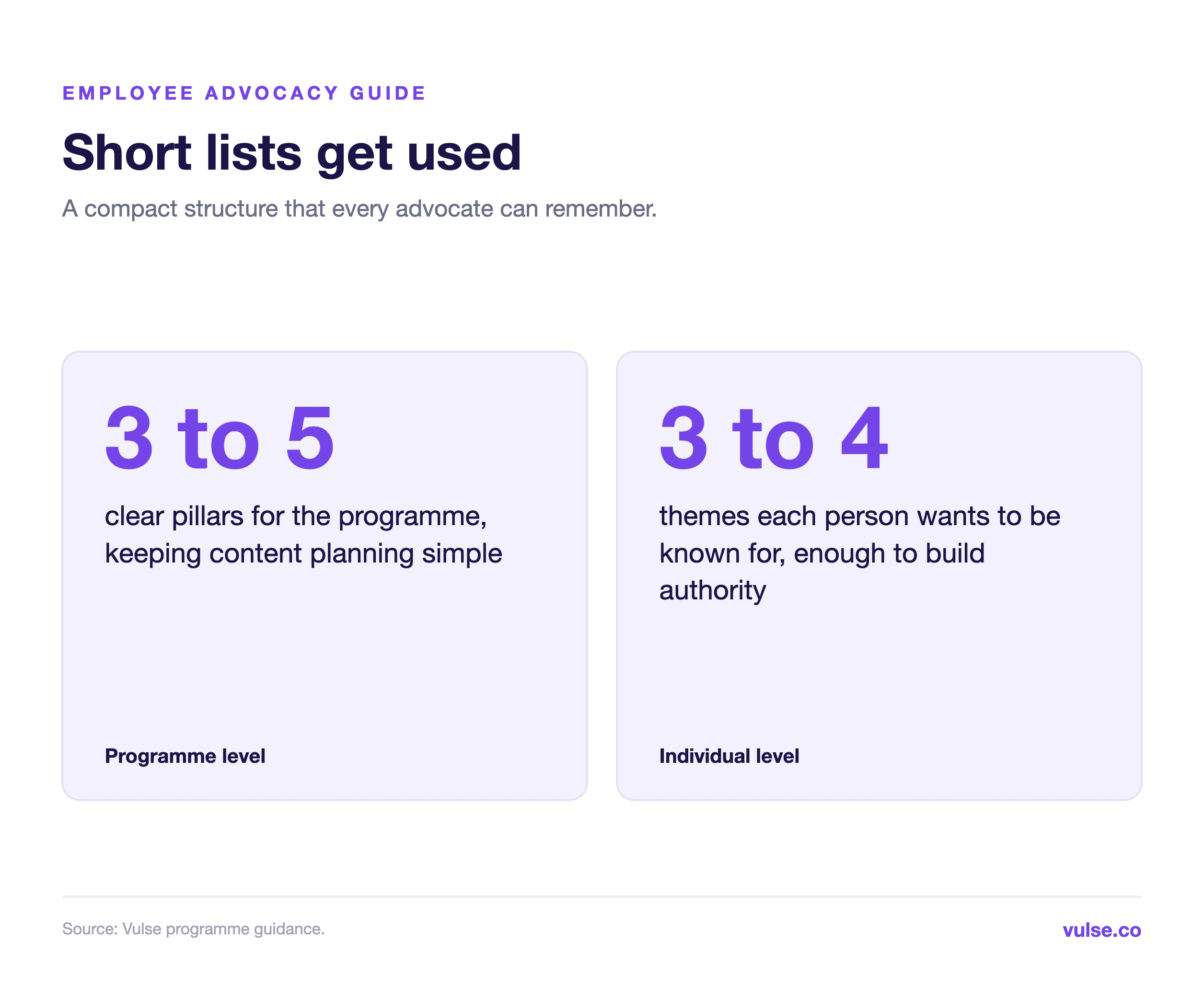
Most programmes run well on three to five clear pillars, which keeps planning simple and gives each theme enough posts to build recognition. Each person then picks three or four themes they want to be known for: enough to stay recognisable, few enough to build authority. Start at the low end. A list of three pillars that every advocate understands serves a team better than a list of ten that needs a reference document.
Give Each Pillar A One-Line Brief
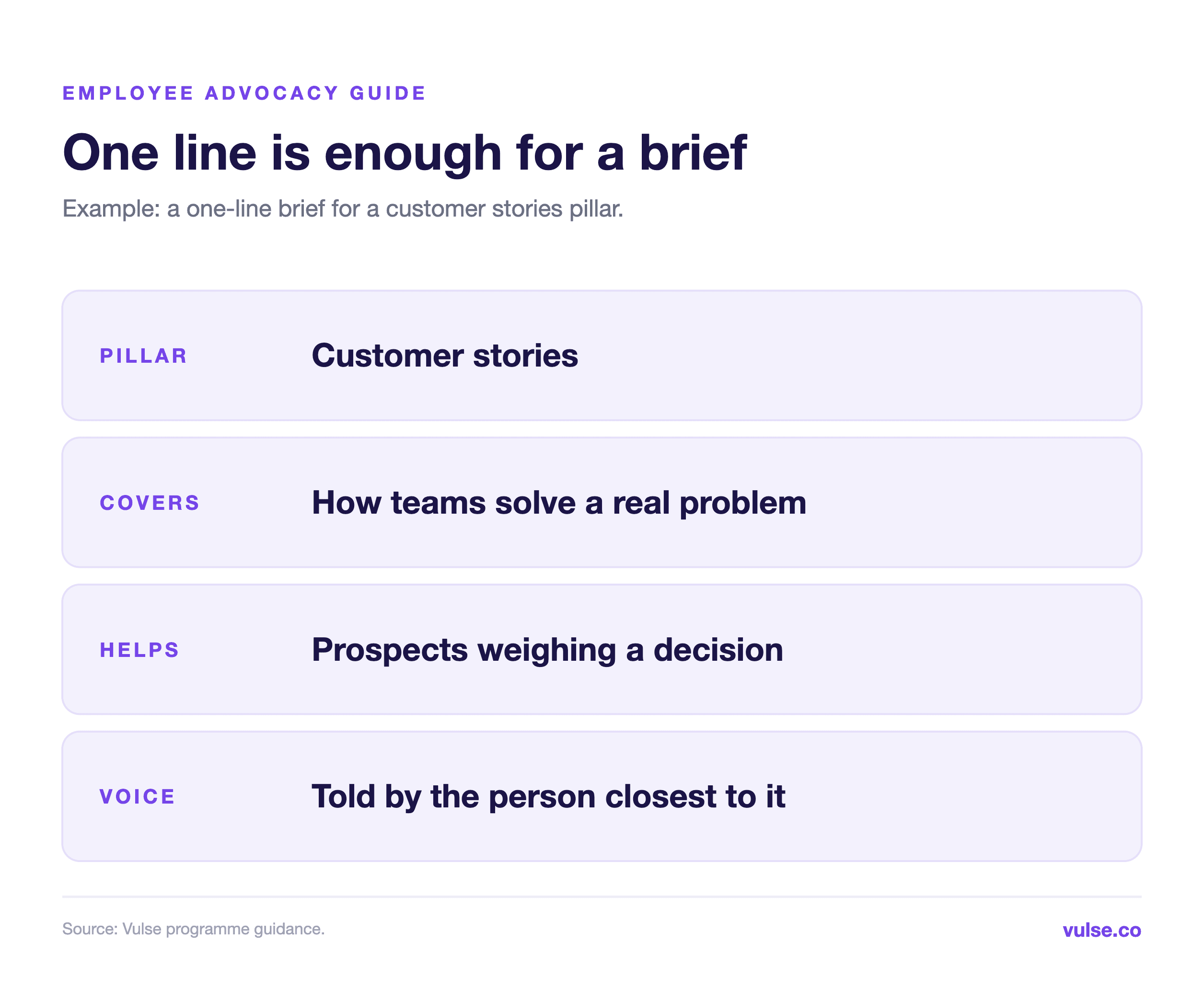
A short description of what belongs in a pillar keeps posts consistent across a whole team. Write it as one sentence covering what the pillar includes, who it helps and what an advocate might say. For example: customer stories, showing how teams solve a real problem, told by the person closest to it. One line is enough for advocates to check a draft against, for compliance to review once and for new joiners to pick up on their first day.
Leave Room For Personal Wins
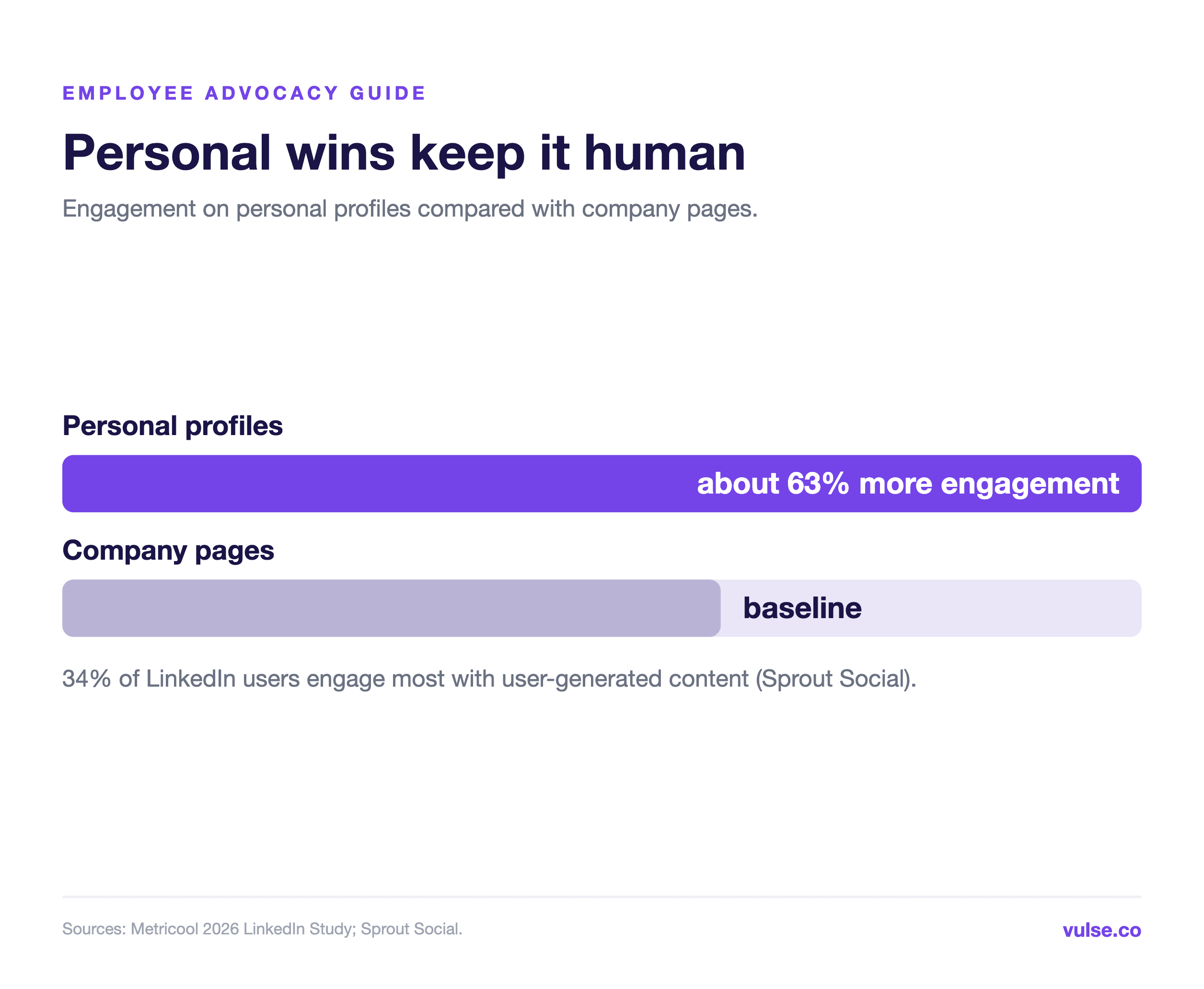
A pillar for career moments and personal milestones keeps the programme feeling human. Personal profiles earn roughly 63% more engagement than company pages (Metricool, 2026 LinkedIn Study), and 34% of LinkedIn users engage most with user-generated content (Sprout Social). A promotion, a certification, a conference talk or a first customer win all belong here. These posts build the personal credibility that makes an advocate's expertise posts land, and they give colleagues a friendly reason to comment.
Map Pillars To A Weekly Rhythm
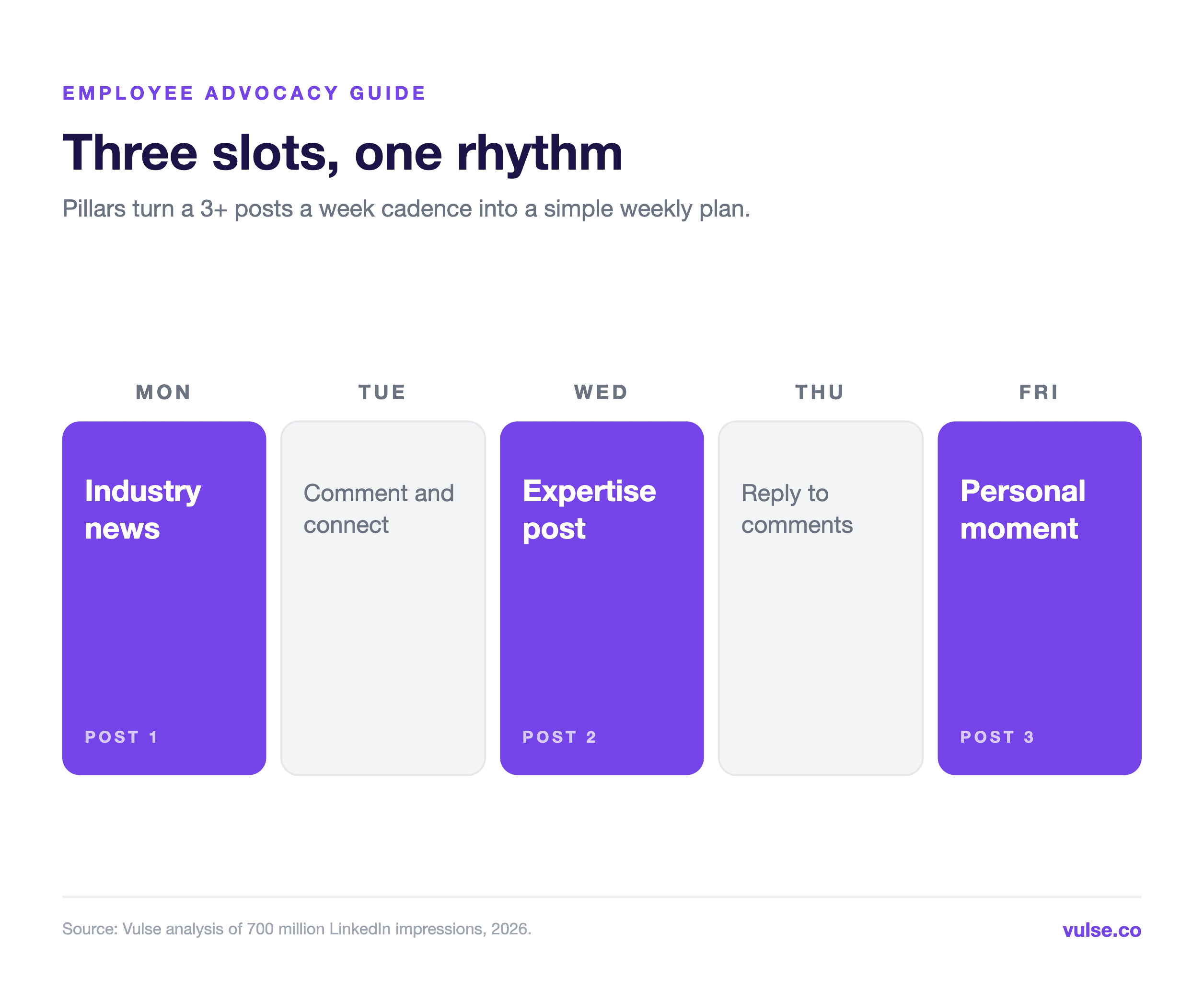
Three or more posts a week is where impressions compound in Vulse's analysis of 700 million LinkedIn impressions, and pillars make that rhythm easy to plan. Give each pillar a slot in the week: industry news early, an expertise post mid-week, a personal moment towards Friday. With the slots set, Monday opens with a simple question, what is this week's news post, in place of the open-ended what should I write. The daily decision shrinks and the cadence holds.
Track Which Pillar Performs Best
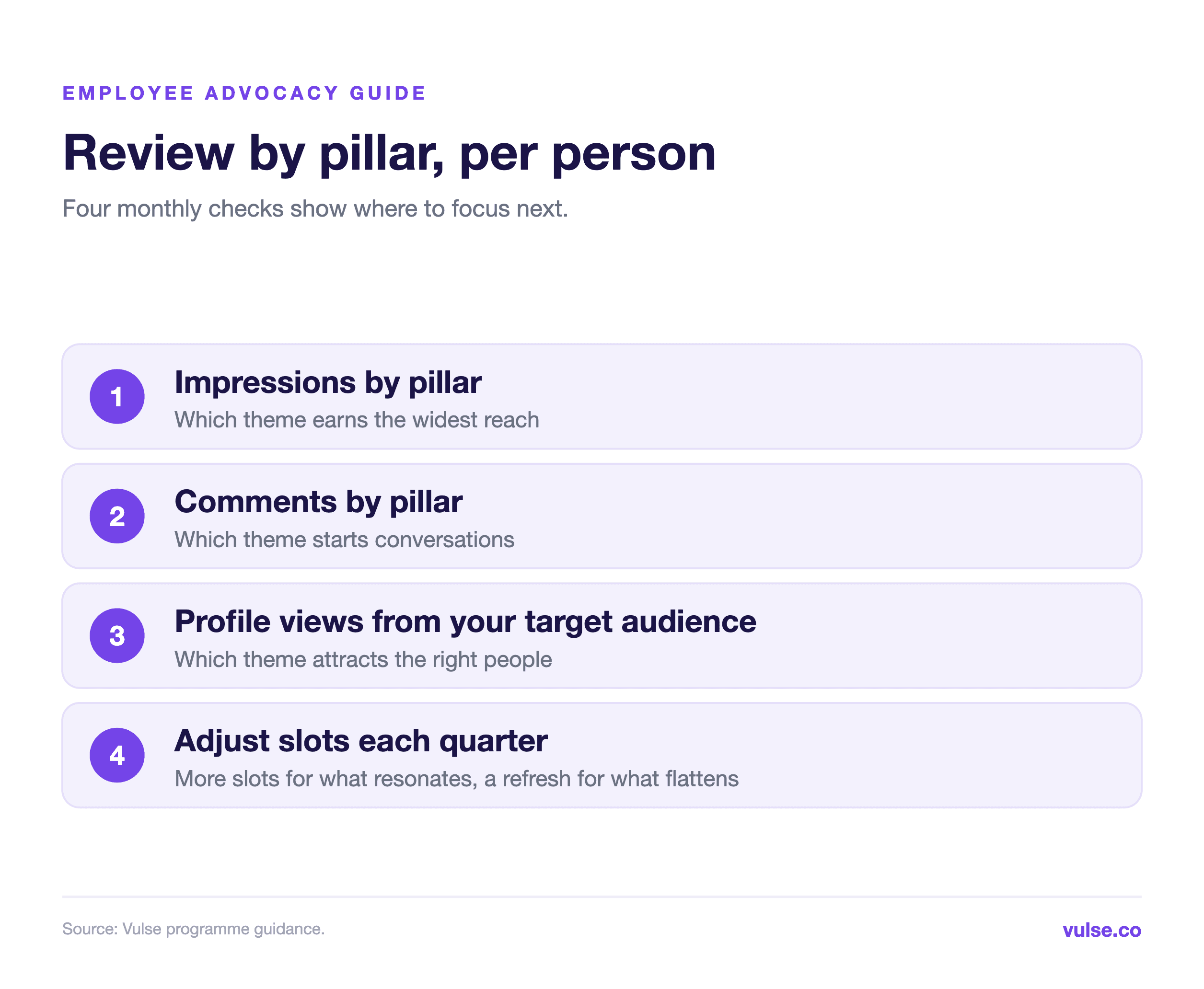
Reviewing engagement by pillar shows you where to focus content planning next. Look per person and per month: which pillar earns the most impressions, which draws the most comments and which brings profile views from your target audience. Then adjust. Give more slots to the pillars that resonate and refresh the ones that flatten. A quarterly review keeps the list aligned with what is performing right now.

3 To 5 Themes Is Enough
Most programmes run well on three to five clear themes, keeping content planning simple.
Mix Company And Personal
Balance pillars about your product or industry with ones that let advocates share their own perspective.

Anchor One Pillar To News
A pillar built around industry news or trends gives advocates a reason to post every week.

Revisit Pillars Quarterly
A quarterly review keeps pillars aligned with what's actually performing right now.

I found that the output was incredibly precise, and matched my tone of voice, especially on technical themes. They allow me to add a theme, which then develops a post idea, which is a great starting point for the content creation process.
Ryan Short, Business Development Manager, Planit Testing
Employee advocacy content pillars: frequently asked questions
Content pillars are three to five recurring themes that guide what advocates post. They keep posts relevant, on-brand and easy to plan, and they give every person a ready supply of topics.
Three to five for the programme, and three or four themes for each individual. A short list keeps planning simple and gives each theme enough posts to build recognition.
Start from the questions advocates already get asked in their role, add a pillar for personal wins, write a one-line brief for each pillar and ask legal or compliance to review the list once.
Three or more posts a week in total is the cadence where impressions compound in Vulse's analysis of 700 million LinkedIn impressions. Give each pillar a slot in the week, for example industry news early, an expertise post mid-week and a personal moment towards Friday.
Yes. Personal profiles earn roughly 63% more engagement than company pages (Metricool, 2026 LinkedIn Study), and 34% of LinkedIn users engage most with user-generated content (Sprout Social). A personal-wins pillar keeps the programme human.
Review engagement by pillar monthly, per person, and refresh the pillar list every quarter. Give more slots to pillars that resonate and update the ones that flatten.