EMPLOYEE ADVOCACY GUIDE
Rolling Out and Onboarding Employee Advocates
A 90-day plan for launching an employee advocacy programme: who to recruit first, how to train them, and how to keep momentum building.
Choose The First Cohort Carefully
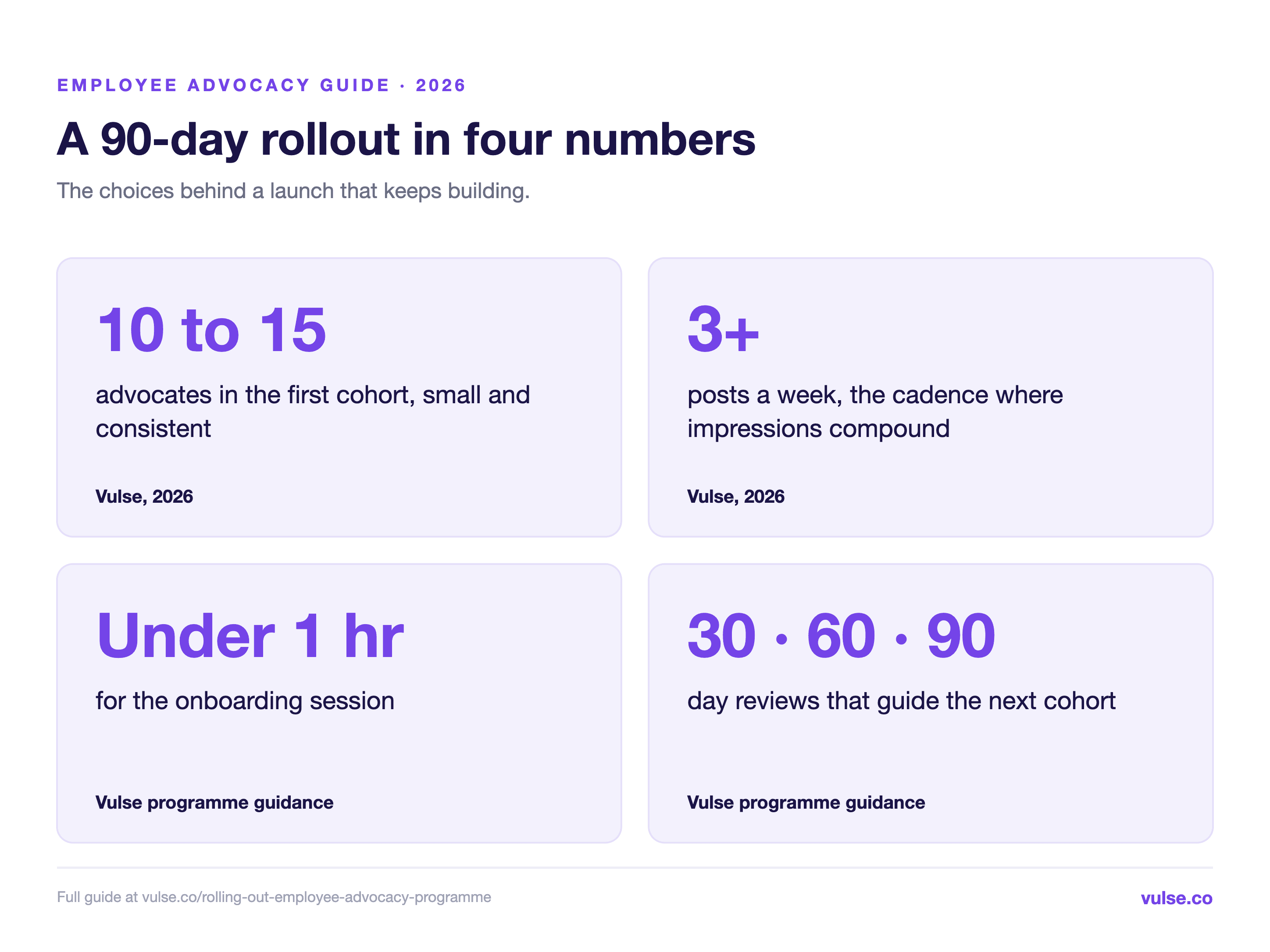
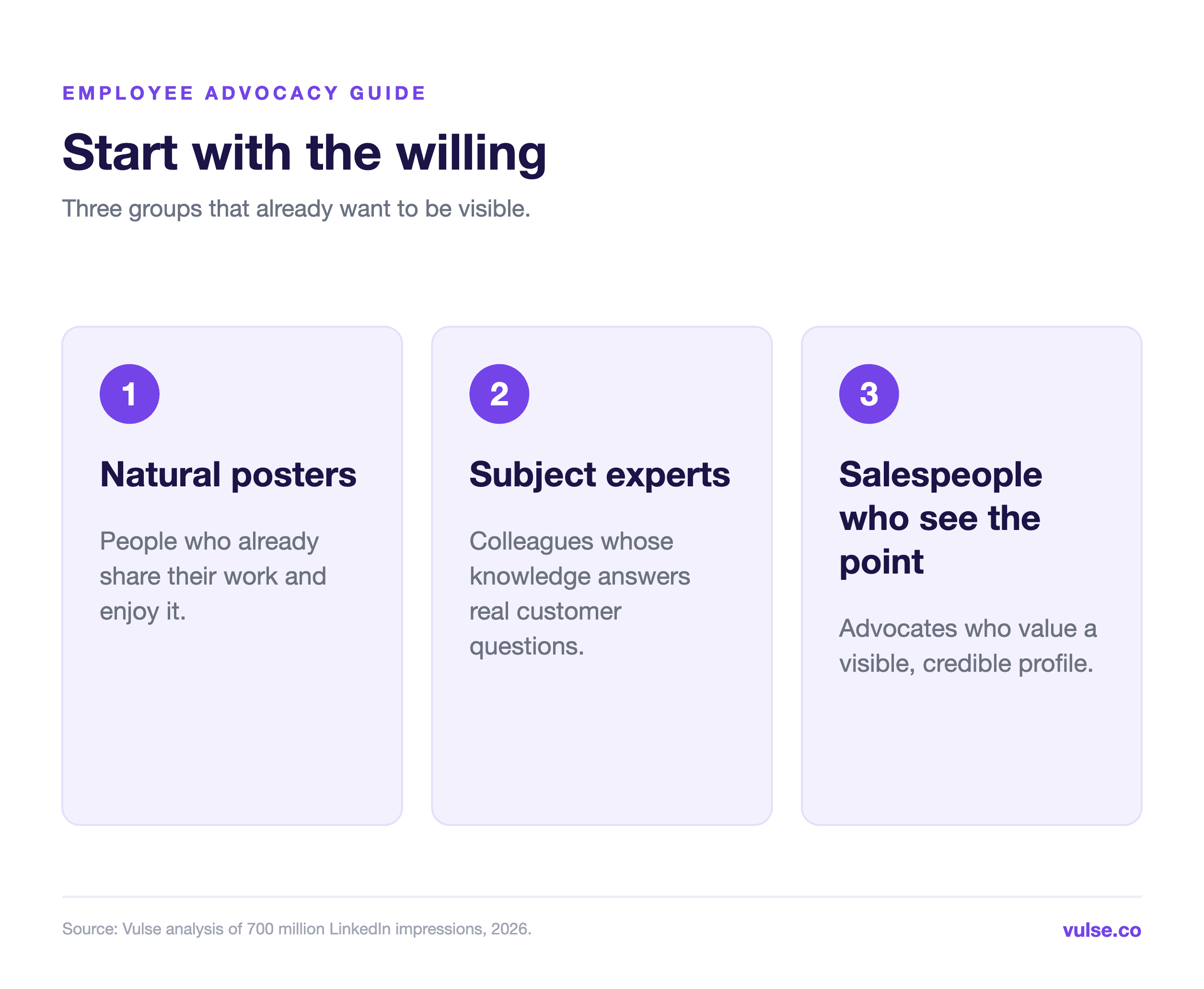
Start with ten to fifteen people who already want to be visible: your natural posters, your subject experts and the salespeople who see the point. In Vulse's analysis of 700 million LinkedIn impressions, a small consistent cohort produced more measurable reach than a large group that was enrolled and largely inactive. Their early results become the internal proof that recruits the next cohort. Choosing enthusiasts first gives you real posts, real numbers and real stories to share before you widen the invitation.
Set Expectations From Day One
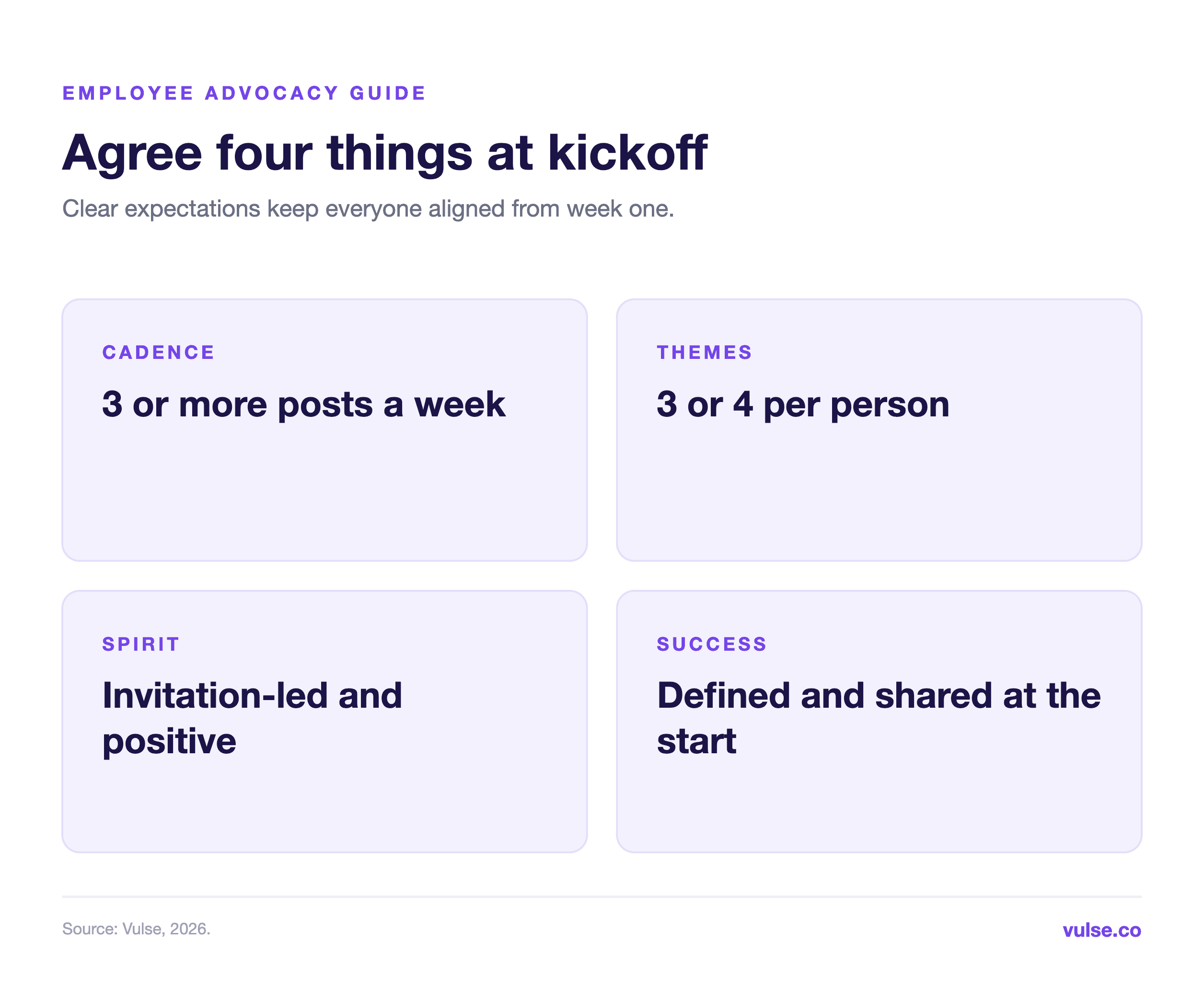
Tell advocates plainly how much time this takes and what success looks like, so everyone starts aligned. Agree the cadence at kickoff: three or more posts a week is where impressions compound in Vulse's 2026 data, and each person picks three or four themes they want to be known for. Invitations work better than quotas. Willing people posting in their own voice build the credibility that LinkedIn's feed and their audiences reward, so make joining an opportunity and keep the tone of the launch positive.
Train In One Focused Session
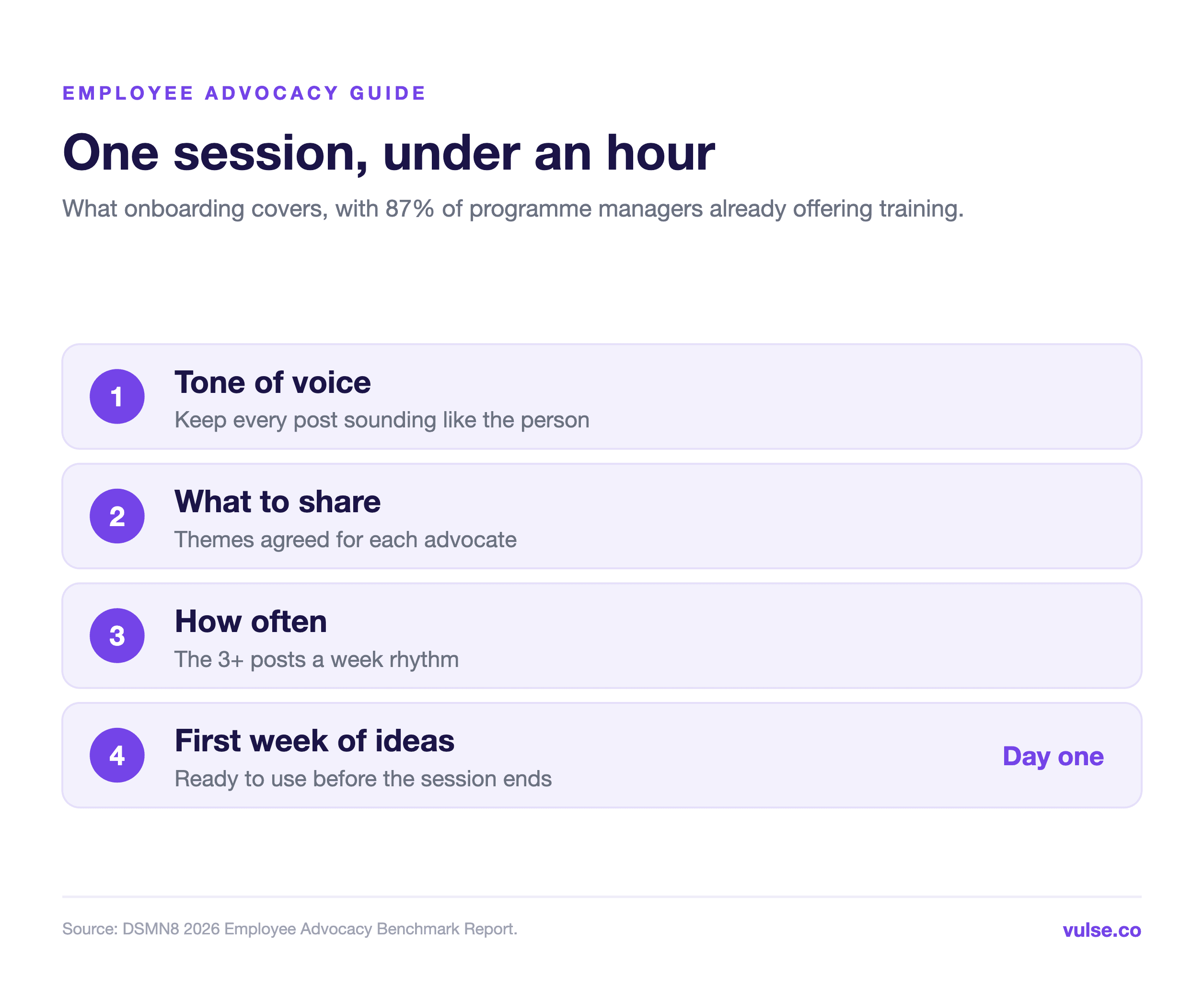
A single onboarding session of under an hour covers what advocates need: tone of voice, what to share and how often. Structured sessions are the most popular training format at 43%, and 87% of programme managers now offer training, up from 62% a year earlier (DSMN8, 2026). Finish the session with each person's themes agreed and their first week of ideas ready. The most common blocker in DSMN8's data is refreshingly human: 18% of advocates are unsure what to share. Ideas waiting on day one remove it.
Give Managers A Role
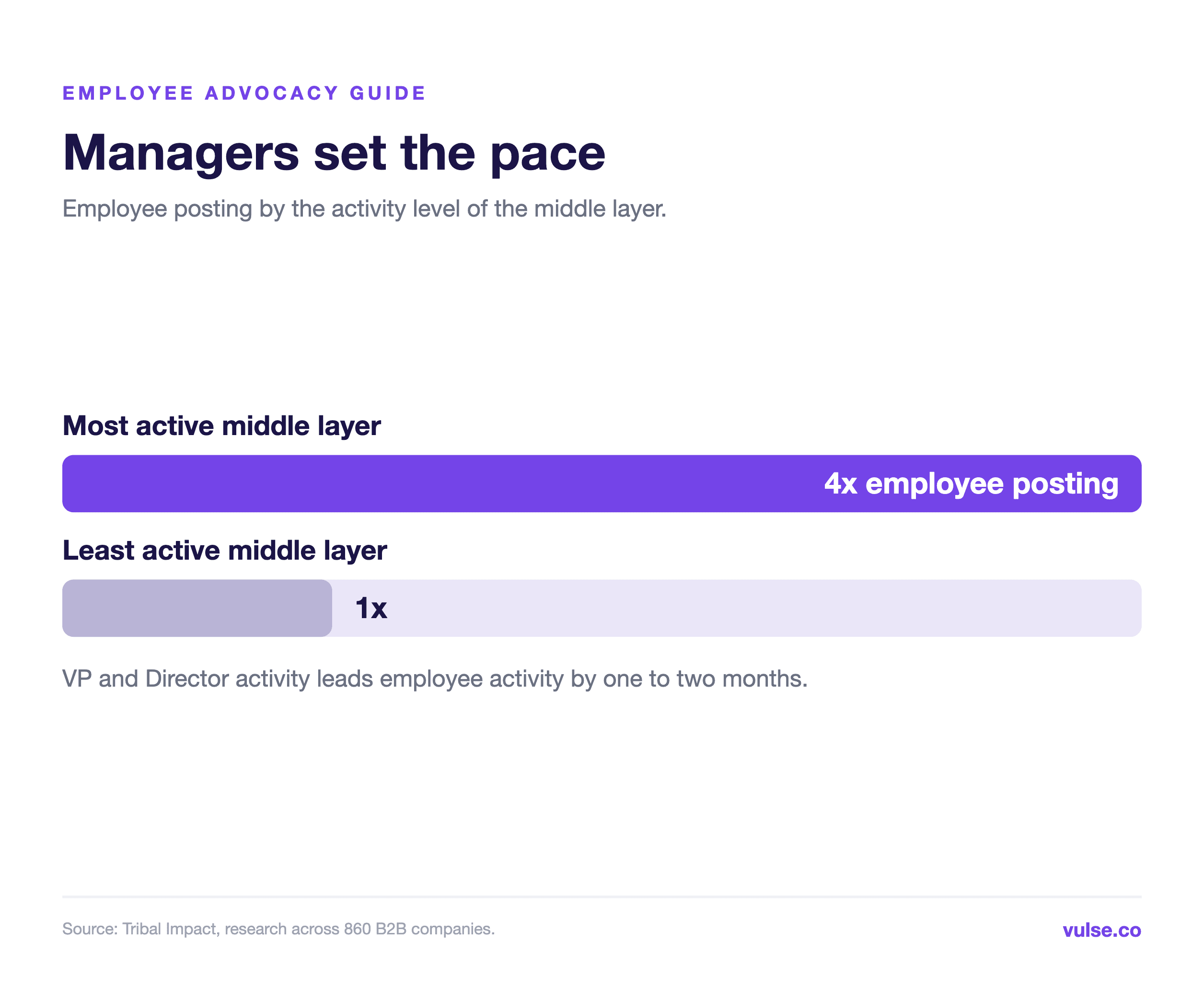
A team lead who posts consistently brings the rest of the team along. Tribal Impact's research across 860 B2B companies found that VP and Director activity leads employee activity by one to two months, and that companies with the most active middle layer see four times the employee posting of those with the least. Invite managers into the first cohort, give them a lighter signalling rhythm and track their cadence as its own line. A steady manager layer is the earliest sign that the programme is healthy.
Review After 30, 60 And 90 Days
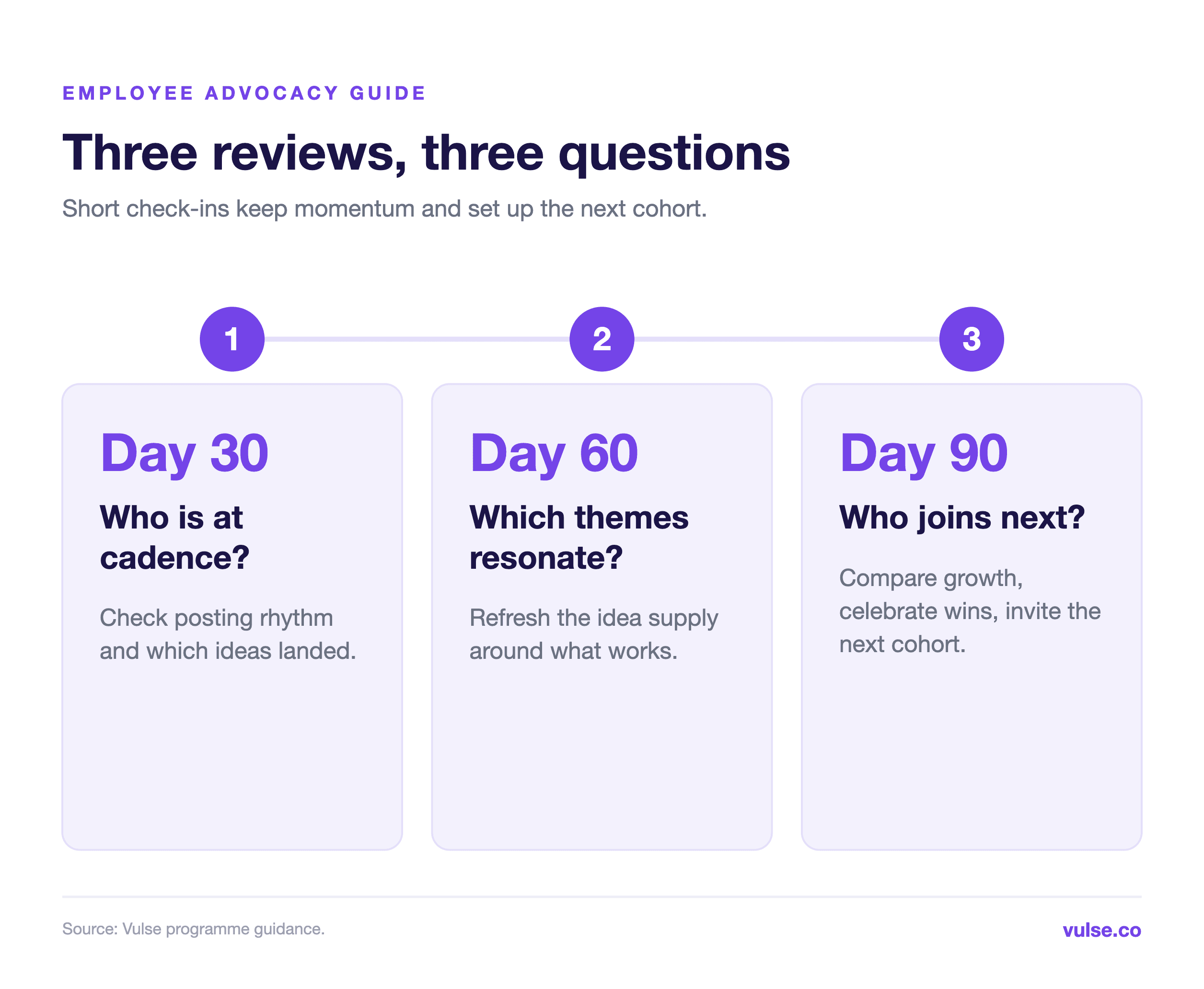
Short check-ins at each milestone keep engagement strong and give you a natural point to invite the next cohort. Keep each one to twenty minutes and look at people rather than totals. At 30 days, check who is at cadence and which ideas landed. At 60 days, review which themes resonate and refresh the idea supply. At 90 days, compare each person's impression and engagement growth, celebrate the strongest results publicly and decide who joins next.
Grow Cohort By Cohort
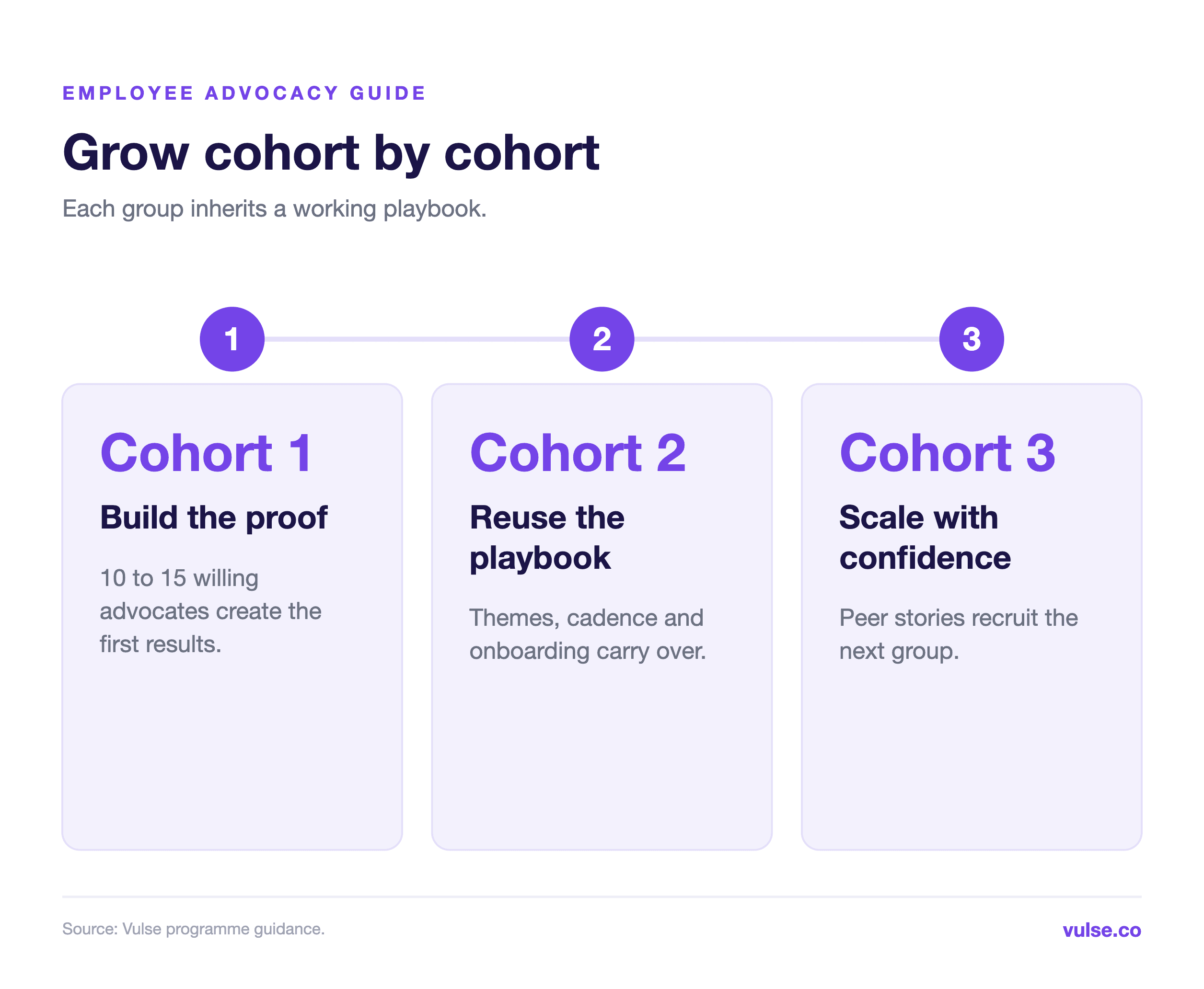
Add the next group once the first is posting consistently, keeping support and content easy to manage. Each new cohort inherits a working playbook: the themes, the cadence, the onboarding session and the proof points from the cohort before. Peer stories recruit better than announcements. When a colleague can share that their impressions grew and that others reached out to compliment their posts, the invitation lands with real credibility.

Recruit 10 To 15 First
Start with a small, consistent cohort of enthusiastic early adopters, then expand once momentum builds.

Train In Under An Hour
A single onboarding session covering tone of voice, what to share and how often gets advocates started quickly.

Share Content They Can Edit
Give advocates a starting point they can make their own; posts written in their own voice consistently perform best.

Celebrate Early Wins Publicly
Highlighting an advocate's first strong post in a team channel builds momentum fast.

It’s simple to use but powerful in its results. Consistency is key to growing social media platforms and Vulse has given me no excuse with its scheduling tool and speedy post generation.
Carla Speight, Founder, PR
Rolling out employee advocacy: frequently asked questions
Start with a first cohort of ten to fifteen willing advocates, train them in one session of under an hour, review progress at 30, 60 and 90 days and add the next cohort once the first is posting consistently.
Ten to fifteen. In Vulse's analysis of 700 million LinkedIn impressions, a small consistent cohort produced more measurable reach than a large group that was enrolled and largely inactive, and their results become the proof that recruits everyone else.
A single session of under an hour covers tone of voice, what to share and how often. Advocates leave with their themes agreed and their first week of ideas ready to use.
At 30 days, check who is at cadence and which ideas landed. At 60 days, review which themes resonate and refresh the idea supply. At 90 days, compare each person's impression and engagement growth, celebrate strong results and decide who joins next.
Protect the rhythm: three or more posts a week, ideas that arrive without being asked, active managers and a monthly per-person review. Programmes tend to fade around month three when posting becomes a daily decision each person makes alone, so build the support around that moment.
Once the first cohort is posting consistently, typically around the 90-day review. Each new cohort inherits the themes, cadence, onboarding session and proof points of the cohort before it.